
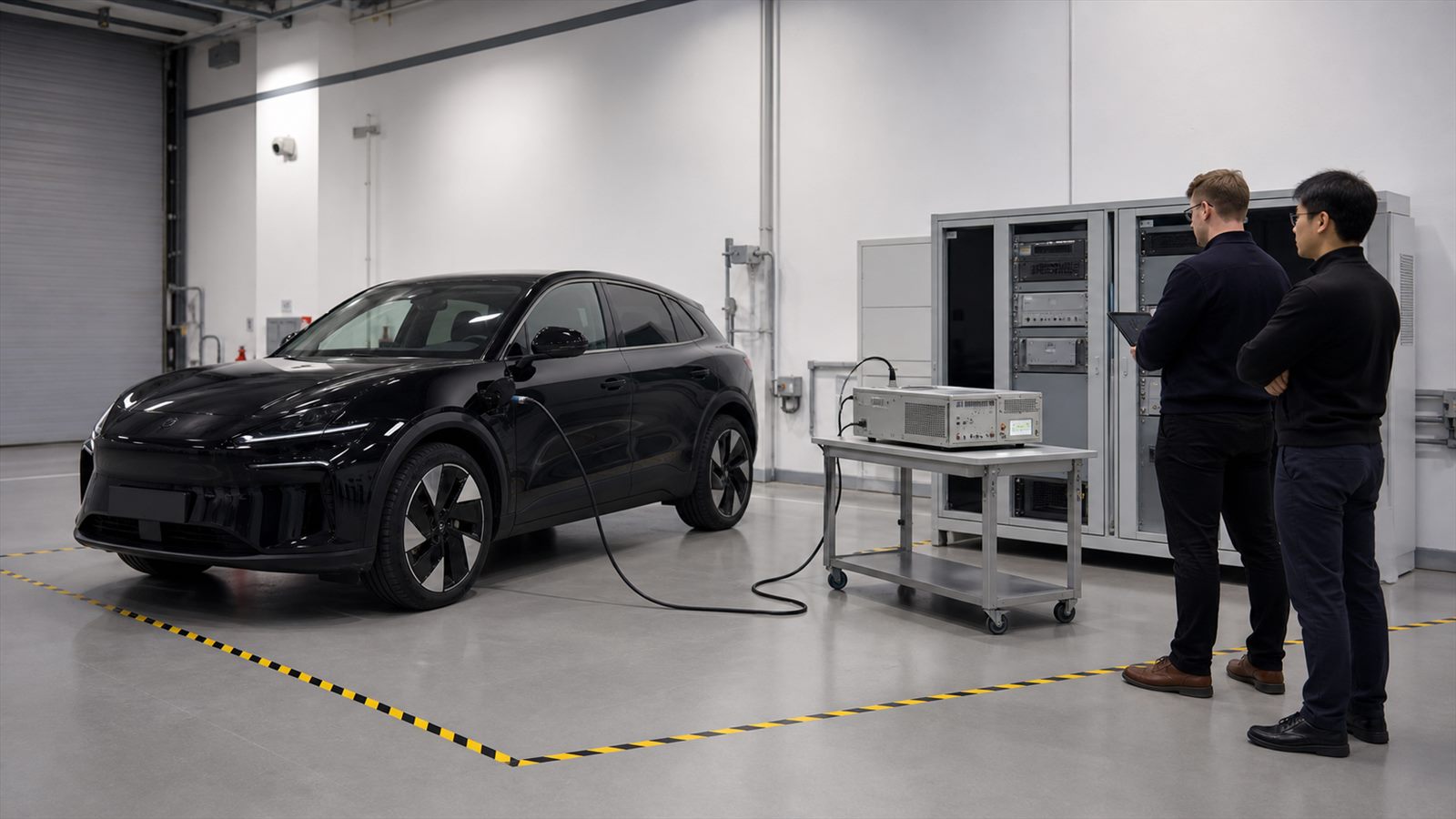
A modern car can gain features, correct defects, and patch security weaknesses through software. Over-the-air, or OTA, delivery makes that work faster than bringing every vehicle to a workshop. It also turns the update system into part of the vehicle’s safety architecture. A failed, misdirected, or malicious update can affect far more than an entertainment screen when software controls propulsion, braking support, charging, batteries, and driver-assistance functions.
The right way to evaluate vehicle OTA is therefore not simply to ask whether a car can download new code. The complete system must identify each vehicle and software version, authorize a package, verify compatibility, install it under safe conditions, recover from interruption, document the result, and monitor the fleet afterward.
A Vehicle Is a Distributed Computing System
Cars contain many electronic control units, or ECUs, connected through several internal networks. Different suppliers may provide hardware, firmware, operating systems, and application software. A change to one component can affect messages, timing, diagnostics, energy use, and assumptions elsewhere.
This makes dependency management essential. An update service needs to know which hardware revision, calibration, region, and existing software combination is installed in a specific vehicle. Sending the correct package to the wrong configuration can be as dangerous as sending damaged code.
The challenge grows as vehicles combine electric propulsion, connectivity, and automated functions, the three layers described in our future transportation overview. Software now links domains that were once more isolated.
UN Regulation No. 156 Treats Updates as a Managed Process
United Nations Regulation No. 156 establishes requirements for software updates and a software update management system. It is used within the vehicle type-approval framework adopted by participating jurisdictions. Rather than certifying only one update file, it asks a manufacturer to maintain processes for identifying software, documenting changes, assessing whether an update affects approved characteristics, delivering updates safely, and recording results.
The regulation also uses a software identification concept so authorities can relate installed software to a vehicle’s approved configuration. This matters because a car can change after it leaves the factory. Compliance evidence has to follow the product through software revisions, not stop at the original production line.
Authenticity and Integrity Are the First Security Gates
A vehicle should install software only from an authorized source and only if the package has not been altered. Digital signatures can verify both properties when the signing keys and verification process are protected. Encryption may protect confidentiality during delivery, but encryption alone does not prove that code is legitimate.
NHTSA’s 2022 cybersecurity best practices recommend state-of-the-art controls that limit firmware modification to authorized parties. They specifically discuss signing, protection of OTA servers and transmission, and risks from compromised servers, insiders, man-in-the-middle attacks, and protocol weaknesses.
Key management is a lifecycle responsibility. Manufacturers need secure signing operations, restricted access, rotation and revocation procedures, and a response plan if credentials are exposed. One shared secret that unlocks an entire fleet creates an unacceptable single point of failure.
Rollback Protection Prevents a Different Attack
An older software version may carry a known vulnerability. Even if that old package was legitimately signed, an attacker should not be able to downgrade a vehicle to it. NHTSA recommends measures that limit firmware rollback attacks.
Version rules must still allow controlled recovery. A new release can contain a defect, so engineers may need a safe path to a previous known-good build or a separately signed recovery image. The distinction is between an authorized recovery policy and accepting any historically valid package.
Installation Conditions Are Part of Safety
A phone can restart on a desk. A vehicle may be moving, charging, towing, parked in an unsafe location, or needed for an emergency trip. Before installation, the system may check speed, gear, battery state, charging status, network quality, temperature, and whether safety functions will remain available.
The driver needs a realistic estimate of unavailable time and a clear confirmation that the vehicle is safe to use afterward. Critical updates may require stronger notification, while routine map or entertainment updates can follow a different schedule. Treating every package identically either creates needless disruption or hides important risk.
Power Loss and Interrupted Downloads Must Be Expected
Networks fail and batteries run low. A robust design downloads into a separate area, verifies the complete package before activation, and preserves a bootable recovery state. Some systems use dual storage partitions so the vehicle can switch back if the new image fails health checks.
Atomic installation is harder when several ECUs must change together. The coordinator may need to stage compatible packages and commit them in a controlled sequence. If only half the group updates, communication protocols or calibrations can become inconsistent. Testing has to include interruption at many points, not only the ideal path.
Fleet Rollouts Need Observation and Brakes
Consumer software teams often release gradually to a small population before expanding. Vehicle manufacturers can use the same principle, but safety raises the standard for monitoring and rollback decisions. A pilot group should represent relevant hardware and environments, and telemetry should focus on validated health signals rather than broad collection without purpose.
A release system needs an emergency stop, rapid investigation, and a way to identify every affected vehicle. Event logs should support reconstruction of failures and attempted attacks. The process resembles the product-security obligations discussed in our article on the EU Cyber Resilience Act, although vehicles sit within their own regulatory framework.
OTA Does Not Erase Recalls or Workshops
Some safety defects can be corrected with software, and remote delivery can shorten the time before owners receive a remedy. But an OTA update is not automatically a complete recall response. Authorities and manufacturers still need to identify the defect, notify owners as required, track completion, and verify the remedy.
Hardware faults, damaged sensors, wiring problems, and mechanical wear still require physical service. Even software work may need a workshop when a vehicle lacks connectivity, has a failed ECU, or cannot enter a safe installation state. Long vehicle lifetimes also require update tools and service information to remain available beyond the first owner’s subscription period.
Repairability and Security Must Coexist
Strong update authentication should not become a blanket excuse to block legitimate repair. NHTSA says manufacturers should provide cybersecurity protection without unduly restricting third-party repair authorized by the owner. That balance requires scoped credentials, auditable diagnostic access, secure replacement-part enrollment, and documentation.
Unsupported aftermarket devices can create new entry points, but an opaque ecosystem can also make vehicles harder to maintain. Good architecture separates safety-critical functions, limits privileges, and authenticates sensitive actions instead of assuming that secrecy is protection.
What Owners Can Check
Owners should use the vehicle’s official update channel, keep contact information current for safety notices, and avoid disconnecting power during an installation. Before a major update, read the manufacturer’s release information and confirm when the vehicle will be unavailable. Unexpected messages asking for account credentials or payment to install a safety update deserve caution.
This is general information, not a substitute for manufacturer instructions. Update procedures differ, and a vehicle showing warnings or incomplete installation may need professional service rather than repeated restarts.
What to Watch Next
Watch for better public reporting of update completion, clearer support periods, independent assessment of software update management systems, and designs that preserve serviceability over a vehicle’s long life. Also watch how automated-driving rules incorporate validation of software changes after initial approval.
The best OTA system will be mostly uneventful. It will deliver the right code to the right configuration, explain what the owner needs to know, recover from ordinary failures, and leave regulators and engineers with evidence that the fleet remains safe.
Leave a Reply