An electric-vehicle charging map can show dozens of pins and still fail at the moment a driver needs it. A station may exist at the mapped location but be offline, occupied, behind a closed gate, incompatible with the car, or priced differently from what the app displays. The problem is no longer just discovering where chargers were installed. It is knowing what a particular charging point can do right now.
That makes charging data part of transportation infrastructure. Operators, mapping services, automakers, and public agencies need shared definitions, fresh status updates, and reliable ways to exchange them. More chargers matter, but usable live data can determine whether a driver reaches the right one with enough battery left.
A map pin is static, while a charging stop is dynamic
Some charging facts change rarely: geographic coordinates, street address, connector types, maximum power, opening hours, accessibility, and the number of vehicles that can charge simultaneously. These are static data, although they still need updates when equipment is replaced or access rules change.
Other facts can change minute by minute. Is a charging point operational? Is it free, occupied, or reserved? What is the ad hoc price? A route planner that knows only the static facts can send several vehicles to the same working connector or direct a driver toward a station that has entered maintenance.
This distinction complements the need for better EV charging reliability metrics. Historical success rates help people compare networks and sites. Live data helps them make the next decision.
Europe is standardizing the data layer
The European Union’s Alternative Fuels Infrastructure Regulation, known as AFIR, requires publicly accessible charging and refueling infrastructure data to be available openly through national access points. The European Commission says the rules are intended to improve interoperability, consumer information, payment options, and price transparency across member states.
Implementing Regulation (EU) 2025/655 defines the format, update frequency, and quality expectations for this information. It applies from April 14, 2025. Static data must be updated no later than 24 hours after a change, while dynamic data must be updated no later than one minute after a change.
The regulation also supports a common European access point that the Commission is due to establish by December 31, 2026. That service is intended to make national datasets easier for apps and other data users to discover and compare. It does not replace the physical chargers; it creates a more consistent route to information about them.
The data model must describe the right object
A charging site, a charging station, a charging point, and a connector are not interchangeable. One site can have several cabinets, each cabinet can serve one or more parking spaces, and a charging point may expose multiple connector cables even though only one can be used at a time. Counting plugs without describing simultaneous charging capacity can overstate what drivers will actually find.
Power needs the same precision. A cabinet marked for high output may share power across stalls, while a vehicle may accept less because of its battery voltage, temperature, state of charge, or charging curve. Live data can report the infrastructure’s capability and status, but it cannot promise the speed every vehicle will receive.
Availability and operational status are different
An operational charger can still be unavailable because another vehicle is using it. An unoccupied charger can still be non-operational because of a fault or scheduled maintenance. Treating both conditions as a single red or green indicator hides information a route planner needs.
The EU specification separates operational status from availability and allows availability states such as occupied, reserved, or free. That difference enables better decisions. A driver may wait for an occupied charger at a large hub but avoid a station where every point is out of service. A fleet system may choose a slightly longer route when reservations make near-term capacity predictable.
Price data needs a complete structure
A single price number can be misleading when a session includes energy charges, time charges, session fees, parking fees, or an idle fee after charging finishes. Currency and tax treatment also matter. The EU rules call for the applicable ad hoc price components to be represented so that services can show more than an unexplained headline figure.
Consistent structure does not guarantee that two apps will estimate the same final cost. Membership plans, roaming agreements, vehicle contracts, and changing idle time can produce different totals. It does give apps a better foundation for explaining the assumptions behind an estimate.
Freshness should travel with the data
A status value without a timestamp is difficult to trust. Apps need to know when the operator observed a change, when an intermediary received it, and when the app last refreshed. If a feed stops updating, an old “available” state should not remain confidently green forever.
The European Commission’s implementation summary emphasizes completeness, correctness, consistency, timeliness, and reliability. Those qualities require monitoring the pipeline, not merely publishing an API address. Operators need error reporting, national access points need quality controls, and consumer services need visible fallbacks when data is stale.
The United States illustrates multiple update paths
The U.S. Department of Energy’s Alternative Fuels Data Center provides a national Station Locator and developer interfaces. Its charging-network documentation explains that station records arrive through daily API imports, periodic spreadsheet imports, or manual entry for non-networked stations. Those methods naturally have different freshness and detail.
The public Alternative Fuel Stations API supports station searches, nearby-route queries, connector and power filters, network lists, and a last-updated endpoint. It demonstrates the value of a reusable public dataset. It also shows why applications should disclose what their source knows: a regularly updated station directory and a second-by-second availability feed are different products.
Open data does not guarantee a successful session
A correct status feed cannot repair a broken cable, authorize payment, or make two systems roam correctly. It may report that a point is operational even when a particular car and charger fail during their communications handshake. Physical accessibility, lighting, trailer clearance, queue design, and cellular coverage can also determine whether the stop works in practice.
For heavy trucks, the stakes grow because sites need more space and much higher electrical capacity. As our guide to megawatt charging explains, grid connections, parking layout, and utilization planning are as important as the plug. Live data should eventually represent those operational constraints rather than flattening every charger into the same map symbol.
Route planning needs uncertainty, not false certainty
A robust planner should combine charger data with vehicle range, weather, elevation, speed, battery temperature, expected charging curve, and a reserve margin. It should consider alternatives before the battery becomes too low to reach them. When live status is unavailable or stale, the planner should communicate that uncertainty and keep more backup options.
Connected transport already depends on trust between participants. The same principle behind secure and interoperable V2X systems applies here: standardized messages are useful only when identities, update paths, and data quality are managed across the ecosystem.
Limitations and what to watch next
Open infrastructure data can improve competition and trip planning, but it raises operational questions. Operators must protect administrative systems even while publishing public status. Data users need fair access without overwhelming source APIs. Drivers may still prefer community reports for details that structured feeds do not capture, although crowdsourced information also needs freshness and verification.
Watch Europe’s common access point, enforcement of update and quality requirements, wider use of common charging-data interfaces, and clearer presentation of timestamps and uncertainty in navigation apps. The important milestone is not a map with more pins. It is a data chain that lets a driver understand compatibility, availability, price, and confidence before committing to a stop.
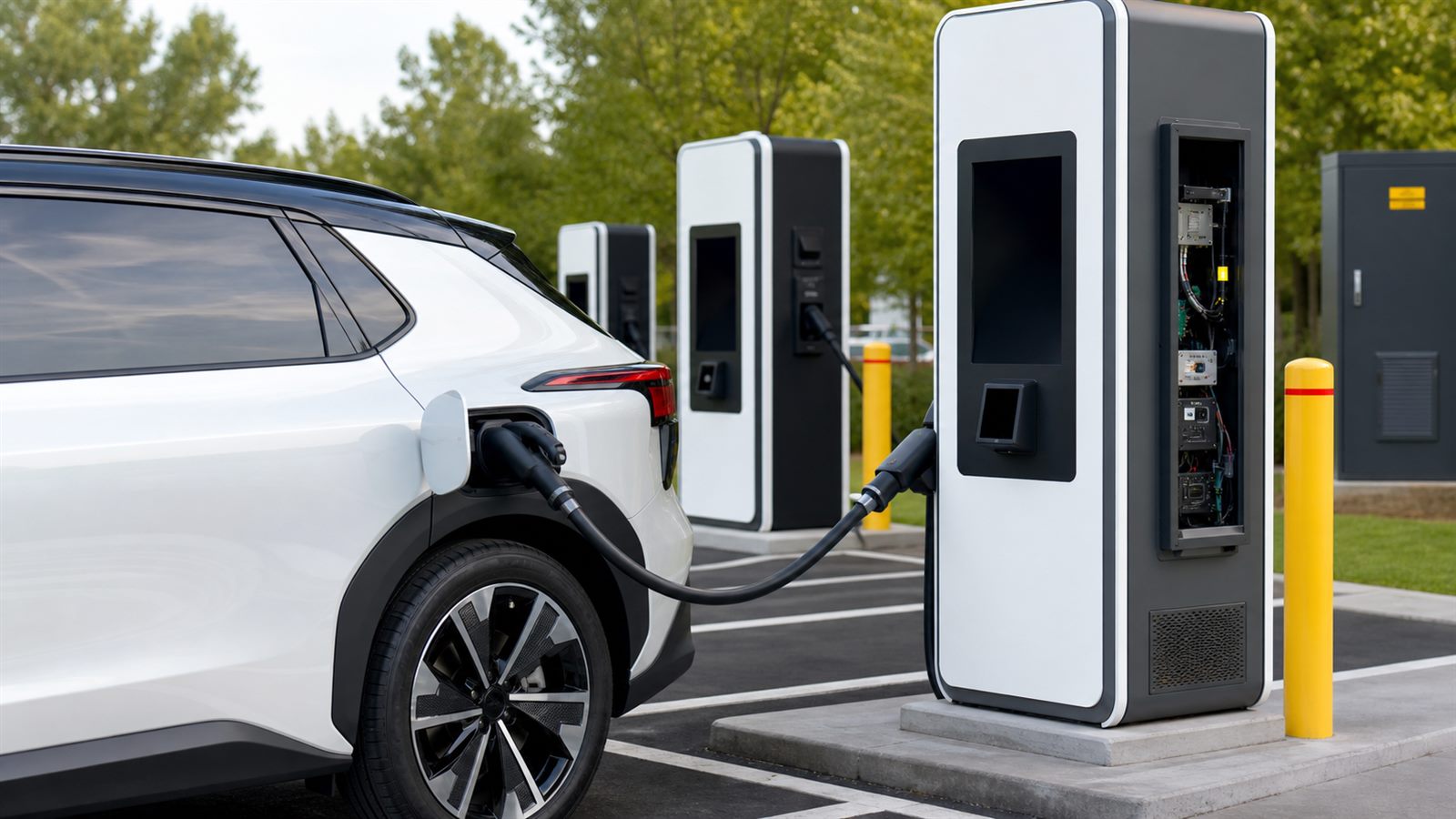
Featured image: AI-generated editorial visualization of live status data connecting an EV route planner with a public charging hub. It is not a screenshot of a specific app, charging network, or hands-on test.
Primary and authoritative sources
- EUR-Lex: Commission Implementing Regulation (EU) 2025/655
- European Commission: Interoperability and Transparency of Alternative Fuels Infrastructure Data
- European Commission: Alternative Fuels Infrastructure Regulation
- U.S. Department of Energy AFDC: Electric Vehicle Charging Networks
- National Laboratory of the Rockies: Alternative Fuel Stations API