
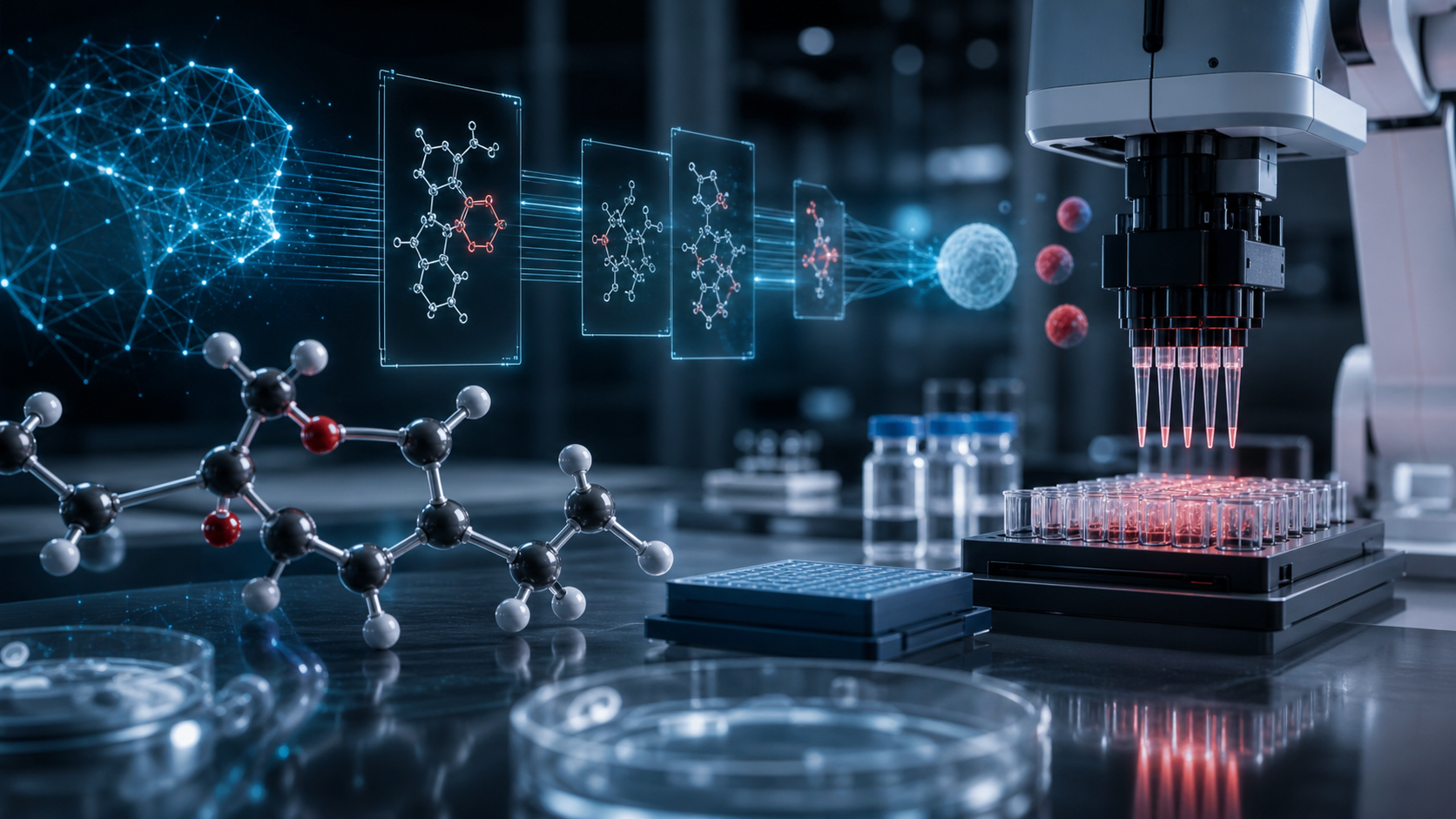
AI drug discovery uses computational models to help identify targets, design molecules, predict properties, and prioritize experiments. It can make the early search process faster and more systematic.
Why It Matters
Drug development is expensive, slow, and uncertain. Better computational tools can reduce wasted effort by helping researchers decide which ideas deserve scarce lab time.
Where It Shows Up
AI can support protein modeling, molecule generation, toxicity prediction, literature analysis, trial matching, and imaging analysis. However, a model’s suggestion is not a medicine. Compounds still need synthesis, testing, safety evaluation, clinical trials, and regulatory review.
What to Watch
- Evidence that AI-designed candidates succeed in clinical trials
- Better biological datasets and experimental feedback loops
- Integration of wet labs with automated software platforms
- Transparent benchmarks rather than marketing claims
AI can improve discovery, but biology gets the final vote. The real opportunity is a faster loop between computation and experiment.
Category: Biotechnology. This article is part of Frontier Technology Portal’s plain-English guide to the technologies shaping the next decade.
Leave a Reply