
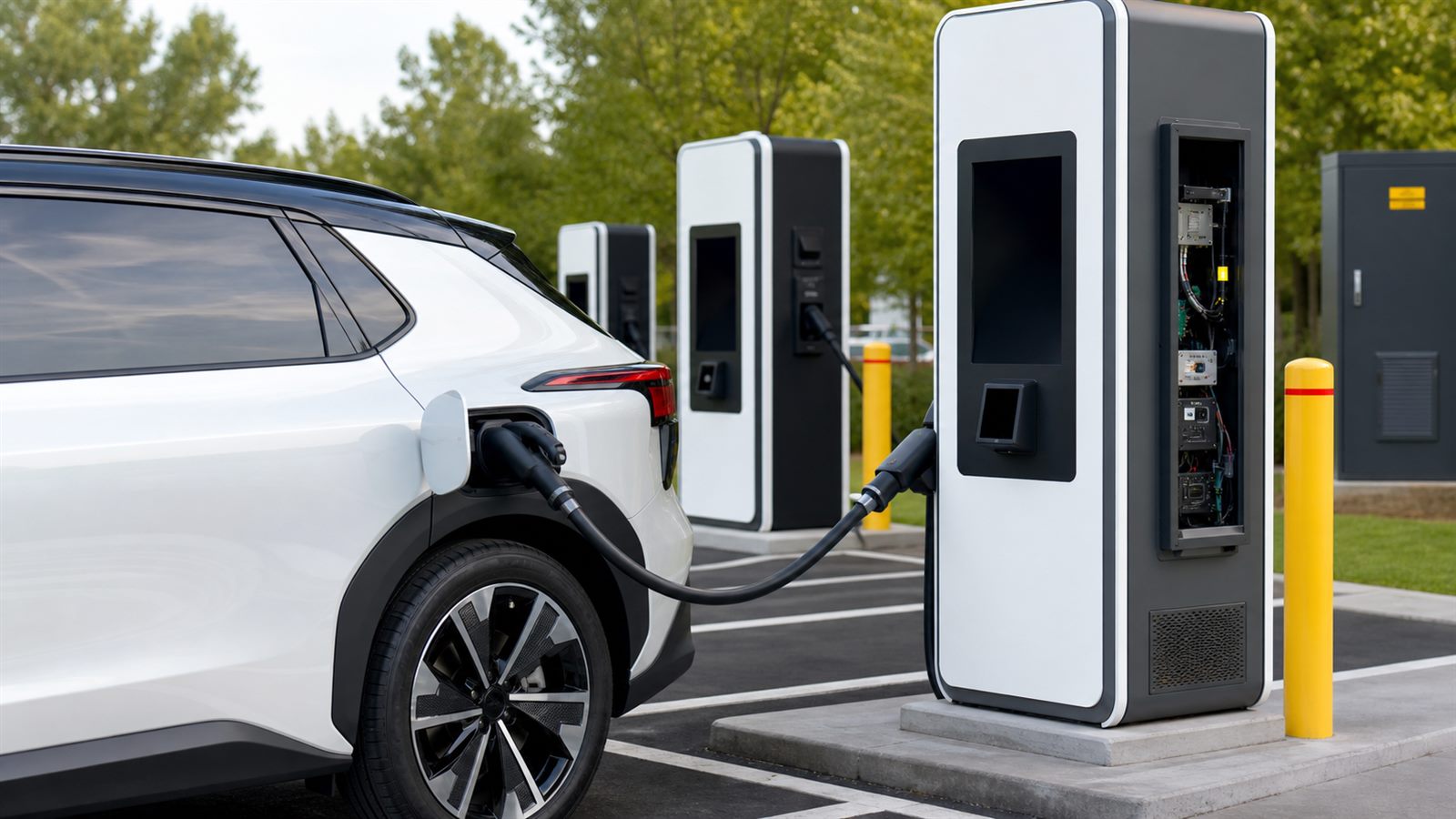
A map can show hundreds of electric-vehicle charging ports and still fail to answer the driver’s most important question: will a useful charging session start when I arrive? Station counts and annual uptime are important, but they can miss payment failures, communication errors, damaged connectors, unexpectedly low power, or sessions that stop after the driver walks away.
Public charging reliability needs customer-focused measurements. A charger can be online while a particular car cannot authenticate, begin energy transfer, or finish normally. Measuring the complete session makes reliability visible from the driver’s perspective and gives operators better information about what to repair.
Uptime is necessary but incomplete
Uptime measures the share of time a charging port is considered operational. U.S. National Electric Vehicle Infrastructure standards use a requirement above 97 percent annual uptime for covered ports. That creates a valuable minimum, but the exact definition and data quality determine what the number means.
A network may report that a charger is online because its modem responds, even when the payment terminal, cable, vehicle communication, or power module fails. Better definitions require the port to be available and able to dispense the required power. Even then, a time-based metric does not directly reveal how many drivers completed their intended sessions.
Session success follows the driver’s actual journey
The ChargeX Consortium and Joint Office of Energy and Transportation have promoted common key performance indicators including charge-start success, charge-start time, charge-end success, and overall session success. These measures examine the transaction from connection and authorization through energy delivery and a normal end.
Separating stages helps diagnosis. A poor start-success rate may indicate payment, authentication, connector, or vehicle-handshake problems. Successful starts followed by abnormal endings may point to thermal limits, software faults, cable issues, or backend interruptions.
The charger is part of a distributed system
A modern fast-charging session involves the vehicle, connector, charger controller, power electronics, payment service, charging-network backend, mobile or roaming service, and sometimes a utility control signal. Several communication standards operate across those boundaries. Each component may work alone while the combined session fails.
Error codes need enough consistency for the responsible party to act. If a vehicle reports one generic failure while the charger and backend use different descriptions, support teams may replace working hardware or ask the driver to repeat steps. Shared diagnostic data can shorten repair time without exposing personal travel records.
Successful charging also includes useful power
A session that delivers electricity at a fraction of the expected rate may be technically successful but practically disappointing. Charging power depends on the vehicle’s battery temperature, state of charge, voltage architecture, charger capacity, shared site power, cable temperature, and grid constraints.
Performance reporting should distinguish a charger fault from normal vehicle behavior. It should also disclose when site power is shared among stalls. The infrastructure needs differ sharply from the megawatt charging systems required by heavy trucks, but both depend on transparent delivered-power measurements.
Payment can break an otherwise working charger
Drivers need a clear price and a payment method that works without an unnecessary account. Card readers, mobile apps, roaming agreements, and automatic vehicle authentication each add possible failure points. A station can have healthy power electronics while rejecting every transaction because a remote service is unavailable.
Price transparency also requires accurate energy measurement. The Joint Office works with NIST measurement programs so consumers can compare prices and receive the electricity for which they pay. Reliability should include correct receipts and understandable fees, not just flowing electrons.
Interoperability has to be tested across combinations
Standards improve compatibility, but implementation details still vary among vehicle models, charger firmware, connectors, and backend software. Test programs need a representative matrix rather than one reference car. Adapters require separate mechanical, thermal, and communication checks.
Automatic mechanisms such as Plug & Charge can simplify authorization, while an automated retry can recover from some failed starts without asking the driver to unplug. Those features need secure identity management and clear failure behavior. They should reduce friction rather than hide repeated faults from operators.
Maintenance data should predict failures
Operators can monitor contactor cycles, cooling performance, cable temperature, connector damage, modem quality, payment-terminal health, and repeated error patterns. A rising fault rate may justify maintenance before a port becomes unavailable. Spare-parts planning and remote diagnostics are as important as installing new hardware.
Public status feeds should update quickly enough that navigation systems do not route drivers to a known failed port. The broader network-planning issues remain important, as explained in our overview of EV charging infrastructure and adoption.
Reliability must account for the site experience
A working port may still be blocked, inaccessible, poorly lit, difficult to reach, or surrounded by a queue. Drivers need accurate information about connector type, maximum power, accessibility, hours, payment, and stall availability. Queue time and the probability of finding at least one working compatible port can matter more than individual-port uptime.
Future bidirectional chargers add another layer because the equipment may exchange power with the grid as described in our guide to vehicle-to-grid charging. Service metrics will need to distinguish mobility charging from optional grid services.
What regulators and funders can measure
Contracts can require standardized event data, independent audits, repair response times, and public reporting. Measurements should be calculated per port and per site, with planned maintenance identified separately and definitions published. Session metrics need privacy protections and should avoid linking public records to individual drivers.
Funding rules can also reward durable operation rather than installation alone. A station that is built quickly but cannot be maintained does not create lasting transportation capacity.
Limitations
No single metric captures every driver, vehicle, weather condition, or trip. Session success may look high at lightly used sites while peak-time queues remain poor. Uptime can be distorted by missing data, and delivered power can fall for valid vehicle-side reasons. Cross-network comparisons are unreliable unless definitions match.
What to watch next
Watch for wider publication of start-success, end-success, session-success, and charge-start-time metrics; standardized error codes; automatic retry; and faster real-time status feeds. Independent testing should compare reported availability with actual multi-vehicle charging attempts.
The mature charging network will not be judged by how many pins appear on a map. It will be judged by how often a driver connects, pays, receives useful energy, and leaves without troubleshooting the station.
Sources: Joint Office: Customer-focused EV charging KPIs; Joint Office: Charging infrastructure standards and reliability; NREL: Impact of EV Charging and Charger Reliability; Joint Office: Measurement and Price Transparency.
Leave a Reply