Frontier Technology Portal Independent technology analysis / Updated daily
Frontier Technology Portal logo
FRONTIER Technology Portal for the next wave of invention

Category: Clean Energy

Solar, batteries, grids, hydrogen, nuclear, storage, materials, and energy software.

  • Interconnection Queues Show Clean Energy’s Grid Bottleneck Is Still Real

    Interconnection Queues Show Clean Energy’s Grid Bottleneck Is Still Real

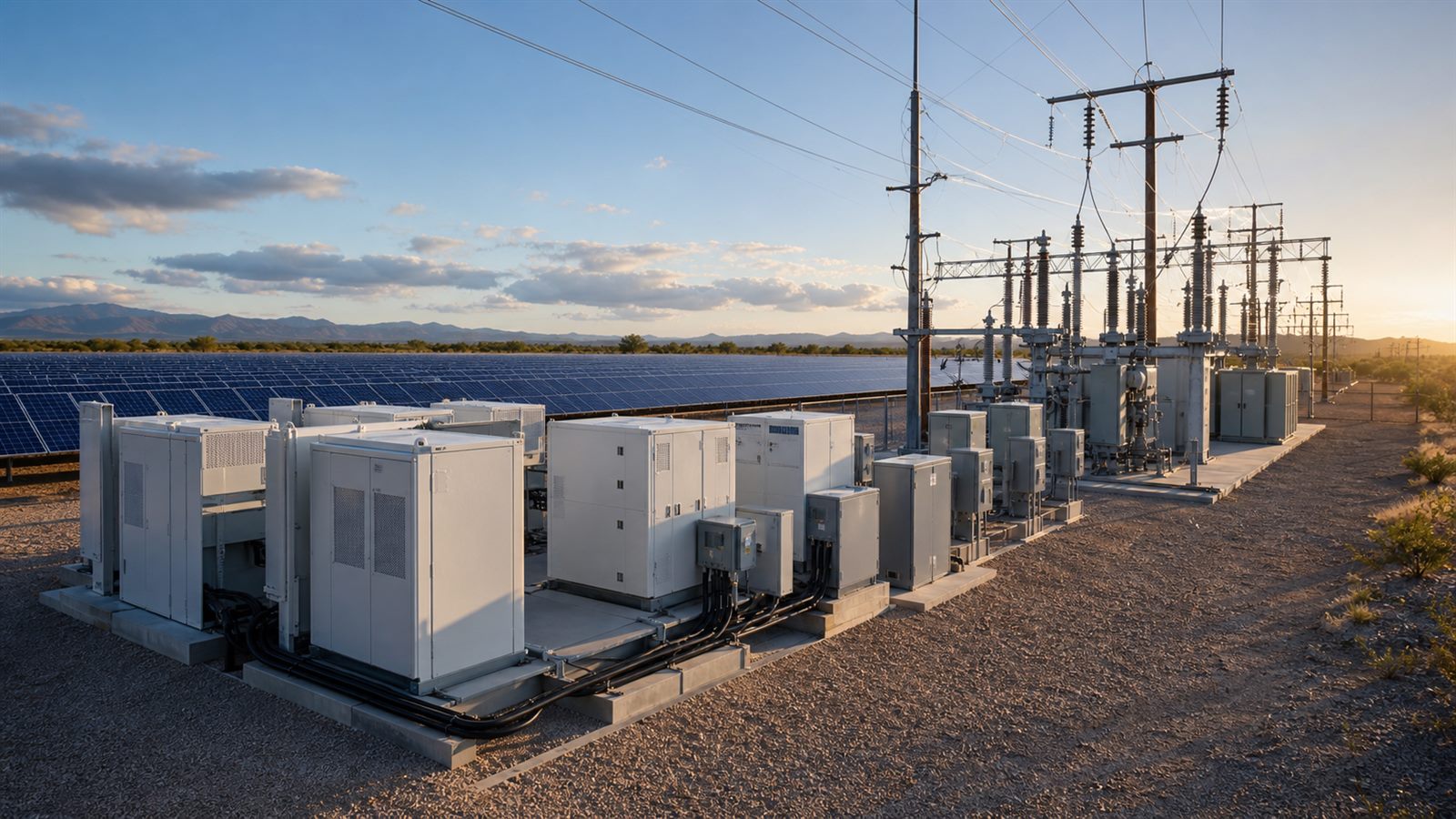
    Clean energy projects do not become power plants the moment a developer finds land, orders equipment, and signs a contract. They must connect to the grid. In the United States and Europe, that interconnection process has become one of the least glamorous but most important bottlenecks in the energy transition.

    An interconnection queue is the waiting room where proposed solar, wind, battery, and hybrid projects ask grid operators for permission to connect. The queue decides what studies must be done, what upgrades are needed, how much they may cost, and when a project can safely deliver electricity.

    The Queue Is a Reality Check

    Developers often announce large pipelines, but queued capacity is not the same as finished capacity. Many projects withdraw after studies reveal upgrade costs, financing changes, permitting delays, equipment problems, or stronger competition from other projects. A crowded queue can signal market interest and grid stress at the same time.

    Lawrence Berkeley National Laboratory’s interconnection queue research tracks the scale and composition of proposed generation and storage waiting for grid connection in the United States. The data repeatedly shows that queued capacity is much larger than annual buildout, especially for solar, wind, and battery storage.

    That gap does not mean the projects are fake. It means the grid has become a scarce platform. The bottleneck is not only panels, turbines, or batteries. It is studies, substations, transmission lines, protection equipment, engineering staff, and rules for deciding who pays for upgrades.

    Why Connection Studies Take Time

    Grid operators need to know whether a new project will overload lines, violate voltage limits, create protection problems, or require new equipment. They also need to study interactions among projects that are close together electrically. One project may look simple alone and complicated when hundreds of nearby requests arrive at once.

    Traditional study processes were built for a smaller number of large power plants. Today, many queues include solar farms, batteries, wind projects, hybrid plants, and repowering proposals in clusters. That creates a moving target. When one project withdraws, the cost allocation and technical assumptions for others may change.

    The problem connects directly to our earlier discussion of why grid software is becoming as important as power plants. Better modeling, data sharing, and workflow automation can reduce friction, but they cannot eliminate the need for engineering judgment.

    Batteries Change the Math

    Battery storage can help the grid by shifting energy, reducing peak stress, and providing fast services. It can also complicate interconnection studies because a battery can both consume and inject power. Its operating profile matters. A battery charging during low-demand periods may ease congestion, while one exporting during a local peak may worsen it.

    Hybrid projects, such as solar-plus-storage plants, make the question even more important. The physical equipment may have more combined capability than the project plans to export. Grid operators need enforceable operating limits, controls, and telemetry so the modeled behavior matches the real plant.

    This is one reason grid-forming inverters and advanced controls matter. The connection study of the future will increasingly examine not just how many megawatts a project can deliver, but how inverter-based resources behave during disturbances.

    Policy Reform Is Moving, but Results Take Time

    In the United States, the Federal Energy Regulatory Commission’s Order No. 2023 reforms generator interconnection procedures by shifting toward first-ready, first-served cluster studies, stricter readiness requirements, and penalties for certain study delays. The aim is to reduce speculative queue entries and speed serious projects.

    Reform does not instantly create transformers, transmission capacity, or experienced engineers. It changes the process by which projects are studied and filtered. The benefits depend on implementation by regional transmission organizations, utilities, developers, and regulators.

    Europe faces related issues through different market structures. Grid expansion, permitting, and connection rules vary by country, but the broad pattern is similar: clean energy deployment increasingly depends on the ability to connect new resources at the speed the market wants to build them.

    Transmission Is the Long Game

    Some congestion can be handled with software, storage, reconductoring, dynamic line ratings, or operational changes. Other bottlenecks require new transmission. Large lines take years to plan, permit, finance, and build. When many projects want to connect in a resource-rich area with limited export capacity, study reform alone cannot solve the physics.

    The International Energy Agency’s Electricity Grids and Secure Energy Transitions report warns that grids must expand and modernize to support electrification and renewable deployment. Interconnection queues are one visible symptom of that broader investment need.

    This also affects long-duration energy storage. Storage can reduce some local constraints, but its value depends on where it connects and what the surrounding network can actually deliver.

    What Developers Can Do

    Developers can improve their odds by choosing sites with realistic grid capacity, submitting mature projects, securing land control, designing flexible operating modes, and understanding likely network upgrade costs before entering the queue. Speculative applications can slow everyone down and may now face tougher readiness screens.

    Better project design also helps. A smaller interconnection request with firm controls may be more viable than a larger request that triggers expensive upgrades. Batteries can be configured to avoid exporting during constrained periods. Projects can share infrastructure when rules and commercial agreements allow it.

    None of that guarantees approval. Interconnection is still shaped by regional grid conditions, local opposition, equipment lead times, and policy decisions. But serious, well-documented projects are easier to study and less likely to collapse when costs become clear.

    What Consumers Should Watch

    For ordinary electricity users, interconnection queues are a useful reality check on clean-energy headlines. A region can have enormous proposed capacity and still struggle to bring projects online. The question is not simply how much clean generation has been announced, but how quickly viable projects are being connected.

    Watch queue withdrawal rates, average study times, transmission buildout, transformer availability, and whether storage projects receive operating rules that reflect their actual flexibility. Clean energy is increasingly a grid-delivery story. The panels and turbines matter, but the connection process decides when their electricity reaches the system.


    Sources and Further Reading

  • Perovskite-Silicon Tandem Solar Cells Have Entered the Reliability Phase

    Perovskite-Silicon Tandem Solar Cells Have Entered the Reliability Phase

    Perovskite-silicon tandem solar cells have already passed an important laboratory milestone: they can convert more sunlight into electricity than a conventional single-junction silicon cell. The next question is harder. Can manufacturers turn that efficiency into large modules that survive heat, moisture, partial shade, voltage stress, transport, and decades outdoors?

    That shift from record efficiency to reliability is a sign of progress, not disappointment. Researchers now have enough performance to investigate failure modes that matter in real installations. Recent work on reverse-bias damage shows how a tandem cell can be redesigned for a condition as ordinary as one shaded section of a solar panel. It also illustrates why a promising cell is not yet the same thing as a bankable module.

    Two Absorbers Use More of the Solar Spectrum

    A silicon solar cell converts only part of the energy in sunlight efficiently. Higher-energy photons lose some energy as heat, while lower-energy photons may pass through without creating useful current. A tandem device stacks absorbers with different bandgaps so each handles a different portion of the spectrum.

    In a perovskite-silicon tandem, a tunable perovskite top cell captures higher-energy light and silicon underneath uses more of the lower-energy light. The US Department of Energy’s perovskite research overview notes that this architecture can move beyond the practical ceiling facing a single absorber. Small-area laboratory tandems have reached efficiencies around the mid-30-percent range.

    Higher efficiency can produce more power from the same panel area. That matters where roof space, land, wiring, racks, installation labor, or permitting costs dominate. It does not automatically make a module cheaper, but it can spread those balance-of-system costs across more watts.

    The Top Cell Adds New Failure Paths

    Silicon modules benefit from decades of manufacturing experience and field data. Metal-halide perovskites are younger and chemically more sensitive. Their composition and interfaces can change under light, heat, moisture, oxygen, and electrical stress. Ions can move through the material, contacts can react, and small defects can grow.

    The top cell also has to transmit the light intended for silicon. Every transparent contact and transport layer must balance electrical conduction, optical loss, adhesion, and stability. A material that improves a one-centimeter cell may be difficult to coat uniformly over a full module.

    A 2025 Nature Photonics review summarized the field around three linked challenges: efficiency, stability, and scalability. Solving one without the others is not enough. A record device made with a slow laboratory process may offer little guidance for a production line, while a durable coating is not useful if it absorbs too much light.

    Partial Shade Creates a Serious Electrical Test

    When cells are connected in series inside a module, current has to pass through all of them. If one cell is shaded while its neighbors remain illuminated, the shaded cell can be driven into reverse bias. Instead of producing power, it is forced to dissipate energy. That can create hot spots and damage vulnerable layers.

    A 2026 Nature Energy study investigated this problem in monolithic perovskite-silicon tandems. The researchers linked abrupt breakdown to an electric-field discontinuity at an interface and introduced graded dielectric layers to smooth that field. In their tests, tandem devices retained more than 92 percent of initial efficiency after 1,000 hours at a reverse bias of minus 15 volts. A large-area multicell string reached 31 percent efficiency and retained more than 90 percent after 1,000 hours of shading stress.

    Those are research results under defined test conditions, not a 25-year field warranty. They are valuable because they connect a measurable failure mechanism to a design change and test it at cell and string levels. That is the kind of evidence required to move from impressive output toward predictable behavior.

    Scaling Changes the Manufacturing Problem

    The best small cells can be made with precise deposition, carefully selected areas, and extensive process control. A factory must coat large surfaces quickly, with high yield and minimal variation. Pinholes, thickness changes, dust, imperfect edges, and nonuniform composition can all reduce module performance.

    Manufacturers must also connect cells without losing too much active area, encapsulate moisture-sensitive layers, and design around thermal expansion. The DOE identifies sheet-to-sheet and roll-to-roll coating as possible production approaches, but each requires stable materials and repeatable films. A process that works on polished laboratory silicon may need substantial changes for the textured wafers used by industry.

    This is similar to the challenge facing enhanced geothermal systems: the underlying physics can be convincing before the complete engineered system proves reliable and economical at scale.

    Efficiency Has Value, but Yield and Lifetime Set the Economics

    A National Renewable Energy Laboratory techno-economic analysis found that module efficiency and manufacturing scale can both lower cost per watt. That framing matters. A highly efficient module made with low factory yield, expensive materials, or frequent replacement may not beat mature silicon.

    Developers therefore need evidence for energy yield over different climates, degradation rates, repair and replacement assumptions, and end-of-life handling. Lead is used in many high-performing perovskite compositions, so robust encapsulation and credible recycling or recovery plans matter alongside electrical performance. Buyers and project financiers will also expect standardized qualification tests and long-term outdoor data.

    Tandems Still Depend on the Rest of the Grid

    More efficient panels do not remove the need for transmission, storage, inverters, and flexible demand. Solar output still varies with weather and time of day. Technologies such as grid-forming inverters and long-duration energy storage address different parts of that system.

    The value of tandem modules will therefore depend on where they are deployed. Space-constrained roofs and high-cost installations may reward efficiency sooner than utility projects with abundant land. Harsh climates may demand a longer reliability record. There will not be one adoption timetable for every market.

    What to Watch Next

    Watch for certified large-area module efficiency rather than isolated cell records, multi-year outdoor testing across climates, high-yield manufacturing lines, and warranties backed by operating data. Reverse-bias resilience, damp heat, thermal cycling, ultraviolet exposure, and mechanical loading should be evaluated together rather than as separate laboratory victories.

    Perovskite-silicon tandems have earned attention because their efficiency advantage is real. Their next breakthrough will look less dramatic: repeatable modules, transparent test results, predictable degradation, and factories that can make the same good product thousands of times.

    Sources and Further Reading

  • Virtual Power Plants Turn Small Energy Devices Into Grid Capacity

    Virtual Power Plants Turn Small Energy Devices Into Grid Capacity

    A virtual power plant does not look like a conventional power station. It may consist of thousands of home batteries, electric vehicles, smart thermostats, water heaters, solar systems, and flexible commercial loads. Software coordinates those small resources so that the group can reduce demand, supply energy, or provide another grid service at a useful scale.

    The concept matters because electricity systems are adding variable generation and new loads while transmission and large power projects can take years to build. Many flexible devices already exist behind customer meters. Aggregating them could turn scattered consumer equipment into grid capacity, but only if control, measurement, compensation, cybersecurity, and customer choice are handled well.

    Aggregation Turns Small Devices Into One Resource

    A single thermostat or home battery is too small for a regional grid operator to dispatch directly. An aggregator combines many devices, forecasts how much flexibility is available, submits an offer or follows a utility signal, and translates the requested response into instructions for individual devices.

    The group is virtual because the equipment remains distributed. It is a power plant only in the functional sense that it can provide a measurable service. Devices do not need to be identical, but the aggregator needs models of their limits, communications, current state, and owner preferences.

    This builds on the broader shift toward software-defined grid operations. The physical devices still deliver energy or reduce consumption; software makes their collective behavior predictable enough to use.

    Demand Flexibility Can Be as Valuable as Generation

    During a short peak, reducing electricity use can balance the system just as adding generation would. A VPP may slightly adjust air-conditioning setpoints across many buildings, delay water heating, or pause selected charging sessions. Each change can be small while the total response is significant.

    Timing flexible use also helps absorb renewable output that might otherwise be curtailed. Water can be heated, batteries charged, or buildings pre-cooled when electricity is abundant, then consumption can fall later. This is different from asking customers to go without energy; the objective is to move a service within an acceptable window.

    Batteries Can Both Charge and Discharge

    Behind-the-meter batteries can absorb power when supply is plentiful and discharge during a peak. The aggregator has to preserve enough charge for the owner’s backup or bill-management goals while accounting for inverter power, efficiency, temperature, and battery limits.

    Electric vehicles add a large flexible load. Managed charging can shift when energy enters the battery without sending energy back to the grid. Bidirectional systems can also discharge, as our guide to vehicle-to-grid charging explains. Availability is uncertain because a car may leave, so the VPP needs forecasts and reserves rather than assuming every enrolled vehicle is plugged in.

    A VPP Is Not the Same as a Microgrid

    A microgrid is a defined electrical area that can often separate from the wider grid and operate as an island. A virtual power plant can coordinate resources spread across many unrelated circuits and usually remains dependent on the larger network.

    The two concepts can overlap. A microgrid may participate in a VPP when connected, and a VPP may coordinate several microgrids. The distinction matters during an outage: enrollment in a virtual program does not automatically mean a home or community can operate independently.

    Grid Services Need Measurement and Baselines

    An aggregator must show that a response occurred. Battery output can be measured directly, but demand reduction is compared with an estimate of what the customer would otherwise have used. That counterfactual baseline can be difficult on a hot day, during a holiday, or when household routines change.

    Fast services may need near-real-time telemetry and tight performance requirements. Capacity programs may focus on availability during a defined peak window. Energy markets measure delivered megawatt-hours. A VPP should not be described by one headline capacity figure without explaining the duration, conditions, and service behind it.

    Market Rules Are Catching Up

    In the United States, Federal Energy Regulatory Commission Order No. 2222 directs regional wholesale market operators to remove barriers that prevent distributed-energy aggregations from participating. FERC’s updated explainer shows that implementation schedules differ across regional organizations and can extend through the second half of this decade.

    The rule does not eliminate local responsibilities. Distribution utilities and retail regulators still manage interconnection, local network constraints, consumer programs, and other matters within their authority. A resource that helps the regional system can still overload a neighborhood transformer if local coordination is poor.

    The Distribution Grid Sets Real Limits

    Two groups with the same total battery capacity may have very different usefulness depending on where they are connected. Power flows, voltage, transformer loading, and feeder constraints matter. An aggregator needs enough location information to avoid commanding a response that worsens a local condition.

    Coordination among the regional operator, aggregator, utility, and devices is technically and institutionally difficult. Commands must be timely, but each organization should receive only the data it needs. Common interfaces and tested fallback behavior become more important as fleets grow.

    Customers Need a Clear Bargain

    A participant should know which device can be controlled, how often, within what comfort or mobility limits, how compensation is calculated, and how to opt out. A thermostat program that silently overrides an owner’s needs will not remain trusted, even if its grid performance is strong.

    Benefits should also be available beyond households able to buy premium batteries and new vehicles. A National Renewable Energy Laboratory report on VPPs and energy justice highlights questions about access, compensation, data, community engagement, and whether program design shifts costs to nonparticipants.

    Programs can include rented homes, multifamily buildings, low-cost smart controls, community resources, and commercial loads. Equity is not automatic simply because the resource is distributed.

    Cybersecurity and Privacy Are Operational Requirements

    A VPP connects large numbers of internet-accessible devices to systems that influence electricity demand and supply. Authentication, encrypted communications, least-privilege access, secure updates, monitoring, and incident response are necessary. A compromised aggregator could create a coordinated disturbance rather than an isolated device failure.

    Fine-grained energy data can reveal occupancy and routines. Programs should minimize collection, define retention, separate billing from operational data where possible, and explain third-party access. Reliability does not require collecting every detail about a household indefinitely.

    Economics Depend on Reliable Performance

    The U.S. Department of Energy’s 2025 VPP Liftoff update argues that coordinated distributed resources can add capacity faster than many conventional alternatives and can defer some infrastructure spending. Those benefits are potential system values, not guaranteed savings for every project.

    Aggregators face customer acquisition, device integration, communications, support, measurement, market, and financing costs. Hardware degrades and participants leave. Revenue may come from several services whose rules or availability overlap. A durable business needs conservative availability forecasts and transparent sharing of value with customers.

    Limits and What to Watch Next

    Virtual power plants cannot replace every generator, transmission line, or long-duration storage system. Many devices can respond only briefly, and customer needs take priority. Communications can fail during the extreme events when flexibility is most valuable. Performance has to be tested under real conditions.

    Watch regional implementation of Order No. 2222, open device interfaces, distribution-level coordination, independent performance data, and program designs that make compensation understandable. Also watch how VPPs interact with grid-forming inverter capabilities. One coordinates many assets over seconds to hours; the other can shape electrical behavior on much faster timescales.

    The strongest VPP will not be the one with the largest enrollment announcement. It will be the one that repeatedly delivers a defined service while respecting device limits and customer choices.

    Sources and Further Reading

  • Grid-Forming Inverters Could Give Renewable Power a Stronger Backbone

    Grid-Forming Inverters Could Give Renewable Power a Stronger Backbone

    Solar panels, wind turbines, and batteries produce or store useful energy, but most connect to the power system through electronic inverters. Those inverters decide how electricity is synchronized and delivered. As inverter-based resources supply a larger share of power, a once-obscure control question becomes central: which devices establish the voltage and frequency that everyone else follows?

    Most deployed inverters are grid-following. They measure an existing electrical waveform and inject current in step with it. Grid-forming inverters are designed to establish and regulate that waveform themselves. They could help renewable-heavy grids maintain stability and restart after an outage, but the technology still needs common specifications, realistic models, and evidence from larger field deployments.

    Traditional Generators Provide a Physical Reference

    Large power stations commonly use synchronous generators: spinning machines whose electrical behavior is directly tied to grid frequency. Their rotating mass stores kinetic energy. When supply and demand suddenly become unbalanced, that inertia slows the initial change in frequency and gives controls time to respond.

    A power-electronic inverter has no heavy rotor coupled to the grid. It can respond very quickly, but its behavior comes from sensors, control software, semiconductor switches, and the energy source behind it. That flexibility is powerful. It also means the grid cannot assume every connected resource will naturally behave like a conventional machine.

    The transition is broader than generation. Batteries, electric vehicles, and many industrial systems also use inverters. The software layer of the power grid increasingly determines how physical energy assets respond in milliseconds.

    Grid-Following Control Needs Something to Follow

    A grid-following inverter observes voltage and frequency, synchronizes with them, and delivers commanded current. This works well when enough conventional generators or other strong sources establish a stable reference. During a severe disturbance, the inverter may reduce output or disconnect to protect equipment and avoid making the event worse.

    Problems can emerge when a local system contains many grid-following devices and too few sources able to establish the waveform. Each controller is looking for a reference that has become weak or unstable. Interactions among control loops can create oscillations or other behavior that planning tools built around conventional generators do not represent accurately.

    This does not mean a particular renewable percentage automatically makes a grid unstable. The outcome depends on location, network strength, control settings, protection, transmission, operating conditions, and the mix of resources. Grid operators need detailed studies rather than a simple threshold.

    Grid-Forming Inverters Establish Voltage and Frequency

    A grid-forming controller acts as a controllable voltage source. It can set a local waveform and adjust its output as load changes. Multiple grid-forming devices can share power without waiting for a conventional generator to provide every reference function.

    Different control methods exist. Some reproduce aspects of a synchronous machine in software, while others use droop control or more advanced strategies. The label grid-forming therefore describes a family of capabilities rather than one identical algorithm. Specifications must define the required response under disturbances, faults, and changing network conditions.

    The energy behind the inverter still matters. A battery can rapidly inject or absorb real power within its charge and power limits. A solar plant can provide some upward response only if it is operating below available output or paired with storage. Control software cannot create energy that the connected resource does not have.

    Black Start Is a Valuable Capability

    After a widespread blackout, sections of the power system need a source that can start without relying on an already energized grid. Conventional black-start plans often use hydroelectric units, diesel generators, or other plants able to establish local voltage before reconnecting larger resources.

    The U.S. Department of Energy says grid-forming inverters can allow inverter-based resources to help restart a downed grid. A battery-backed system is particularly useful because it can establish a waveform immediately, energize selected equipment, and support other generation as the network is rebuilt.

    That capability must be planned and tested. Energizing transformers and transmission lines creates inrush current and voltage challenges. Operators need communications, sequencing, reserve energy, protection settings, and a path for synchronizing separate islands. A laboratory feature does not become a regional restoration plan simply by enabling a setting.

    Protection Must Work With Different Fault Behavior

    Traditional protection schemes often detect large fault currents from synchronous machines. Inverters are limited by semiconductor ratings and may provide a smaller, tightly controlled current during a fault. Relays that expect an old fault signature can respond too slowly or incorrectly.

    Grid-forming controls must also remain stable while voltage collapses and recovers. Requirements for fault ride-through, current limiting, and transition between operating modes need to fit the network. The National Laboratory of the Rockies identifies protection, voltage control, frequency control, fault ride-through, and modeling as linked research areas.

    This is a system problem. A control that performs well alone may interact poorly with another manufacturer’s inverter, a conventional plant, or a series-compensated transmission line. Hardware-in-the-loop tests and staged field demonstrations can expose those interactions before deployment at scale.

    Standards and Models Need to Catch Up

    Planning models simplify equipment behavior so utilities can study thousands of possible disturbances. Grid-forming projects need models that are accurate enough to reproduce fast control interactions without revealing every proprietary implementation detail. They also need parameters that can be validated against real devices.

    The DOE-backed Universal Interoperability for Grid-Forming Inverters Consortium, or UNIFI, brings laboratories, universities, utilities, system operators, and manufacturers together around common guidelines. Its work includes modeling, controls, hardware prototypes, validation, standards, and a planned 20-megawatt demonstration.

    Interoperability is important because a future grid will not contain one type of inverter. It will mix grid-following and grid-forming resources from many suppliers with synchronous generators and flexible loads. Operators need predictable behavior at the points where those systems meet.

    Batteries Are Natural Early Hosts

    Battery plants are well suited to early grid-forming projects because they can change power quickly and operate when solar or wind output is unavailable. They may provide frequency response, voltage support, reserves, or black-start service while also shifting energy across time.

    Those services compete for battery capacity and inverter headroom. A plant scheduled to discharge at its maximum has less room to increase output. A nearly empty battery cannot sustain a long restoration event. The economic schedule must reserve enough capability for the reliability service being promised.

    This trade-off connects to long-duration energy storage. Grid-forming control addresses how power behaves from moment to moment, while storage duration determines how long the energy source can maintain support. The two capabilities are related but not interchangeable.

    Limits and Open Questions

    Grid-forming inverters are not a universal replacement for transmission, reserves, protection upgrades, or sound operating practice. A weak grid may need several changes at once. Poorly coordinated grid-forming controls can create new interactions, and requirements suitable for an island microgrid may not transfer directly to a continental interconnection.

    Costs also depend on whether capability is designed into new equipment or added to an existing plant. Owners need a market or contract that values the service, while system operators need tests that verify it remains available after firmware and parameter changes.

    What to Watch Next

    Watch the UNIFI demonstration, utility interconnection requirements, validated public models, and evidence from systems operating with high instantaneous shares of inverter-based generation. Strong reports will describe fault response, black-start sequences, mixed-vendor behavior, and the conditions under which controls were stable.

    Also watch coordination with flexible resources such as bidirectional electric vehicles. Millions of small inverters may eventually support the grid, but only if communication, aggregation, customer needs, and protection are engineered as carefully as the control inside each device.

    Sources and Further Reading

  • Enhanced Geothermal Systems Could Bring Underground Heat to More Places

    Enhanced Geothermal Systems Could Bring Underground Heat to More Places

    Geothermal power is attractive because underground heat is available day and night. Conventional projects, however, depend on rare places where heat, water, and naturally permeable rock occur together. Enhanced geothermal systems aim to widen the map by engineering the missing permeability and circulating fluid through hot rock.

    The concept is often described as next-generation geothermal, but it is not one machine or a guaranteed resource. It combines deep drilling, reservoir characterization, controlled stimulation, well construction, fluid management, and surface power equipment. Recent field work is making those pieces more repeatable, while cost, seismic risk, and long-term reservoir performance remain decisive.

    How an Enhanced Geothermal System Works

    A natural hydrothermal resource needs heat, fluid, and pathways that allow the fluid to move. In many regions, rock at depth is hot but does not contain enough connected fractures or water for commercial production. An enhanced geothermal system, usually shortened to EGS, tries to create or improve those pathways.

    Engineers first build a detailed model of temperature, rock type, stress direction, existing fractures, and underground fluids. They drill an injection well and introduce water under controlled conditions to open or connect a fracture network. A production well intersects that network. Water travels down, absorbs heat from the rock, and returns to the surface, where it can produce steam or heat a separate working fluid that drives a turbine. The geothermal water is then reinjected.

    The physical idea is simple; the reservoir engineering is not. The wells must connect effectively without losing too much fluid. Flow must be distributed across enough hot rock to deliver useful heat. Operators must monitor pressure and small seismic events while avoiding pathways that cool too quickly or communicate with unwanted formations.

    Why Drilling Cost Matters So Much

    Deep wells are a major part of a geothermal project’s capital cost, and hard, hot rock is difficult on drilling equipment. The US Department of Energy’s Frontier Observatory for Research in Geothermal Energy, or FORGE, is a field laboratory in Utah built to test drilling, stimulation, monitoring, and reservoir methods in a transparent research setting.

    DOE reports that FORGE reduced on-bottom drilling time at an equivalent depth of 6,000 feet from 440 hours on an early well to 60 hours on a later one. That result came from improved drilling practices and equipment, not from making every part of a geothermal project seven times cheaper. It is still important because faster, more predictable drilling can reduce one of the largest uncertainties in project development.

    FORGE also reports creating a reservoir from scratch and testing multi-zone stimulation in hot granite. The site’s public data repository contained more than 133 terabytes of drilling, well-log, stimulation, and microseismic data as of May 2026. Shared field data can help other researchers compare methods without repeating every experiment.

    What Makes EGS Different From Energy Storage

    An EGS plant is a source of heat and electricity, not a battery. If the reservoir is engineered and managed successfully, it can operate for long periods and provide power when wind and solar output is low. That makes geothermal a possible source of firm generation in a system that also needs the flexibility described in our overview of storage, grids, and materials.

    Firm does not mean inflexible. Some geothermal plants can adjust output, but operating strategy depends on the reservoir, equipment, contracts, and grid. A project might prioritize steady generation, while another could vary production within limits. Good grid integration therefore still depends on forecasting, transmission, markets, and the control systems discussed in our guide to grid software.

    Induced Seismicity Requires Active Management

    Changing pressure in fractured rock can cause small earthquakes, a phenomenon called induced seismicity. Most monitored events may be too small to feel, but larger events can damage public confidence and stop a project. The risk varies with local geology, faults, injection strategy, and operating pressure.

    Developers need baseline seismic surveys, dense monitoring, clear operating thresholds, and a response plan that can reduce or halt injection. Siting decisions must consider nearby communities and infrastructure, not only temperature. Transparent reporting matters because residents are being asked to accept an underground industrial operation whose behavior cannot be seen directly.

    Water use is another local question. A closed circulation loop recycles fluid, but projects still need water for drilling, reservoir creation, losses, and plant operations. The amount and source depend on the design. Air-cooled surface systems may reduce some water demand while changing cost and performance.

    The Reservoir Can Change Over Time

    Heat extraction cools the rock near active flow paths. If water takes a short route between wells, production temperature may decline faster than expected. If fractures close, clog, or fail to connect, flow may fall. Long-term success depends on creating a large effective heat-exchange volume and managing it with real measurements.

    Fiber-optic sensing, tracers, pressure data, temperature logs, and microseismic monitoring can reveal how the reservoir responds. Operators may adjust flow between zones or add wells. These tools improve visibility, but they do not eliminate geological uncertainty. Commercial lenders and utilities will want years of dependable operating evidence, not only a successful stimulation test.

    Where EGS May Fit First

    Early commercial projects are likely to favor locations with strong heat resources, experienced drilling workforces, available transmission, manageable water access, and supportive permitting. Industrial heat may be another use where temperatures and customers align, although the economics differ from electricity generation.

    Techniques adapted from oil and gas can accelerate progress, including directional drilling, improved bits, zonal isolation, and subsurface monitoring. The transfer is not automatic. Geothermal wells face high temperatures, corrosive fluids, and the need to sustain heat exchange rather than extract hydrocarbons. Materials and well integrity remain important, connecting the field to the broader role of advanced materials in frontier technology.

    What to Watch Next

    Watch for independently reported drilling cost, stable multi-year flow and temperature, verified seismic performance, water use, and capacity delivered to the grid. DOE’s announced FORGE II effort is intended to test EGS concepts in another geological setting, an important step because success at one field site does not prove universal repeatability.

    Enhanced geothermal systems could make underground heat available in far more places than conventional geothermal. The opportunity is substantial precisely because the engineering challenge is substantial. The field will earn confidence through repeatable reservoirs, transparent monitoring, and plants that operate reliably beyond the demonstration stage.

    Sources and Further Reading

  • Advanced Materials Are Quietly Driving Frontier Technology

    Advanced Materials Are Quietly Driving Frontier Technology

    Advanced materials rarely receive as much attention as AI models or rockets, but they quietly determine what technology can do. Better materials can make devices lighter, stronger, faster, safer, more efficient, or more durable.

    Why It Matters

    Many frontier technologies are limited by physical properties: conductivity, heat tolerance, energy density, corrosion resistance, flexibility, weight, and manufacturability. Materials innovation can unlock entire product categories.

    Where It Shows Up

    Materials matter in batteries, semiconductors, solar cells, aircraft, medical implants, sensors, robotics, water systems, and construction. The challenge is moving from lab samples to reliable, affordable manufacturing.

    What to Watch

    • Battery materials that reduce cost or improve safety
    • Thermal materials for chips and data centers
    • Lightweight composites for transport and robotics
    • Recyclable or bio-based materials for sustainability

    The future often looks digital, but it is still built from matter. Materials science is one of the quiet engines of frontier technology.

    Category: Clean Energy. This article is part of Frontier Technology Portal’s plain-English guide to the technologies shaping the next decade.

  • Grid Software Is Becoming as Important as Power Plants

    Grid Software Is Becoming as Important as Power Plants

    The electric grid is becoming more dynamic. Power no longer flows only from large plants to passive customers. Solar panels, batteries, electric vehicles, smart appliances, and flexible industrial loads are changing how the system behaves.

    Why It Matters

    This makes software essential. Grid operators, utilities, and energy companies need better forecasting, control, monitoring, pricing, and cybersecurity to keep electricity reliable and affordable.

    Where It Shows Up

    Grid software helps with demand response, virtual power plants, outage detection, interconnection studies, renewable forecasting, battery dispatch, EV charging coordination, and asset management.

    What to Watch

    • Virtual power plant programs that aggregate many small devices
    • AI-assisted forecasting and maintenance tools
    • Cybersecurity for operational technology
    • Faster interconnection queues for clean energy projects

    The energy transition is not only hardware. The grid is becoming a software-coordinated platform, and that platform must be secure, reliable, and understandable.

    Category: Clean Energy. This article is part of Frontier Technology Portal’s plain-English guide to the technologies shaping the next decade.

  • Long-Duration Energy Storage Explained

    Long-Duration Energy Storage Explained

    Short-duration batteries are useful for balancing daily electricity demand, but some clean energy challenges last longer than a few hours. Long-duration energy storage aims to provide power across extended periods when generation is low or demand is high.

    Why It Matters

    As grids add more solar and wind, flexibility becomes more valuable. Storage can reduce curtailment, support reliability, and help avoid fossil backup during longer gaps.

    Where It Shows Up

    Technologies include flow batteries, thermal storage, compressed air, gravity systems, hydrogen, advanced chemical batteries, and pumped hydro. Each option has trade-offs in cost, geography, efficiency, scale, and deployment speed.

    What to Watch

    • Projects that prove economics at grid scale
    • Materials availability and manufacturing capacity
    • Integration with renewable generation and transmission
    • Policies that reward reliability and flexibility

    There may not be one winning storage technology. Different grids need different tools, and long-duration storage will likely be a portfolio.

    Category: Clean Energy. This article is part of Frontier Technology Portal’s plain-English guide to the technologies shaping the next decade.

  • Clean Energy’s Next Bottleneck Is Storage, Grids, and Materials

    Clean Energy’s Next Bottleneck Is Storage, Grids, and Materials

    Clean energy discussions often focus on solar panels, wind turbines, and electric vehicles. Those technologies are important, but the next stage of the energy transition depends heavily on storage, grid capacity, materials, software, and permitting.

    Generating clean electricity is only part of the challenge. The power must be delivered where it is needed, when it is needed, at a price consumers and businesses can accept.

    Why Storage Matters

    Solar and wind output changes with weather and time of day. Batteries and other storage technologies help balance supply and demand. Short-duration batteries can smooth daily peaks. Long-duration storage may help with seasonal or multi-day gaps, though economics and deployment are still developing.

    The Grid Is the Hidden Platform

    The electrical grid was not originally built for millions of distributed energy sources, electric vehicles, smart devices, and two-way power flows. Modernization requires transmission lines, transformers, sensors, software, cybersecurity, demand response, and better interconnection processes.

    Materials and Manufacturing

    Batteries, motors, solar panels, and grid hardware depend on supply chains for lithium, nickel, copper, rare earth elements, silicon, steel, and advanced chemicals. Recycling, alternative chemistries, and domestic manufacturing will shape cost and resilience.

    What to Watch

    • Battery chemistry improvements and recycling systems.
    • Grid-scale storage projects.
    • Virtual power plants and demand response.
    • Advanced nuclear and geothermal development.
    • Permitting reform and transmission expansion.

    Clean energy is not one invention. It is a system upgrade. The winners will be technologies that integrate well with the grid, supply chains, regulation, and real customer demand.