
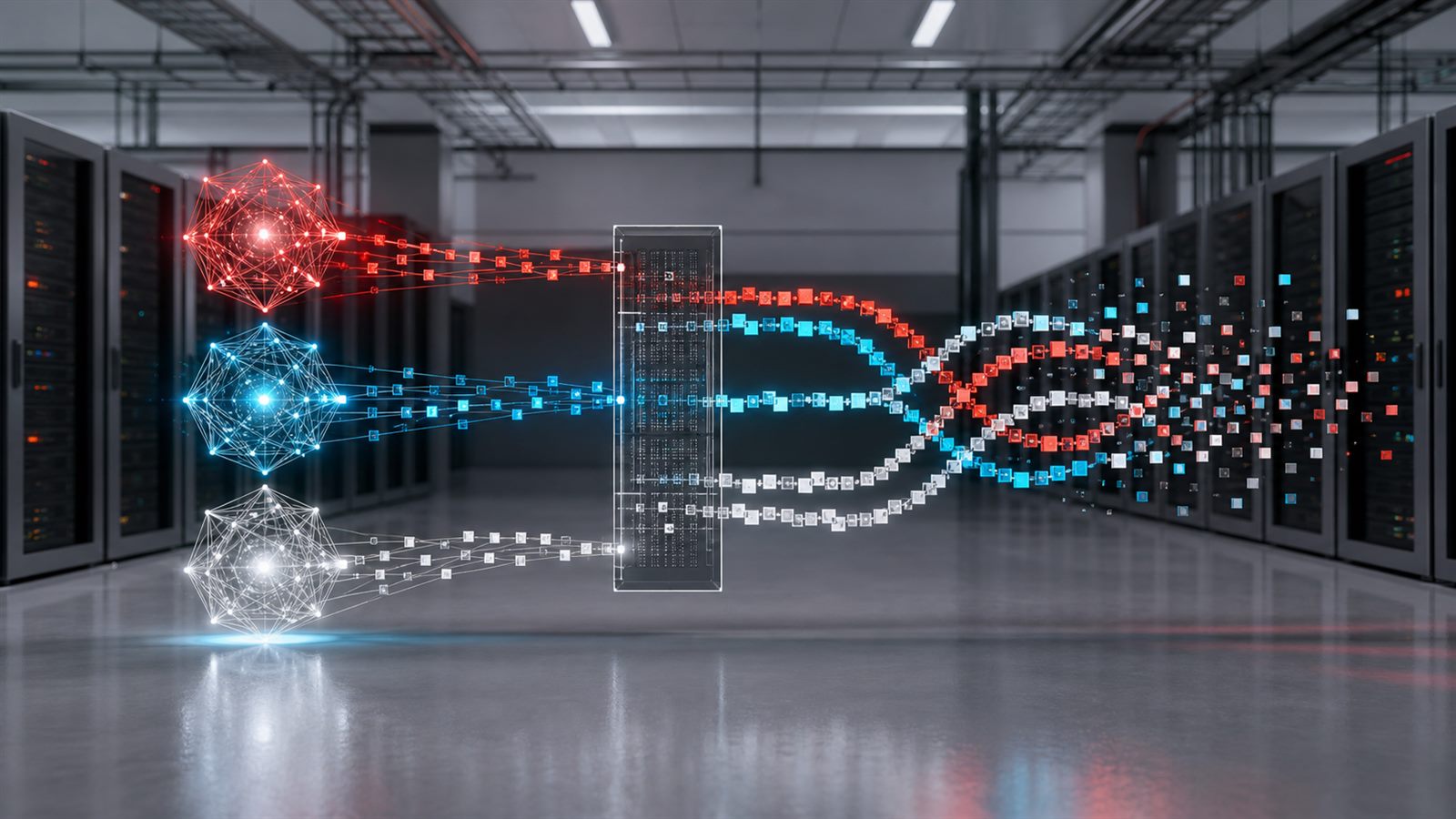
AI agents are being asked to do more than answer questions. They may search company systems, call software tools, delegate work to specialized agents, wait for long-running tasks, and return structured results. That makes interoperability a practical problem. An agent built by one vendor may need to use tools exposed by another platform and cooperate with a third agent that has a different model, framework, and internal design.
Two open protocols are helping define this emerging stack. The Model Context Protocol, or MCP, standardizes how an AI application connects to tools, data, and other context. The Agent2Agent protocol, or A2A, focuses on communication between independent agents. Together they offer useful building blocks, but they do not make an agent trustworthy, accurate, or safe by themselves.
Why agents need protocols
Traditional software integrations usually connect known services through documented application programming interfaces. Agent systems add uncertainty. A request may become a multi-step task, the result may arrive later, and an agent may need to explain what it can do before another system decides whether to delegate work to it. If every platform invents a private method for those interactions, organizations face repeated integration work and stronger vendor lock-in.
A shared protocol gives developers a common envelope for discovery, requests, results, errors, and lifecycle events. It does not standardize the intelligence inside an agent. Instead, it can make the boundary around that intelligence easier to connect, inspect, and replace. This is similar to the way web protocols allow many kinds of servers and browsers to communicate without making every website identical.
MCP connects an AI application to capabilities
The official MCP architecture describes a host, clients, and servers. The host is the AI application. It creates a separate client connection for each MCP server, while a server exposes capabilities such as tools, resources, or prompts. A tool might query a database, create a ticket, or call an external service. A resource can provide context such as a file or record.
This separation matters because the host remains the coordinator. It can decide which servers are available, what information is passed to them, and when a user must approve an action. MCP focuses on context exchange and capability access; it does not dictate how the host uses a language model or how the model reasons about the returned data.
A2A connects independent agents
A2A addresses a different boundary. Its specification is designed for independent, potentially opaque agent systems to discover capabilities, exchange messages, manage tasks, and deliver artifacts without sharing their private memory or internal tools. An agent can publish an Agent Card describing its service, supported input and output modes, skills, and security requirements. Another agent can then decide whether it knows how to communicate with that service.
The task model is especially important. Some work can finish in one response, while other work needs status updates, streaming, cancellation, or a later result. A shared task lifecycle gives systems a more consistent way to handle those cases. The A2A documentation describes MCP and A2A as complementary: MCP is generally for connecting agents to tools and resources, while A2A is for connecting agents to other agents.
What interoperability could change for users
For ordinary users, protocols are mostly invisible. Their value appears when software becomes easier to combine. A travel agent could ask a specialized scheduling agent for available times, use a mapping tool through MCP, and return one coordinated plan. A support agent could delegate a technical diagnosis to a product agent without requiring both systems to use the same model provider.
Open boundaries may also make systems more replaceable. A business could change one specialist agent without rebuilding every connection around it. That possibility is relevant to the operational governance discussed in Critical Infrastructure AI Needs Operational Risk Management, Not Just Model Benchmarks: organizations need to understand not only a model, but also every connected component and the decisions flowing between them.
Interoperability is not the same as trust
A protocol can describe how to send a request, but it cannot prove that the receiving agent is competent or honest. Capability descriptions are claims made by a service. They still need identity, authentication, authorization, testing, monitoring, and contractual accountability. A standards-compliant agent can return a poor answer, mishandle sensitive data, or request more access than it needs.
The same distinction appears in media provenance. As AI Content Provenance Is Useful, but It Is Not a Lie Detector explains, verifiable history does not establish truth. Likewise, a valid protocol exchange establishes a technical conversation, not the quality of the work produced inside it.
Security has to be designed at every boundary
Agent connections can reach files, accounts, databases, and external services, so permissions must be narrow. MCP’s architecture keeps separate client connections to servers, which can support clearer isolation, but implementers still need consent controls and secure credential handling. Official MCP security guidance also discusses risks such as token passthrough, server-side request forgery, session hijacking, and compromised local servers.
A2A similarly relies on standard web security mechanisms rather than inventing a universal trust system. Production services need encrypted transport, authenticated requests, server-side authorization, input validation, rate limits, and careful handling of push notifications. Delegation should not silently transfer all of the calling agent’s authority. Each service should receive only the access required for the specific task.
The hard problems remain above the protocol
Even perfectly compatible agents can misunderstand each other. Two services may use the same JSON fields but interpret a business concept differently. They may disagree about when a task is complete, how confidence is represented, or which evidence belongs in a result. Long chains also add latency, cost, and more places for partial failure.
Evaluation therefore has to include the whole workflow. The article Synthetic Data Can Train AI, but Reality Must Stay in the Loop makes a related point: internally generated signals are not enough. Multi-agent systems need real tasks, adversarial tests, failure recovery, audit logs, and human review at consequential decision points.
What to watch next
The next phase will be less about announcing protocols and more about implementation quality. Watch for stable versioning, compatibility tests, portable identity, granular authorization, clear cancellation behavior, and observability that shows which agent or tool produced each part of a result. Independent conformance testing will matter more as vendors make broader interoperability claims.
A2A and MCP are promising because they define different layers instead of pretending one interface can solve everything. They can reduce integration friction and make agent systems more modular. The sober conclusion is that open communication is only the first layer. Trust still has to be earned through controls, evidence, and reliable operation.
Sources: A2A Protocol specification; Linux Foundation: Agent2Agent Protocol Project; Model Context Protocol architecture; MCP security best practices.
Leave a Reply