
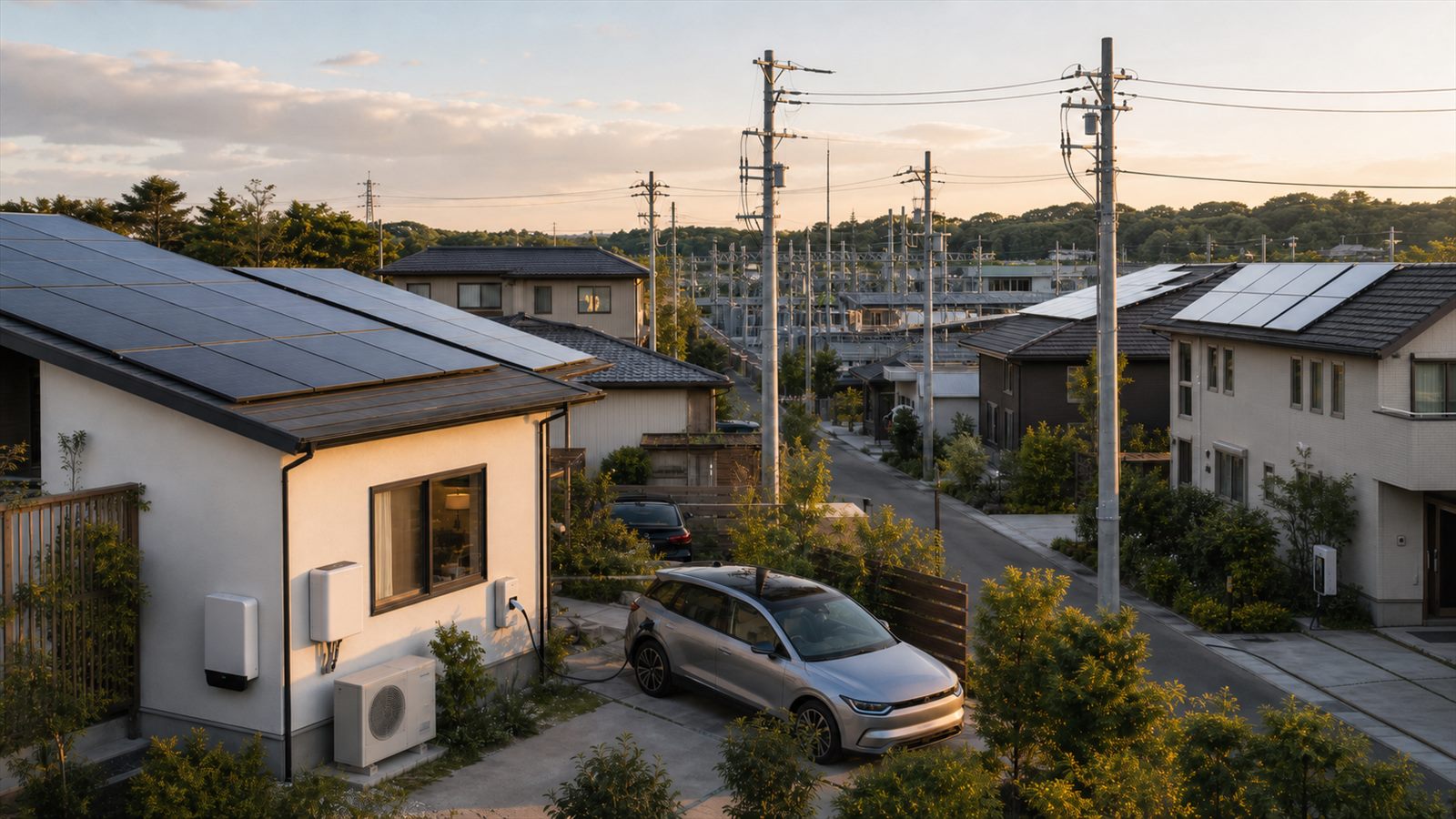
A virtual power plant does not look like a conventional power station. It may consist of thousands of home batteries, electric vehicles, smart thermostats, water heaters, solar systems, and flexible commercial loads. Software coordinates those small resources so that the group can reduce demand, supply energy, or provide another grid service at a useful scale.
The concept matters because electricity systems are adding variable generation and new loads while transmission and large power projects can take years to build. Many flexible devices already exist behind customer meters. Aggregating them could turn scattered consumer equipment into grid capacity, but only if control, measurement, compensation, cybersecurity, and customer choice are handled well.
Aggregation Turns Small Devices Into One Resource
A single thermostat or home battery is too small for a regional grid operator to dispatch directly. An aggregator combines many devices, forecasts how much flexibility is available, submits an offer or follows a utility signal, and translates the requested response into instructions for individual devices.
The group is virtual because the equipment remains distributed. It is a power plant only in the functional sense that it can provide a measurable service. Devices do not need to be identical, but the aggregator needs models of their limits, communications, current state, and owner preferences.
This builds on the broader shift toward software-defined grid operations. The physical devices still deliver energy or reduce consumption; software makes their collective behavior predictable enough to use.
Demand Flexibility Can Be as Valuable as Generation
During a short peak, reducing electricity use can balance the system just as adding generation would. A VPP may slightly adjust air-conditioning setpoints across many buildings, delay water heating, or pause selected charging sessions. Each change can be small while the total response is significant.
Timing flexible use also helps absorb renewable output that might otherwise be curtailed. Water can be heated, batteries charged, or buildings pre-cooled when electricity is abundant, then consumption can fall later. This is different from asking customers to go without energy; the objective is to move a service within an acceptable window.
Batteries Can Both Charge and Discharge
Behind-the-meter batteries can absorb power when supply is plentiful and discharge during a peak. The aggregator has to preserve enough charge for the owner’s backup or bill-management goals while accounting for inverter power, efficiency, temperature, and battery limits.
Electric vehicles add a large flexible load. Managed charging can shift when energy enters the battery without sending energy back to the grid. Bidirectional systems can also discharge, as our guide to vehicle-to-grid charging explains. Availability is uncertain because a car may leave, so the VPP needs forecasts and reserves rather than assuming every enrolled vehicle is plugged in.
A VPP Is Not the Same as a Microgrid
A microgrid is a defined electrical area that can often separate from the wider grid and operate as an island. A virtual power plant can coordinate resources spread across many unrelated circuits and usually remains dependent on the larger network.
The two concepts can overlap. A microgrid may participate in a VPP when connected, and a VPP may coordinate several microgrids. The distinction matters during an outage: enrollment in a virtual program does not automatically mean a home or community can operate independently.
Grid Services Need Measurement and Baselines
An aggregator must show that a response occurred. Battery output can be measured directly, but demand reduction is compared with an estimate of what the customer would otherwise have used. That counterfactual baseline can be difficult on a hot day, during a holiday, or when household routines change.
Fast services may need near-real-time telemetry and tight performance requirements. Capacity programs may focus on availability during a defined peak window. Energy markets measure delivered megawatt-hours. A VPP should not be described by one headline capacity figure without explaining the duration, conditions, and service behind it.
Market Rules Are Catching Up
In the United States, Federal Energy Regulatory Commission Order No. 2222 directs regional wholesale market operators to remove barriers that prevent distributed-energy aggregations from participating. FERC’s updated explainer shows that implementation schedules differ across regional organizations and can extend through the second half of this decade.
The rule does not eliminate local responsibilities. Distribution utilities and retail regulators still manage interconnection, local network constraints, consumer programs, and other matters within their authority. A resource that helps the regional system can still overload a neighborhood transformer if local coordination is poor.
The Distribution Grid Sets Real Limits
Two groups with the same total battery capacity may have very different usefulness depending on where they are connected. Power flows, voltage, transformer loading, and feeder constraints matter. An aggregator needs enough location information to avoid commanding a response that worsens a local condition.
Coordination among the regional operator, aggregator, utility, and devices is technically and institutionally difficult. Commands must be timely, but each organization should receive only the data it needs. Common interfaces and tested fallback behavior become more important as fleets grow.
Customers Need a Clear Bargain
A participant should know which device can be controlled, how often, within what comfort or mobility limits, how compensation is calculated, and how to opt out. A thermostat program that silently overrides an owner’s needs will not remain trusted, even if its grid performance is strong.
Benefits should also be available beyond households able to buy premium batteries and new vehicles. A National Renewable Energy Laboratory report on VPPs and energy justice highlights questions about access, compensation, data, community engagement, and whether program design shifts costs to nonparticipants.
Programs can include rented homes, multifamily buildings, low-cost smart controls, community resources, and commercial loads. Equity is not automatic simply because the resource is distributed.
Cybersecurity and Privacy Are Operational Requirements
A VPP connects large numbers of internet-accessible devices to systems that influence electricity demand and supply. Authentication, encrypted communications, least-privilege access, secure updates, monitoring, and incident response are necessary. A compromised aggregator could create a coordinated disturbance rather than an isolated device failure.
Fine-grained energy data can reveal occupancy and routines. Programs should minimize collection, define retention, separate billing from operational data where possible, and explain third-party access. Reliability does not require collecting every detail about a household indefinitely.
Economics Depend on Reliable Performance
The U.S. Department of Energy’s 2025 VPP Liftoff update argues that coordinated distributed resources can add capacity faster than many conventional alternatives and can defer some infrastructure spending. Those benefits are potential system values, not guaranteed savings for every project.
Aggregators face customer acquisition, device integration, communications, support, measurement, market, and financing costs. Hardware degrades and participants leave. Revenue may come from several services whose rules or availability overlap. A durable business needs conservative availability forecasts and transparent sharing of value with customers.
Limits and What to Watch Next
Virtual power plants cannot replace every generator, transmission line, or long-duration storage system. Many devices can respond only briefly, and customer needs take priority. Communications can fail during the extreme events when flexibility is most valuable. Performance has to be tested under real conditions.
Watch regional implementation of Order No. 2222, open device interfaces, distribution-level coordination, independent performance data, and program designs that make compensation understandable. Also watch how VPPs interact with grid-forming inverter capabilities. One coordinates many assets over seconds to hours; the other can shape electrical behavior on much faster timescales.
The strongest VPP will not be the one with the largest enrollment announcement. It will be the one that repeatedly delivers a defined service while respecting device limits and customer choices.
Leave a Reply