`n
Frontier Technology Portal July 11, 2026 / AI, robotics, space, quantum, biotech, energy
Frontier Technology Portal logo
FRONTIER Technology Portal for the next wave of invention

Blog

  • AI Drug Discovery: Faster Ideas, Still Hard Validation

    AI Drug Discovery: Faster Ideas, Still Hard Validation

    AI drug discovery uses computational models to help identify targets, design molecules, predict properties, and prioritize experiments. It can make the early search process faster and more systematic.

    Why It Matters

    Drug development is expensive, slow, and uncertain. Better computational tools can reduce wasted effort by helping researchers decide which ideas deserve scarce lab time.

    Where It Shows Up

    AI can support protein modeling, molecule generation, toxicity prediction, literature analysis, trial matching, and imaging analysis. However, a model’s suggestion is not a medicine. Compounds still need synthesis, testing, safety evaluation, clinical trials, and regulatory review.

    What to Watch

    • Evidence that AI-designed candidates succeed in clinical trials
    • Better biological datasets and experimental feedback loops
    • Integration of wet labs with automated software platforms
    • Transparent benchmarks rather than marketing claims

    AI can improve discovery, but biology gets the final vote. The real opportunity is a faster loop between computation and experiment.

    Category: Biotechnology. This article is part of Frontier Technology Portal’s plain-English guide to the technologies shaping the next decade.

  • Synthetic Biology: Programming Cells for Materials and Medicine

    Synthetic Biology: Programming Cells for Materials and Medicine

    Synthetic biology treats biology as something that can be designed, edited, and engineered. Scientists can modify cells to produce molecules, sense conditions, manufacture materials, or perform useful biological functions.

    Why It Matters

    The promise is enormous because living systems already build complex structures with remarkable efficiency. If researchers can guide those systems safely, biology could become a manufacturing platform for medicines, chemicals, foods, fuels, and materials.

    Where It Shows Up

    Applications include engineered microbes, cell therapies, bio-based materials, agricultural tools, diagnostics, and sustainable manufacturing. Progress depends on design software, gene editing, automation, measurement, and careful safety practices.

    What to Watch

    • Biofoundries that automate design-build-test cycles
    • Regulatory frameworks for engineered organisms
    • Scalable fermentation and manufacturing methods
    • Public trust, biosafety, and environmental safeguards

    Synthetic biology is powerful because it works with life itself. That also means responsibility matters. The field will advance through both imagination and restraint.

    Category: Biotechnology. This article is part of Frontier Technology Portal’s plain-English guide to the technologies shaping the next decade.

  • Post-Quantum Cryptography: Why Encryption Is Getting an Upgrade

    Post-Quantum Cryptography: Why Encryption Is Getting an Upgrade

    Updated July 11, 2026, to include the latest NIST implementation work and US federal migration guidance.

    Post-quantum cryptography has moved from a research project into an infrastructure upgrade. The goal is to replace vulnerable public-key algorithms with methods designed to resist attacks from both conventional computers and future cryptographically relevant quantum computers. Organizations do not need to wait for such a machine to exist before planning. Cryptographic migrations take years, and information stolen today may still be sensitive when more powerful systems arrive.

    The practical task is not to buy a mysterious “quantum security” product. It is to discover where cryptography is used, adopt standardized algorithms through maintained software and hardware, test compatibility, and make future changes easier. In June 2026, new US federal directives accelerated that shift from preparation to execution.

    What a Powerful Quantum Computer Could Break

    Modern digital systems use different kinds of cryptography for different jobs. Symmetric algorithms such as AES protect the contents of data once two parties share a secret key. Public-key algorithms such as RSA and elliptic-curve cryptography help establish keys and create digital signatures without a pre-shared secret.

    A sufficiently capable fault-tolerant quantum computer running Shor’s algorithm could undermine the mathematical problems that protect widely used RSA and elliptic-curve systems. That would affect key exchange, certificates, software signatures, device identities, secure email, virtual private networks, and many other protocols.

    This does not mean every encrypted file becomes readable overnight. Symmetric cryptography is affected differently, and real attacks would depend on hardware scale, error correction, implementation, access, and target value. The reason to act early is that public-key cryptography is embedded deeply in long-lived systems.

    The “Harvest Now, Decrypt Later” Risk

    An attacker can collect encrypted traffic today even if it cannot yet break the protection. If the information remains valuable for many years, the attacker may store it and attempt decryption after technology improves. This threat is most relevant to long-lived government, research, health, industrial, and intellectual-property data.

    Organizations should therefore compare two timelines: how long the data must stay confidential and how long migration will take. A system that stores sensitive information for 15 years cannot assume that a five-year transition starting later will be sufficient.

    The First NIST Standards Are Ready

    In August 2024, the National Institute of Standards and Technology finalized three post-quantum standards:

    • FIPS 203, ML-KEM: a key-encapsulation mechanism used to establish shared secret material.
    • FIPS 204, ML-DSA: the primary lattice-based standard for digital signatures.
    • FIPS 205, SLH-DSA: a hash-based signature standard designed as an alternative with a different mathematical foundation.

    A key-encapsulation mechanism is not the same as a general-purpose file encryption algorithm. It helps two systems establish a shared secret, which can then be used with symmetric encryption. A digital signature protects authenticity and integrity: it helps a recipient verify who signed software, a document, or a protocol message and whether it was changed.

    Standardization is only the beginning. Products need correct implementations, protocol updates, performance testing, secure key storage, certification, and compatibility across vendors.

    Why 2026 Is a Migration Year

    In June 2026, NIST released working drafts showing how Personal Identity Verification credentials could support ML-KEM and ML-DSA. The proposed approach uses a dual stack that preserves existing classical objects while adding new post-quantum keys, certificates, and data structures. That illustrates a likely pattern for real deployments: incremental transition and backward compatibility rather than a single global switch.

    The US government also issued an executive action and Office of Management and Budget memorandum directing federal agencies to establish migration leadership, inventory cryptographic systems, create prioritized plans, and mitigate quantum risk in owned or operated systems with a target of December 31, 2030. Those requirements apply directly to federal agencies, but suppliers and software vendors should expect the work to influence procurement and product roadmaps.

    The deadlines do not predict when a cryptographically relevant quantum computer will arrive. They reflect how long large organizations need to replace embedded cryptography safely.

    A Practical Migration Starts With Inventory

    Cryptography is often invisible to asset-management tools. It may be built into web servers, certificates, identity systems, databases, mobile applications, firmware, code-signing pipelines, hardware security modules, backup systems, industrial devices, partner connections, and third-party services.

    A useful inventory records the algorithm, key size, protocol, certificate authority, software library, hardware dependency, data sensitivity, expected product lifetime, vendor owner, and upgrade path. The organization can then prioritize systems that protect long-lived data or perform critical authentication.

    This is not only a security-team project. Application owners, procurement, vendors, infrastructure teams, legal and compliance staff, and business leaders all control parts of the migration.

    Hybrid Deployment Can Reduce Transition Risk

    During a transition, some protocols combine a classical algorithm with a post-quantum algorithm. The goal is to retain protection if one component later proves weak or if older systems still need compatibility. Hybrid designs can be valuable, but they add complexity, larger messages, more processing, and additional failure modes.

    Organizations should use combinations defined by reputable protocol communities and supported by maintained products. Inventing a private hybrid scheme is not crypto agility. It creates another custom dependency that will be difficult to validate and replace.

    Crypto Agility Is the Long-Term Capability

    No algorithm should be treated as permanent. Implementations can fail, standards can change, and new research can alter confidence. Crypto agility means an organization can identify, replace, configure, test, and monitor cryptographic components without rebuilding every application.

    That requires supported libraries, clear interfaces, automated certificate management, test environments, vendor commitments, and configuration policies. It also requires avoiding hard-coded assumptions about key lengths, signature sizes, or certificate formats, because post-quantum objects can be larger than their classical predecessors.

    Post-Quantum Cryptography Is Not Quantum Key Distribution

    Post-quantum algorithms run on conventional computers and networks. Quantum key distribution uses specialized physical links and quantum hardware to distribute key material. QKD may be useful in narrow environments, but it requires dedicated infrastructure and does not secure endpoints or replace ordinary authentication.

    The US National Security Agency currently emphasizes standardized quantum-resistant algorithms for national security systems and identifies significant engineering, cost, validation, and denial-of-service limitations in QKD. The emerging quantum networking field should therefore not be confused with the software migration organizations need today.

    What Consumers and Small Organizations Should Do

    Most individuals should not install experimental cryptography or buy products that promise vaguely defined “quantum-proof” protection. Keep operating systems, browsers, messaging applications, routers, and security software updated so mature protocol changes arrive through supported vendors.

    Small organizations should ask cloud, identity, certificate, network, and software suppliers for post-quantum roadmaps. They can begin documenting certificates and cryptographic dependencies now, especially for systems with long service lives.

    The basics still matter. Multi-factor authentication, passkeys, backups, patching, access control, and phishing resistance address immediate risks discussed in our guide to AI phishing and passkeys. Post-quantum migration does not compensate for weak passwords or compromised endpoints.

    A Five-Step Readiness Checklist

    1. Find cryptography: inventory certificates, protocols, libraries, devices, data stores, and supplier dependencies.
    2. Prioritize: focus on long-lived sensitive data, critical identities, code signing, and systems with slow replacement cycles.
    3. Ask vendors: require standards-based roadmaps, supported upgrade paths, testing evidence, and lifecycle commitments.
    4. Pilot safely: test approved post-quantum or hybrid configurations in controlled environments and measure performance and compatibility.
    5. Build agility: make cryptographic components observable and replaceable so this is not the last painful migration.

    What to Watch Next

    Watch for final migration timelines, protocol standards from groups such as the IETF, validated cryptographic modules, post-quantum certificate deployments, updated identity credentials, and product support that is enabled by default rather than hidden behind experiments.

    Post-quantum cryptography is now an implementation program, not a distant thought exercise. The best preparation is disciplined engineering: know what you use, protect the data with the longest lifetime, follow tested standards, and preserve the ability to change again.

    Sources and Further Reading

  • Quantum Sensors May Arrive Before Quantum Computers

    Quantum Sensors May Arrive Before Quantum Computers

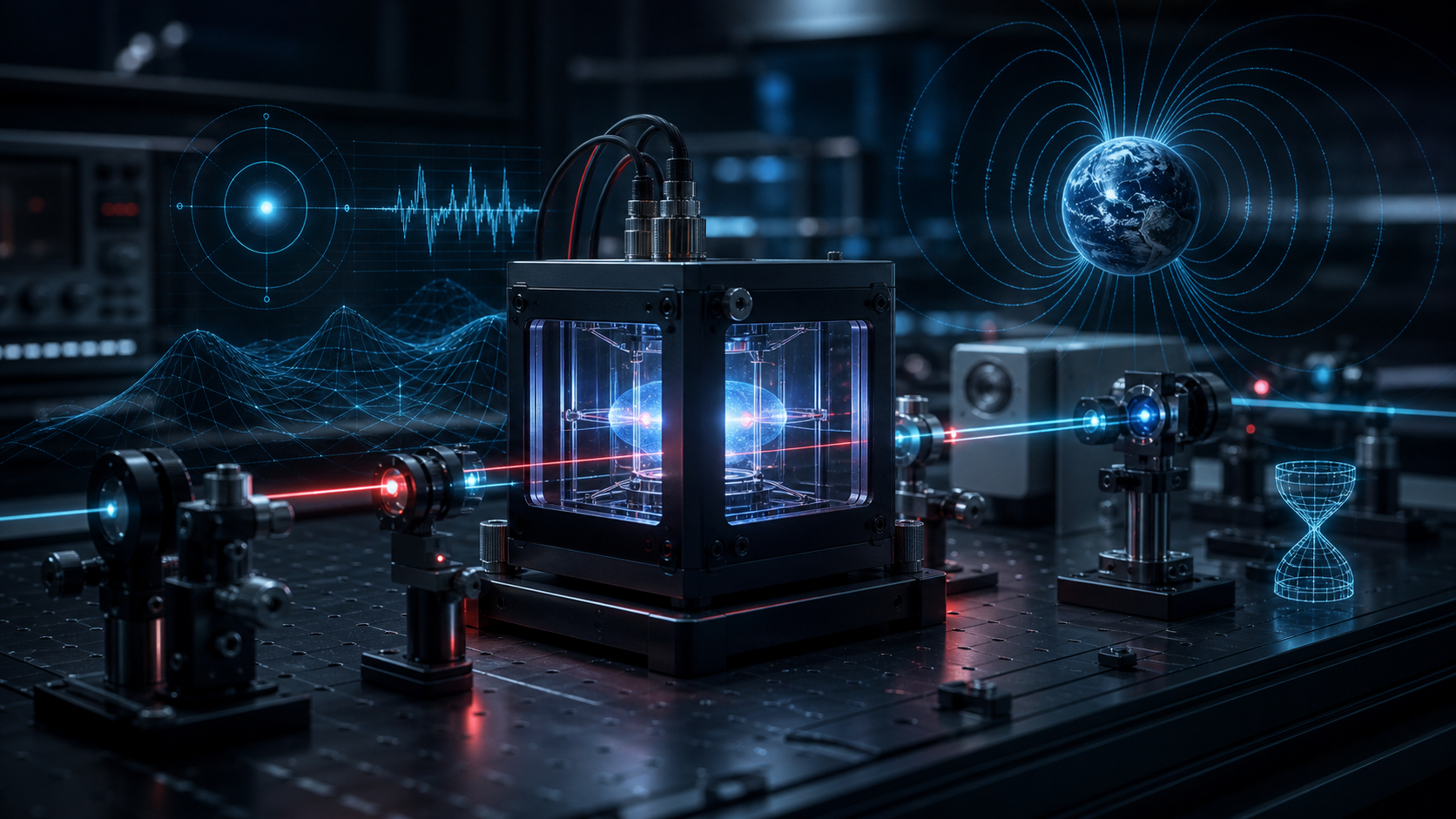
    Quantum computing receives most of the attention, but quantum sensing may produce practical applications sooner. Quantum sensors use delicate quantum effects to measure physical quantities with exceptional precision.

    Why It Matters

    Better measurement can improve navigation, medical imaging, geology, defense, timing, infrastructure monitoring, and scientific research. These applications do not always require the same scale of error-corrected computing.

    Where It Shows Up

    Quantum sensors may support navigation without GPS, detect underground structures, improve clocks, measure magnetic fields, and enhance laboratory instruments. The technology still faces cost, ruggedness, and integration challenges.

    What to Watch

    • Field-ready devices that work outside controlled labs
    • Quantum clocks and timing networks
    • Navigation systems for GPS-denied environments
    • Medical and industrial sensing applications

    Quantum technology is broader than computing. For many readers, the first useful quantum product they encounter may be a sensor, not a computer.

    Category: Quantum Computing. This article is part of Frontier Technology Portal’s plain-English guide to the technologies shaping the next decade.

  • Space Debris and the Future of Orbital Safety

    Space Debris and the Future of Orbital Safety

    The new space economy depends on orbit remaining usable. As more satellites are launched, the risk of collisions and debris grows. Even small fragments can damage spacecraft because objects in orbit move at extremely high speeds.

    Why It Matters

    Space debris is not only a technical issue. It affects communications, Earth observation, navigation, security, insurance, and the long-term sustainability of commercial space services.

    Where It Shows Up

    Operators need tracking data, collision avoidance, deorbit plans, responsible satellite design, and coordination with regulators. Governments and companies are also exploring debris removal and satellite servicing technologies.

    What to Watch

    • Improved space traffic management systems
    • Rules for end-of-life satellite disposal
    • Active debris removal demonstrations
    • Transparency around satellite maneuvers and conjunction warnings

    A crowded orbit can still be a productive orbit, but only if safety becomes part of the infrastructure. Sustainable space requires more than rockets; it requires stewardship.

    Category: Space Technology. This article is part of Frontier Technology Portal’s plain-English guide to the technologies shaping the next decade.

  • Small Satellites Are Changing Earth Observation

    Small Satellites Are Changing Earth Observation

    Small satellites have changed the economics of Earth observation. Instead of relying only on a few large spacecraft, operators can deploy constellations that revisit the same areas frequently and collect different types of data.

    Why It Matters

    Frequent observation creates value because many real-world systems change quickly. Crops, ports, forests, construction sites, storms, and supply chains all benefit from timely information.

    Where It Shows Up

    Earth observation data can support precision agriculture, insurance, environmental monitoring, disaster response, urban planning, energy infrastructure, maritime tracking, and climate research. The satellite image is only the beginning; analytics turn imagery into decisions.

    What to Watch

    • Higher revisit rates and better resolution
    • Radar satellites that see through clouds and at night
    • AI analysis of satellite data streams
    • Responsible orbital operations and debris management

    Small satellites make Earth more measurable. The next challenge is turning constant measurement into reliable insight that organizations can actually use.

    Category: Space Technology. This article is part of Frontier Technology Portal’s plain-English guide to the technologies shaping the next decade.

  • Robots in Healthcare: Practical Uses Beyond Science Fiction

    Robots in Healthcare: Practical Uses Beyond Science Fiction

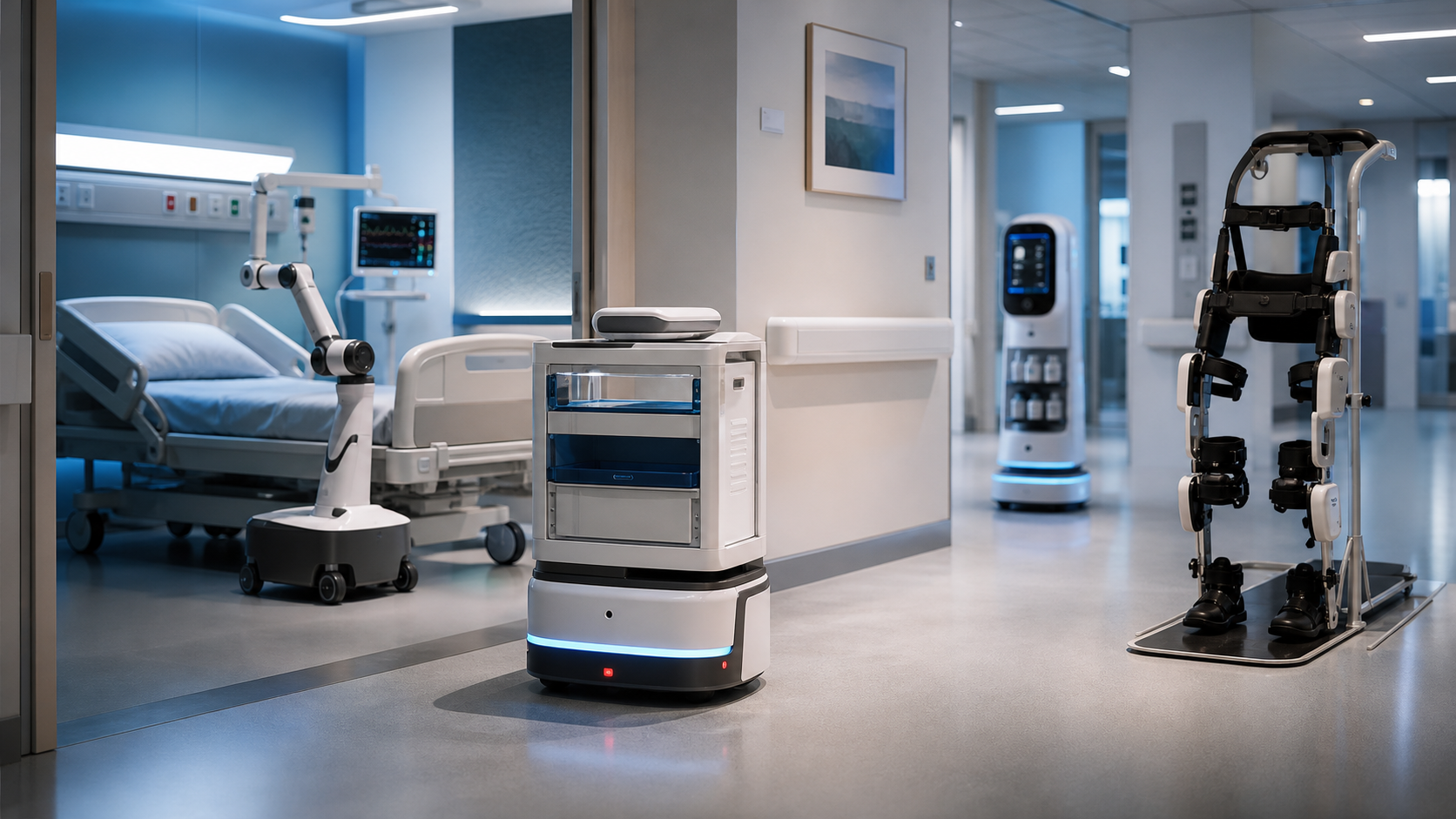
    Healthcare robotics is not just about futuristic hospital machines. Many useful applications are practical: moving supplies, supporting rehabilitation, assisting surgery, disinfecting rooms, monitoring patients, and helping clinicians with repetitive tasks.

    Why It Matters

    Hospitals and care facilities face labor shortages, safety requirements, and high demand for consistency. Robots can help when the task is well-defined and the workflow is designed around clinical realities.

    Where It Shows Up

    Surgical robots can help trained surgeons perform precise movements. Rehabilitation robots can guide repeatable exercises. Delivery robots can move medication, linens, or lab samples. Social and assistive robots may support elderly care, although trust and usability are critical.

    What to Watch

    • Clinical validation and safety approval
    • Integration with hospital software and workflows
    • Staff training and maintenance requirements
    • Clear evidence that robots improve outcomes or reduce workload

    The best healthcare robots are not replacements for caregivers. They are tools that help skilled people spend more time on judgment, empathy, and complex care.

    Category: Robotics. This article is part of Frontier Technology Portal’s plain-English guide to the technologies shaping the next decade.

  • Humanoid Robots: What Needs to Happen Before They Scale

    Humanoid Robots: What Needs to Happen Before They Scale

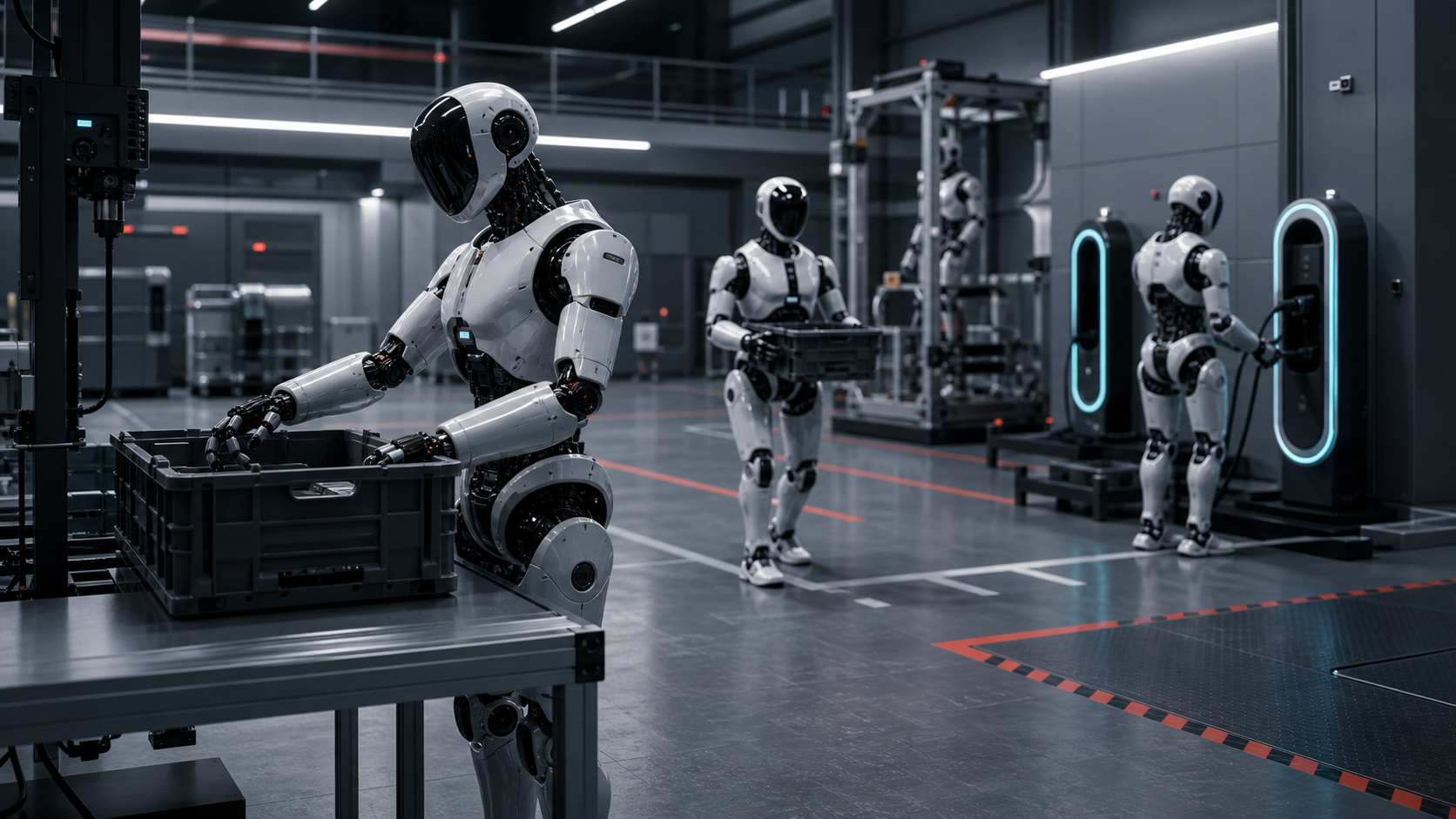
    Humanoid robots attract attention because they look like a general-purpose solution. Human environments are designed for human bodies, so a robot with arms, legs, hands, and cameras can theoretically use the same spaces and tools.

    Why It Matters

    The challenge is that real environments are messy. A humanoid robot must walk safely, understand objects, manipulate tools, recover from mistakes, work near people, and justify its cost. A demo is not the same as a dependable worker.

    Where It Shows Up

    The first scalable uses may be in warehouses, factories, logistics centers, inspection, and repetitive service tasks. These settings can define the workflow, reduce uncertainty, and measure productivity clearly.

    What to Watch

    • Battery life and actuator durability
    • Hands that can grasp many object types
    • Safety systems for working around people
    • Training methods that transfer from simulation to reality

    Humanoid robots may become important, but the path to scale will be practical rather than cinematic. The key question is not whether a robot looks human, but whether it can do useful work reliably.

    Category: Robotics. This article is part of Frontier Technology Portal’s plain-English guide to the technologies shaping the next decade.

  • AI Chips Explained: Why Memory and Power Matter

    AI Chips Explained: Why Memory and Power Matter

    AI chips are often discussed through performance numbers, but raw compute is only one part of the story. Modern AI workloads move huge amounts of data through memory, interconnects, accelerators, and software frameworks.

    Why It Matters

    A model can only run efficiently if data moves fast enough and power consumption stays manageable. This is why memory bandwidth, on-chip cache, advanced packaging, cooling, and data center power contracts have become strategic topics.

    Where It Shows Up

    AI chips show up in cloud data centers, laptops, phones, cars, robotics, cameras, and edge devices. Some chips are built for training large models, while others are optimized for inference: running models after they have been trained.

    What to Watch

    • Memory bandwidth and high-bandwidth memory supply
    • Inference chips for lower-cost AI services
    • On-device neural processing units in PCs and phones
    • Software ecosystems that make chips easier for developers to use

    The winning AI chip is not always the one with the biggest headline number. Real-world adoption depends on a balanced system of compute, memory, energy, software, availability, and cost.

    Category: Artificial Intelligence. This article is part of Frontier Technology Portal’s plain-English guide to the technologies shaping the next decade.

  • How Edge AI Brings Intelligence Closer to Devices

    How Edge AI Brings Intelligence Closer to Devices

    Edge AI means running machine learning models closer to where data is created: on phones, laptops, cameras, vehicles, industrial sensors, and smart home devices. Instead of sending every request to a cloud data center, the device can process at least part of the task locally.

    Why It Matters

    This matters because latency, privacy, bandwidth, and reliability all improve when useful decisions can happen near the user. A camera that detects a safety issue, a vehicle that interprets road conditions, or a wearable that notices a health pattern cannot always wait for a round trip to the cloud.

    Where It Shows Up

    Edge AI appears in voice assistants, image processing, predictive maintenance, retail analytics, smart cameras, drones, medical devices, and industrial automation. The cloud still matters for training, updates, and heavy workloads, but many everyday decisions can happen on-device.

    What to Watch

    • Smaller models that run efficiently on phones and PCs
    • AI accelerators built into consumer and industrial chips
    • Privacy-preserving features that keep sensitive data local
    • Hybrid systems that move tasks between device and cloud

    Edge AI will not replace cloud AI. The stronger future is a layered system where devices, networks, and data centers share the work according to speed, privacy, cost, and power needs.

    Category: Artificial Intelligence. This article is part of Frontier Technology Portal’s plain-English guide to the technologies shaping the next decade.