`n
Frontier Technology Portal July 11, 2026 / AI, robotics, space, quantum, biotech, energy
Frontier Technology Portal logo
FRONTIER Technology Portal for the next wave of invention

Blog

  • Quantum Computing Needs Independent Benchmarks More Than Bigger Qubit Counts

    Quantum Computing Needs Independent Benchmarks More Than Bigger Qubit Counts

    Quantum computing announcements often lead with a qubit count. That number is easy to understand and easy to compare, but it says little on its own about whether a machine can complete a valuable calculation. Qubits differ in quality, connectivity, speed, control overhead, and error behavior. A smaller, more reliable system can outperform a larger machine on a particular workload.

    The industry therefore needs independent benchmarking that connects hardware claims to useful, repeatable computation. The US Defense Advanced Research Projects Agency is taking an unusually direct approach through its Quantum Benchmarking Initiative, or QBI: evaluate whether any proposed architecture can plausibly reach utility-scale operation, then verify the engineering plans behind it.

    Why Qubit Count Is an Incomplete Metric

    A physical qubit is a controllable quantum system, but physical qubits are noisy. Their state can be disturbed by imperfect operations, environmental interactions, measurement, and control errors. Useful fault-tolerant computing is expected to encode more reliable logical qubits across many physical qubits while continuously detecting and correcting errors.

    The physical-to-logical overhead depends on hardware error rates, error correlations, the error-correcting code, connectivity, measurement speed, and the target algorithm. Two processors with the same physical-qubit count may therefore support very different logical capabilities. This is why our guide to quantum error correction focuses on controlled operations and logical reliability rather than a single headline number.

    Execution speed matters too. A processor that performs a high-fidelity operation slowly may be better for one task and worse for another. Connectivity determines how much extra work is needed to move quantum information. Calibration time and uptime determine whether a nominally powerful machine is available long enough to finish a useful job.

    What DARPA Means by Utility Scale

    DARPA describes utility-scale quantum computing as operation whose computational value exceeds its cost. QBI aims to rigorously verify whether any participating approach could reach that point by 2033. This definition is deliberately more demanding than demonstrating quantum behavior or running a small benchmark that is difficult to reproduce classically.

    The program uses stages. In Stage A, teams describe a concept for a useful fault-tolerant computer. In Stage B, they develop detailed research and development plans, identify risks, and specify prototypes that can reduce those risks. In the final stage, a government verification and validation team is expected to test whether the concept can be constructed and operated as designed.

    As of November 6, 2025, DARPA said 11 companies had been selected for Stage B, with teams entering the process on different timelines. The agency explicitly says QBI is not a competition intended to select one winner. Multiple approaches, one approach, or none may ultimately demonstrate a credible path.

    Different Architectures Need Comparable Questions

    Superconducting circuits, trapped ions, neutral atoms, photonic systems, spin qubits, and other platforms solve the engineering problem differently. They operate at different temperatures, use different control systems, and face different scaling constraints. A fair benchmark should not assume that one platform’s easiest metric represents every architecture.

    Comparable evaluation can instead ask a shared set of questions. How many logical operations can run before failure? How quickly can the system detect and correct errors? What resources are required for one logical qubit? Can control electronics and cryogenic or optical equipment scale with the processor? How often is the machine available, and how much classical computation is required around it?

    NIST’s quantum program emphasizes measurement science, performance benchmarking, and standards for this reason. Reproducible methods allow laboratories and vendors to compare measurements without pretending the underlying machines are identical.

    A Useful Benchmark Needs a Real Workload

    Component measurements such as gate fidelity and readout error are essential, but they do not automatically predict application performance. Errors can correlate, calibration can drift, and a circuit can amplify small weaknesses. A system-level benchmark should include workloads that exercise the processor in representative ways.

    The workload must also have a clear success criterion. If a classical computer can efficiently verify the answer, the comparison is easier to trust. If verification is itself intractable, evaluators need statistical checks, smaller validated instances, or other evidence that the quantum result is correct.

    Economic value adds another layer. A calculation may be technically impressive but too slow, expensive, energy intensive, or specialized to justify the full system. Utility depends on the cost of hardware, facilities, operators, error correction, classical control, and repeated runs, not only processor time.

    Benchmarks Can Be Gamed

    Every benchmark creates incentives. A vendor may tune hardware and software for one task, exclude setup time, report the best run, or compare against an outdated classical method. Results can also depend heavily on compiler choices and problem structure. Independent evaluators need access to assumptions, run conditions, uncertainty, and enough data to reproduce the conclusion.

    That does not mean benchmark-specific optimization is dishonest; classical computing uses optimized benchmarks too. The problem arises when a narrow demonstration is presented as evidence of general usefulness. Readers should ask what the benchmark measures, what it excludes, and whether another laboratory reproduced it.

    Networking and Sensing Need Different Measures

    Quantum technology is broader than computing. A network is judged by entanglement rate, distance, fidelity, memory time, and interoperability, as explained in our article on quantum networks. A sensor may be judged by sensitivity, stability, bandwidth, and performance outside a laboratory. Those measurements should not be collapsed into a generic claim of quantum advantage.

    This distinction also explains why useful devices can appear on different timelines. Our overview of quantum sensors describes applications that do not require a universal fault-tolerant processor. Independent benchmarking should clarify which technology and task are actually under discussion.

    What Ordinary Readers Should Look For

    When a company announces a quantum milestone, look beyond the number of qubits. Ask whether the result used physical or logical qubits, whether error correction ran during the calculation, how success was verified, and whether independent researchers had access to the system. Check whether the comparison includes current classical hardware and algorithms.

    Also look for engineering evidence: repeatable fabrication, control-system scaling, cooling or laser requirements, calibration burden, and uptime. A credible road map identifies risks and prototypes that can disprove assumptions, not only milestones that confirm them.

    What to Watch Next

    QBI’s most valuable outputs may be the verification methods and risk evidence rather than a simple ranking. Watch which teams progress, what independent measurements become public, and whether evaluators can connect logical performance to costed systems. International standards work at NIST, ISO, and IEC will also matter for consistent terminology and measurement.

    Quantum computing will not become easier to evaluate by adding more headline numbers. It will become easier when claims are tied to reproducible workloads, logical reliability, full-system resources, and independent inspection. That is a slower story than a qubit race, but it is the one that can reveal whether a useful computer is actually being built.
    Sources and Further Reading

  • Europe’s Smartphone Repairability Rules Are Changing What Buyers Can Compare

    Europe’s Smartphone Repairability Rules Are Changing What Buyers Can Compare

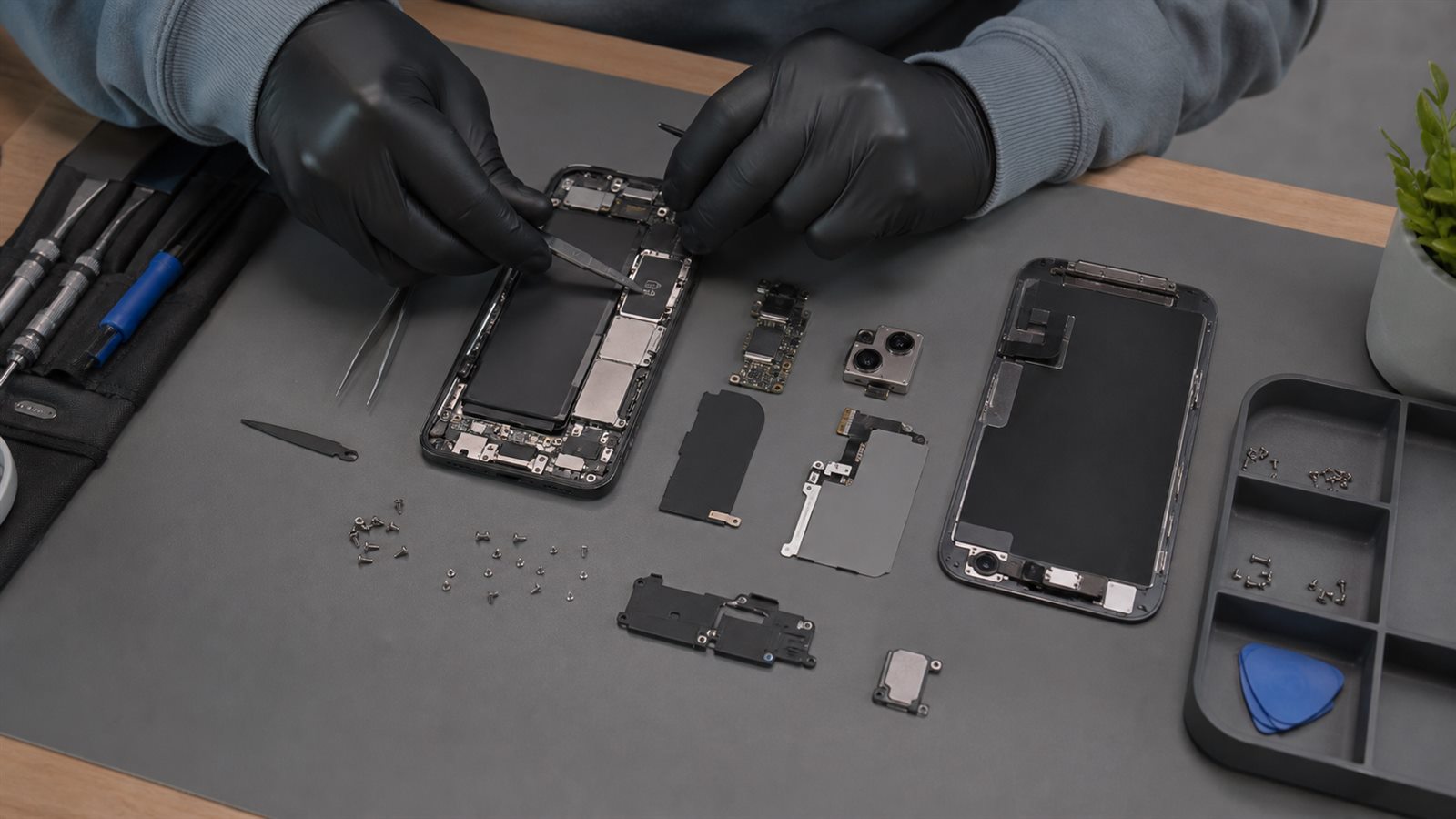
    A phone can have an excellent camera and fast processor yet become a poor purchase if its battery fades, parts are unavailable, or software support ends early. New European Union rules make some of those long-term qualities easier to compare. Smartphones and slate tablets newly placed on the EU market have faced ecodesign and energy-label requirements since June 20, 2025.

    The change matters beyond a sticker on a box. It turns durability, battery endurance, spare parts, repair information, and software support into product-design and disclosure requirements. Buyers still need to read the details, but the useful life of a device is becoming more visible at the point of sale.

    What the New Label Shows

    The EU energy label for smartphones and tablets includes energy efficiency, battery endurance, resistance to repeated drops, ingress protection, battery cycle endurance, and a repairability class. The repairability scale runs from A, the most repairable, to E, the least repairable. Product information is also registered in the European Product Registry for Energy Labelling, known as EPREL.

    The repairability class is not based on one judgment about whether a device looks modular. The European Commission’s Joint Research Centre says the method considers disassembly depth, fasteners, required tools, spare-part availability, software updates, and repair information. Priority components are assessed and combined into an overall class.

    This gives shoppers a common starting point. A reviewer can still explain why one repair is easier than another, but the label makes it harder to ignore serviceability completely. That supports the broader evaluation method in our guide to separating technology utility from hype.

    Minimum Durability Requirements Sit Behind the Label

    The ecodesign regulation establishes minimum requirements for devices covered by the rules. The Commission says batteries must retain at least 80 percent of their initial capacity after at least 800 charging cycles. Manufacturers must meet defined resistance requirements for drops, scratches, dust, and water. The exact test and class information is available through the label and product documentation.

    Spare parts are another important part of the framework. The Commission states that key parts must be supplied within five to ten working days and remain available for at least seven years after the model is no longer sold in the EU. Professional repairers must also receive fair access to software or firmware needed for repair.

    Operating-system support is treated as part of longevity. The Commission describes a requirement for updates to remain available for at least five years from the date the last unit of a model is placed on the market. That is not the same as five years from an individual buyer’s purchase date, so shoppers should still check the model’s release and support policy.

    What Buyers Should Compare in Practice

    Start with the repairability class, but do not stop there. Open the product’s EPREL entry and look at the battery, drop, and ingress information. Check whether the battery can be replaced by a consumer or only by a professional repairer. Review the public prices of common parts when available, because a repair can be technically possible and still uneconomic.

    Next, compare the manufacturer’s update commitment. Security fixes, operating-system upgrades, and app compatibility affect how long a connected device remains useful. This is especially important for phones used as account authenticators, payment devices, health-data hubs, or controllers for the home. Our smart home security checklist explains why unsupported control devices can create risks beyond the gadget itself.

    Also check the warranty and local repair network. EU rules can improve part and information availability without guaranteeing that every repair shop has the training, equipment, or capacity to service a model quickly. Turnaround time, diagnostic fees, data handling, and the availability of loan devices can matter as much as the physical repair score.

    Repairability Is Not the Same as Overall Quality

    A high repairability class does not mean a phone has the best camera, modem, display, accessibility features, or software. It does not guarantee that the device will never fail. It means that defined repair-related factors compare favorably under the EU method. A durable sealed device and a highly repairable device can also make different design tradeoffs.

    Energy efficiency deserves similar care. A label can help compare products under standardized conditions, but real battery life varies with signal strength, display brightness, background services, temperature, and workload. The long-term health patterns discussed in our article on wearables and health data also show why software, privacy, and service continuity must be evaluated alongside hardware.

    The rules include exclusions. The Commission notes that they do not cover products with a rollable flexible main display, smartphones designed for high-security communications, or tablet computers that fall outside the defined slate-tablet category. Shoppers should confirm whether a device is actually within scope rather than assuming every portable screen uses the same label.

    How the Rules Can Influence Product Design

    When a market as large as the EU requires standardized disclosure, manufacturers have a reason to consider serviceability earlier in development. Fastener choices, adhesive, component access, diagnostic software, documentation, and parts logistics all affect the final result. A company cannot improve repairability at the last minute by changing marketing copy.

    The effects may reach products sold elsewhere. Manufacturers often prefer a shared global design rather than separate internal layouts for every region. The same phone may therefore gain longer part availability or a more replaceable component even where the EU label is not displayed. Policies, prices, warranties, and software commitments can still differ by country, so the spillover should not be assumed.

    Longer device life also changes the meaning of progress after the smartphone. As our overview of the next consumer-electronics interfaces argues, wearables and ambient devices will depend on ecosystems of connected hardware. Repair and support policies become more valuable as the number of dependent devices grows.

    What Reviewers Need to Do Differently

    A credible phone review should now record the model’s repairability and energy-label data, not merely repeat launch specifications. It should state the region tested, because configurations can vary. If the reviewer did not open or repair the device, the article should distinguish label-based analysis from hands-on service experience.

    Reviewers should also revisit products after updates. A five-year commitment is only valuable if releases arrive in a timely, stable form. Long-term reporting can track battery health, repair prices, part delays, and whether promised updates continue. Those measurements are more useful than treating every phone as a disposable one-week test.

    What to Watch Next

    Watch how consistently labels appear in online stores, whether EPREL entries remain complete, and how national authorities enforce inaccurate claims. Compare actual repair outcomes with the standardized classes. Pay attention to whether manufacturers make batteries and ports easier to replace without sacrificing water resistance or structural reliability.

    The EU rules do not end the debate over repair rights, ownership, or electronic waste. They do make longevity a more concrete product attribute. For buyers, the practical gain is simple: the next smartphone comparison can include not only what the device does on day one, but how realistically it can remain useful years later.

    Sources and Further Reading

  • Enhanced Geothermal Systems Could Bring Underground Heat to More Places

    Enhanced Geothermal Systems Could Bring Underground Heat to More Places

    Geothermal power is attractive because underground heat is available day and night. Conventional projects, however, depend on rare places where heat, water, and naturally permeable rock occur together. Enhanced geothermal systems aim to widen the map by engineering the missing permeability and circulating fluid through hot rock.

    The concept is often described as next-generation geothermal, but it is not one machine or a guaranteed resource. It combines deep drilling, reservoir characterization, controlled stimulation, well construction, fluid management, and surface power equipment. Recent field work is making those pieces more repeatable, while cost, seismic risk, and long-term reservoir performance remain decisive.

    How an Enhanced Geothermal System Works

    A natural hydrothermal resource needs heat, fluid, and pathways that allow the fluid to move. In many regions, rock at depth is hot but does not contain enough connected fractures or water for commercial production. An enhanced geothermal system, usually shortened to EGS, tries to create or improve those pathways.

    Engineers first build a detailed model of temperature, rock type, stress direction, existing fractures, and underground fluids. They drill an injection well and introduce water under controlled conditions to open or connect a fracture network. A production well intersects that network. Water travels down, absorbs heat from the rock, and returns to the surface, where it can produce steam or heat a separate working fluid that drives a turbine. The geothermal water is then reinjected.

    The physical idea is simple; the reservoir engineering is not. The wells must connect effectively without losing too much fluid. Flow must be distributed across enough hot rock to deliver useful heat. Operators must monitor pressure and small seismic events while avoiding pathways that cool too quickly or communicate with unwanted formations.

    Why Drilling Cost Matters So Much

    Deep wells are a major part of a geothermal project’s capital cost, and hard, hot rock is difficult on drilling equipment. The US Department of Energy’s Frontier Observatory for Research in Geothermal Energy, or FORGE, is a field laboratory in Utah built to test drilling, stimulation, monitoring, and reservoir methods in a transparent research setting.

    DOE reports that FORGE reduced on-bottom drilling time at an equivalent depth of 6,000 feet from 440 hours on an early well to 60 hours on a later one. That result came from improved drilling practices and equipment, not from making every part of a geothermal project seven times cheaper. It is still important because faster, more predictable drilling can reduce one of the largest uncertainties in project development.

    FORGE also reports creating a reservoir from scratch and testing multi-zone stimulation in hot granite. The site’s public data repository contained more than 133 terabytes of drilling, well-log, stimulation, and microseismic data as of May 2026. Shared field data can help other researchers compare methods without repeating every experiment.

    What Makes EGS Different From Energy Storage

    An EGS plant is a source of heat and electricity, not a battery. If the reservoir is engineered and managed successfully, it can operate for long periods and provide power when wind and solar output is low. That makes geothermal a possible source of firm generation in a system that also needs the flexibility described in our overview of storage, grids, and materials.

    Firm does not mean inflexible. Some geothermal plants can adjust output, but operating strategy depends on the reservoir, equipment, contracts, and grid. A project might prioritize steady generation, while another could vary production within limits. Good grid integration therefore still depends on forecasting, transmission, markets, and the control systems discussed in our guide to grid software.

    Induced Seismicity Requires Active Management

    Changing pressure in fractured rock can cause small earthquakes, a phenomenon called induced seismicity. Most monitored events may be too small to feel, but larger events can damage public confidence and stop a project. The risk varies with local geology, faults, injection strategy, and operating pressure.

    Developers need baseline seismic surveys, dense monitoring, clear operating thresholds, and a response plan that can reduce or halt injection. Siting decisions must consider nearby communities and infrastructure, not only temperature. Transparent reporting matters because residents are being asked to accept an underground industrial operation whose behavior cannot be seen directly.

    Water use is another local question. A closed circulation loop recycles fluid, but projects still need water for drilling, reservoir creation, losses, and plant operations. The amount and source depend on the design. Air-cooled surface systems may reduce some water demand while changing cost and performance.

    The Reservoir Can Change Over Time

    Heat extraction cools the rock near active flow paths. If water takes a short route between wells, production temperature may decline faster than expected. If fractures close, clog, or fail to connect, flow may fall. Long-term success depends on creating a large effective heat-exchange volume and managing it with real measurements.

    Fiber-optic sensing, tracers, pressure data, temperature logs, and microseismic monitoring can reveal how the reservoir responds. Operators may adjust flow between zones or add wells. These tools improve visibility, but they do not eliminate geological uncertainty. Commercial lenders and utilities will want years of dependable operating evidence, not only a successful stimulation test.

    Where EGS May Fit First

    Early commercial projects are likely to favor locations with strong heat resources, experienced drilling workforces, available transmission, manageable water access, and supportive permitting. Industrial heat may be another use where temperatures and customers align, although the economics differ from electricity generation.

    Techniques adapted from oil and gas can accelerate progress, including directional drilling, improved bits, zonal isolation, and subsurface monitoring. The transfer is not automatic. Geothermal wells face high temperatures, corrosive fluids, and the need to sustain heat exchange rather than extract hydrocarbons. Materials and well integrity remain important, connecting the field to the broader role of advanced materials in frontier technology.

    What to Watch Next

    Watch for independently reported drilling cost, stable multi-year flow and temperature, verified seismic performance, water use, and capacity delivered to the grid. DOE’s announced FORGE II effort is intended to test EGS concepts in another geological setting, an important step because success at one field site does not prove universal repeatability.

    Enhanced geothermal systems could make underground heat available in far more places than conventional geothermal. The opportunity is substantial precisely because the engineering challenge is substantial. The field will earn confidence through repeatable reservoirs, transparent monitoring, and plants that operate reliably beyond the demonstration stage.

    Sources and Further Reading

  • Memory-Safe Languages Are Becoming a Cybersecurity Requirement

    Memory-Safe Languages Are Becoming a Cybersecurity Requirement

    Many serious software vulnerabilities begin with a simple problem: a program reads or writes memory that it should not touch. Buffer overflows, use-after-free errors, double frees, and uninitialized memory can crash a system or give an attacker a route to run code. Security agencies are now pushing software producers to prevent these defects at the programming-language level instead of relying only on testing and patches.

    That shift is driving interest in memory-safe languages. These languages use built-in rules and runtime protections to restrict dangerous memory operations. They cannot make software perfectly secure, but they can remove a large class of mistakes before a product reaches users.

    What Memory Safety Means

    Programs continuously allocate memory, read data, change values, and release storage that is no longer needed. In a memory-unsafe environment, the developer has direct control over many of those operations. That control is valuable for low-level systems work, but a small error can make one part of a program overwrite another, keep using memory after it has been released, or expose data that should remain private.

    A memory-safe language tries to make invalid access impossible or much harder. Different languages use different techniques. Managed languages may rely on automatic memory management and bounds checks. Rust uses ownership and lifetime rules that the compiler checks before the program runs. Other languages combine compile-time checks, runtime checks, and restricted escape hatches for operations that genuinely need direct access.

    The result is not merely cleaner code. Preventing the underlying mistake can eliminate an entire route to exploitation. That is a different strategy from detecting a known attack pattern after a vulnerable product has already shipped.

    Why Government Guidance Has Become More Direct

    In June 2025, the US National Security Agency and the Cybersecurity and Infrastructure Security Agency released joint guidance on memory-safe languages in modern software development. The guidance describes language-level protection as a way to reduce vulnerabilities, improve reliability, and lower the risk of incidents. It also emphasizes that adoption does not require rewriting every existing line at once.

    CISA and the FBI made the same principle concrete in a 2025 Secure by Design alert about buffer overflows. Their recommendations include using memory-safe languages where feasible, writing new components in safer languages, prioritizing exposed or highly privileged code, using compiler protections and sanitizers during transition, and publishing a phased memory-safety roadmap.

    This approach fits the broader idea that vendors should reduce risk before transferring it to customers. It complements operational controls such as the identity checks and limited access described in our article on zero trust security. Zero trust can limit what compromised software reaches, but it does not repair the software defect that enabled compromise.

    Migration Is Usually Incremental

    A mature operating system, browser, industrial controller, or network service may contain millions of lines of code and decades of dependencies. Replacing the entire codebase would introduce cost, compatibility problems, and new defects. A practical roadmap starts by finding where memory risk is concentrated.

    Teams can use vulnerability history, code ownership, attack surface, privileges, and exposure to identify priorities. A parser that processes untrusted network data may deserve attention before an isolated internal utility. New services and modules can be written in a memory-safe language. Existing components can be wrapped behind narrow interfaces, while especially risky functions are rewritten over time.

    Interoperability is therefore central. A safer module often has to call an older C or C++ library, interact with a device driver, or share data through a foreign-function interface. The boundary must be reviewed carefully because language guarantees may stop at that point. A program written mostly in a memory-safe language can still inherit a vulnerability from an unsafe dependency.

    What Memory-Safe Languages Do Not Solve

    Memory safety is one security property, not a complete security model. A safe program can still contain weak authentication, authorization mistakes, insecure defaults, exposed secrets, flawed cryptography, injection vulnerabilities, or incorrect business logic. Developers can also misuse unsafe language features, disable checks, or introduce denial-of-service problems through excessive resource consumption.

    Supply-chain security remains important as well. A memory-safe application may import packages that are malicious, abandoned, or incorrectly configured. Updates must be authenticated and delivered safely. Operators still need logging, incident response, backups, and carefully designed access controls.

    Nor should buyers treat a language name as proof of product quality. The meaningful evidence is how the vendor uses the language, which components remain unsafe, how dependencies are managed, and whether the company publishes measurable progress. This is similar to the migration discipline required for post-quantum cryptography: inventory first, prioritize risk, test interoperability, and avoid a rushed replacement.

    Performance and Hardware Constraints Still Matter

    Some low-level systems have tight requirements for latency, memory use, binary size, certification, or hardware access. A language and toolchain that works well for a cloud service may not fit a tiny embedded controller. Teams must evaluate real workloads rather than assuming one language is ideal everywhere.

    That does not make memory safety optional. When a full language transition is not currently feasible, agencies recommend layers of mitigation: compiler hardening, address-space protections, canaries, fuzzing, static analysis, runtime sanitizers, careful review, and architectural isolation. These controls reduce risk while the highest-value parts of the codebase move toward safer foundations.

    What Buyers and Organizations Can Ask

    Most consumers cannot inspect a product’s source code, but organizations buying critical software can ask useful questions. Does the vendor track memory-safety vulnerabilities separately? Are new exposed components written in memory-safe languages? Is there a published migration roadmap? Which unsafe libraries remain, and how are they isolated and tested? Does the vendor conduct root-cause analysis across a product line instead of patching one bug at a time?

    For connected devices, support duration also matters. A product with safer code can still become risky if updates stop. Our smart home security checklist explains why update policy, account protection, and network design should be evaluated together.

    What to Watch Next

    Progress will be visible in procurement requirements, secure-development attestations, open-source dependency plans, and published measurements of vulnerability classes. Watch whether vendors disclose which high-risk components have moved, whether major libraries offer stable safe interfaces, and whether toolchains make mixed-language analysis easier.

    The important change is cultural as much as technical. Security teams are asking producers to eliminate predictable defect classes during design, not celebrate faster patching after exploitation. Memory-safe languages are not a universal cure, but they are becoming a baseline expectation for software that society depends on.

    Sources and Further Reading

  • Content Credentials Can Show Where AI Media Came From, Not Whether It Is True

    Content Credentials Can Show Where AI Media Came From, Not Whether It Is True

    AI image and video tools have made it much harder to judge a file by appearance alone. A realistic picture may be a direct camera capture, a lightly edited photograph, a fully synthetic image, or a real scene placed in a false context. Content Credentials are designed to add another source of evidence: a tamper-evident record of where a file came from and how it changed.

    That record can be useful, but it is easy to misunderstand. Content Credentials do not determine whether a claim is true. They do not prove that a photograph shows the full story. They are better understood as a standardized chain of custody for digital media. The chain can help a reader inspect origin and editing history, while the final judgment still requires context, reporting, and common sense.

    What Content Credentials Actually Record

    The technical foundation is the specification developed by the Coalition for Content Provenance and Authenticity, or C2PA. A participating camera, editing application, AI generator, or publishing system can attach a signed package of provenance information to an image, video, audio file, or document. The consumer-facing name for that package is a Content Credential.

    A credential can contain assertions about how an asset was created, which tools changed it, whether generative AI was involved, and how earlier versions relate to the current file. The assertions are bundled into a manifest and digitally signed. A validator can then check whether the manifest is correctly formed, whether its signature can be trusted, and whether the media has changed since the credential was attached.

    This is different from the pattern-matching systems often called AI detectors. Detection tools inspect pixels, audio, or writing for statistical clues. Provenance begins with information supplied during the creation and editing workflow. The US National Institute of Standards and Technology treats provenance, watermarking, labeling, and detection as related but distinct approaches in its report on synthetic-content transparency.

    A Signed History Is Not a Truth Machine

    The most important limitation is built into the C2PA design. The standard verifies the integrity and source of recorded assertions; it does not assign a value judgment to them. A valid credential may show that a named publisher signed an image and that a particular crop or color adjustment occurred. It cannot tell whether the scene was staged, whether the caption is misleading, or whether relevant events happened outside the frame.

    The reverse is also true. A missing credential does not prove that a file is fake. Billions of legitimate images were created before provenance tools existed, and many current devices and platforms do not yet preserve credentials. Media can also lose metadata when it is compressed, screenshotted, copied through an incompatible service, or deliberately stripped.

    Readers should therefore treat provenance as one trust signal. It belongs beside the source’s reputation, the publication date, corroborating evidence, and the surrounding claim. That broader habit is also useful when assessing the AI-assisted scams discussed in our guide to AI phishing, identity, and passkeys.

    How an Editing Chain Can Stay Verifiable

    A useful provenance system must handle normal creative work. Photographers adjust exposure, editors crop frames, newsrooms add captions, and designers combine assets. C2PA allows each participating tool to add a new signed manifest while preserving references to earlier ingredients. A viewer can inspect the chain rather than being forced to choose between the simplistic labels “untouched” and “fake.”

    The signature also needs an identity that a validator can evaluate. Trust lists and signing certificates help establish who or what signed a claim. Time stamps and revocation information can help a credential remain checkable after a certificate expires or is withdrawn. Version 2.2 of the C2PA specification added changes intended to improve reliability, recovery, support for more asset formats, and long-lived validation.

    There are still difficult operational questions. Publishers need secure signing keys. Platforms must avoid stripping manifests. Interfaces must explain provenance without overwhelming readers. Creators need privacy controls, because a detailed production history can reveal more than they want to disclose. An implementation that merely displays a reassuring icon, without making the signer and claims understandable, can create false confidence.

    Why AI Regulation Is Increasing the Pressure

    The European Union’s AI Act includes transparency obligations for providers of systems that generate synthetic audio, images, video, or text. Article 50 calls for outputs to be marked in a machine-readable form and detectable as artificially generated or manipulated. C2PA is not the only possible way to meet such requirements, and legal compliance depends on the system and use case. Even so, regulation increases the practical value of interoperable technical standards rather than platform-specific labels.

    The same pressure is visible in product design. AI tools are increasingly embedded in software workflows, not confined to a separate image generator. As discussed in our article on AI agents as a software interface, automation can move work across several tools. Provenance systems must follow the asset through that chain if the final record is going to be useful.

    What Readers Can Check Today

    When a platform exposes Content Credentials, start with the signer. A technically valid signature from an unknown party does not carry the same weight as a credential from a source you already have reason to trust. Next, examine the creation claim, the list of edits, and any indication that AI generation or manipulation occurred. Look for gaps between versions, but remember that gaps can have innocent causes.

    Then evaluate the claim outside the credential. Search for the original publication, compare coverage from independent sources, and check dates and locations. For product imagery and demonstrations, apply the same skepticism described in our guide to evaluating technology reviews. Provenance can show that a company produced an image; it cannot prove that a product performs as advertised.

    Limitations That Adoption Will Not Eliminate

    Wider deployment will reduce some uncertainty, but it will not remove adversarial behavior. Attackers can create convincing media with no credential, attach honest provenance to a misleading scene, or persuade viewers to ignore warning signals. A compromised signing key could also damage trust until it is revoked. Durable credentials need secure key management, revocation systems, independent validation libraries, and clear user experiences.

    There is also a distribution problem. A standard can be technically sound and still fail if major capture devices, editing tools, social networks, messaging services, and publishers do not preserve it. Soft-binding techniques may help reconnect a stripped file with remotely stored provenance, but those systems introduce their own matching, privacy, and availability questions.

    What to Watch Next

    The meaningful milestones are not the number of companies that announce support. Watch whether credentials survive real publishing pipelines, whether independent validators produce consistent results, whether trust lists are governed transparently, and whether users can understand the difference between verified provenance and verified truth.

    Content Credentials are a promising infrastructure layer for an internet filled with AI media. Their value comes from making history inspectable, not from replacing judgment. The healthiest outcome is a web where a trustworthy provenance record is common, missing records are explained carefully, and no single badge is treated as the final word.

    Sources and Further Reading

  • Vehicle-to-Grid Charging Could Turn Parked EVs Into Energy Assets

    Vehicle-to-Grid Charging Could Turn Parked EVs Into Energy Assets

    An electric vehicle spends much of its life parked with a large battery connected to nothing. Bidirectional charging changes that relationship. Instead of only drawing electricity from a charger, a compatible vehicle can send power to a home, building, microgrid, or utility system. At sufficient scale, parked EVs could become flexible energy assets as well as transportation.

    The idea is technically proven, but the market is not yet simple or universal. A vehicle-to-grid system needs compatible hardware, software, utility rules, communications standards, customer incentives, and a plan that keeps the vehicle ready to drive. In the United States, a 2025 Department of Energy assessment described most bidirectional deployments as demonstrations or niche uses rather than a mainstream grid resource.

    V1G, V2H, V2B, and V2G Are Different

    Managed charging, sometimes called V1G, controls when or how quickly an EV charges. The power still flows in one direction, but the vehicle can avoid expensive peak periods, respond to grid conditions, or use more electricity when renewable generation is abundant.

    Vehicle-to-home and vehicle-to-building systems send power from the battery to local loads. They can provide backup electricity during an outage or reduce a building’s peak demand. These behind-the-meter uses may be easier to deploy because the vehicle is not continuously selling power into a wider electricity market.

    Vehicle-to-grid, or V2G, allows coordinated discharge into the electric system. A utility or aggregator might call on many vehicles to reduce demand, absorb excess energy earlier, or provide a grid service. The value comes from coordination: one car is a modest resource, while hundreds of connected vehicles can behave like a distributed power plant.

    What the Grid Can Gain

    Electricity demand changes throughout the day. Solar and wind output also vary. Flexible EV charging can move demand away from stressed hours. Bidirectional charging adds the option to discharge stored energy when it is more useful, then recharge later.

    For a building, that can mean lowering demand charges, using more on-site solar, or maintaining critical loads during an outage. For a grid operator, aggregated vehicles could participate in demand response or other programs where local rules allow it. The Department of Energy notes that bidirectional vehicles can complement solar arrays, stationary storage, and microgrids.

    This is not a replacement for transmission, long-duration storage, or conventional generation. EV batteries are mobile, their owners need them for travel, and most are not connected all the time. They are best viewed as one flexible layer in the broader system described in our articles on grid software and long-duration energy storage.

    The Hardware Has to Support Reverse Power

    A bidirectional system starts with a vehicle whose battery, power electronics, and software allow discharge through an approved interface. It also requires a compatible charger or inverter. A standard charger designed only to send power into a battery cannot automatically operate in reverse.

    Building wiring, transfer equipment, protection systems, and utility interconnection requirements matter as well. Backup power must disconnect safely from the wider grid during an outage so it does not energize lines where workers expect no voltage. Grid-connected export must meet local electrical and utility rules.

    The ISO 15118 family defines high-level communication between an EV and charging equipment, including use cases for energy transfer from the vehicle to a home, load, or grid. A standard is an important foundation, but equipment from different vendors still needs testing for real interoperability.

    Fleets May Have the Strongest Early Business Case

    School buses, delivery vans, municipal vehicles, and workplace fleets often follow predictable schedules and return to known depots. An operator knows when each vehicle must leave, how much energy the route requires, and how many batteries are connected. That predictability makes managed charging and limited discharge easier to plan.

    A fleet may also pay demand charges based on its highest power use. Coordinating chargers can avoid a large simultaneous peak, reducing the need for an expensive electrical upgrade. If utility programs compensate discharge or demand reduction, the fleet may earn additional value without compromising the transportation mission.

    Private cars are less predictable. A household may plug in at different times and need an unexpected trip. Any consumer program should allow a minimum state of charge, a required departure time, and a simple opt-out.

    Battery Wear Is Real but Manageable

    Charging and discharging contribute to battery degradation. The effect depends on temperature, power level, depth of discharge, battery chemistry, age, and how the control system operates. A program that repeatedly drains a battery deeply is different from one that makes small adjustments within a protected range.

    Compensation must reflect that tradeoff. Vehicle owners will expect the value of grid participation to exceed any added wear, inconvenience, or warranty risk. Automakers also need clear warranty terms for approved bidirectional use.

    There can be a positive side: managed charging that avoids keeping a battery at an extreme state of charge or high temperature may be gentler than uncontrolled charging. The right comparison is between complete operating strategies, not simply “V2G” versus “no battery use.”

    Software, Cybersecurity, and Privacy Matter

    A coordinated charging system knows when vehicles are connected, their energy needs, and often when they are expected to leave. That information can reveal travel and work patterns. Operators should minimize collection, protect accounts, encrypt communications, and define who can issue charge or discharge commands.

    Security failures could affect transportation and electricity simultaneously. Authentication, signed software updates, segmented networks, safe defaults, monitoring, and recovery procedures are therefore part of the infrastructure, not optional add-ons.

    What Drivers Should Check

    A vehicle advertised as capable of powering appliances is not necessarily approved for whole-home backup or grid export. Buyers should confirm the exact vehicle model, charger, installation equipment, software, utility program, permit requirements, warranty terms, and maximum output.

    They should also ask what happens during an outage, whether the system can operate with rooftop solar, how much battery reserve the owner controls, and whether a subscription or aggregator contract is required. Those checks extend the practical advice in our guide to EV charging networks.

    What to Watch Next

    Watch for vehicles and chargers that support common standards, simpler interconnection approvals, transparent utility tariffs, independent interoperability tests, and warranties that explicitly address bidirectional operation. Fleet deployments will show whether aggregated batteries can deliver reliable grid services over years rather than during a short pilot.

    Vehicle-to-grid charging turns the EV transition into an energy-system opportunity, but only when transportation needs come first. The useful version is coordinated, secure, interoperable, and financially clear to the people providing the batteries.

    Sources and Further Reading

  • Personalized CRISPR Shows the Promise and Limits of One-Patient Medicine

    Personalized CRISPR Shows the Promise and Limits of One-Patient Medicine

    In May 2025, researchers reported a milestone that changed how personalized medicine can be imagined. An infant with a life-threatening genetic disorder received a gene-editing treatment designed for that patient’s specific DNA variant. The therapy was developed in roughly six months and delivered directly into liver cells. It was the first known case of a personalized CRISPR-based medicine created for and administered to a single patient.

    The result is important, but it requires careful interpretation. It was one patient, not a broad clinical trial or a generally approved treatment. Early observations were encouraging, and no serious adverse events were reported in the short follow-up described in the study. Longer monitoring is necessary to understand safety, durability, and clinical benefit.

    Why This Case Was Different

    The infant had carbamoyl phosphate synthetase 1, or CPS1, deficiency. The condition prevents the body from processing nitrogen normally, which can allow toxic ammonia to build up. Severe cases can cause brain injury or death, and treatment options are limited.

    After identifying the patient’s mutation, researchers at Children’s Hospital of Philadelphia and the University of Pennsylvania designed a base-editing therapy for that variant. Base editors can make a targeted chemical change to a DNA letter without relying on the same double-strand cut used by some earlier CRISPR systems.

    The editing components were packaged in lipid nanoparticles that naturally reach the liver after infusion. That delivery choice matched the disease because the relevant metabolic process occurs in liver cells. The therapy targeted somatic cells, not reproductive cells, so the edit was intended to affect only the patient and not be inherited by future children.

    A Reusable Platform Made a One-Patient Therapy Possible

    Creating a completely new drug for one person would normally be too slow and expensive. The team used a platform approach: much of the editor, delivery system, manufacturing process, testing strategy, and regulatory knowledge could be reused, while the targeting component was adapted to the patient’s mutation.

    This resembles software architecture more than traditional mass-produced medicine. A validated base platform provides the common machinery, while a smaller component directs it toward a particular DNA sequence. The analogy has limits because biology is not deterministic code, but it explains why platform validation could make future personalized treatments more practical.

    The same design-build-test logic appears in our overview of synthetic biology. In both fields, reusable tools matter because researchers cannot start every project from zero.

    What the Early Clinical Evidence Showed

    The patient received two infusions at approximately seven and eight months of age. In the seven weeks following the first infusion, the researchers reported that the infant tolerated more dietary protein and required a lower dose of a nitrogen-scavenging medication. The child also experienced viral illnesses without the severe metabolic crisis the team feared.

    Those observations suggest biological activity, but they do not establish a permanent cure. The study involved no control group, and the follow-up available at publication was short. Researchers must continue monitoring growth, liver function, immune responses, off-target edits, and whether the benefit persists as treated cells turn over.

    This is why the difference between faster discovery and hard validation remains central to biotechnology. Our article on AI-assisted drug discovery makes the same point: a promising design can accelerate the beginning of a program, but evidence still comes from careful testing and clinical follow-up.

    The Regulatory Challenge Is a Platform Challenge

    Traditional drug approval is organized around a product that will be manufactured consistently for many patients. A bespoke editor may be used once or only a few times. Regulators therefore need to decide which evidence belongs to the reusable platform and which tests must be repeated for each new target.

    Every patient-specific design still raises questions. Does the guide bind other parts of the genome? Does the editor create unintended changes? Is the delivery particle manufactured consistently? How should a dose be selected? Can regulators accept standardized testing methods without requiring a full conventional program for each individual?

    The 2025 case proceeded through an investigational regulatory pathway with intensive oversight. Turning that exceptional effort into a repeatable system will require agreed manufacturing standards, validated computational screening, rapid quality testing, long-term patient registries, and clear rules for when a prior platform can support a new variant.

    Manufacturing May Be the Real Bottleneck

    Designing a guide sequence can be fast. Producing clinical-grade material, testing purity and potency, completing animal and laboratory studies, preparing documentation, and coordinating specialists is harder. Ultra-rare diseases also create difficult economics because development costs cannot be spread across a large patient population.

    Platform manufacturing could reduce cost and time, but only if organizations can maintain capacity before a specific patient appears. Newborn diagnosis may also be essential. Some conditions cause irreversible damage quickly, leaving little time to identify a mutation and build a treatment.

    AI may help prioritize targets, predict off-target activity, and organize evidence, as discussed in our guide to biotechnology and AI. Those tools can support experts; they do not replace molecular testing, clinical judgment, or regulatory review.

    Why This Is Not a Template for Every Genetic Disease

    The liver is comparatively accessible to current lipid nanoparticle delivery systems. Other tissues, including parts of the brain, muscle, lung, or eye, may require different delivery methods. Some disorders involve many genes or complex developmental effects that cannot be corrected by changing one DNA letter.

    Timing matters as well. Editing a mutation may stop future damage without reversing injury that has already occurred. Immune responses, mosaic editing, cell turnover, and the percentage of cells that must be corrected vary by disease.

    What to Watch Next

    The most important evidence will be long-term follow-up of the first patient and additional carefully selected cases. Watch for platform-based regulatory guidance, standardized off-target testing, faster manufacturing release methods, and delivery systems that reach tissues beyond the liver.

    Personalized gene editing has moved from a theoretical possibility to a documented clinical case. Its future depends on whether researchers can turn an extraordinary one-patient effort into a safe, repeatable, and fairly accessible platform without lowering the evidence standard that protects patients.

    Sources and Further Reading

  • Why the Moon Needs Its Own Communications and Navigation Network

    Why the Moon Needs Its Own Communications and Navigation Network

    Every spacecraft needs a way to communicate and determine where it is. Near Earth, missions can rely on familiar ground networks and established navigation infrastructure. The Moon is different. Surface terrain blocks radio signals, the far side cannot see Earth directly, and operations near the south pole can move in and out of line of sight. A growing number of landers, rovers, orbiters, and crewed missions will place more demand on the limited direct links back to Earth.

    NASA, the European Space Agency, the Japan Aerospace Exploration Agency, and commercial partners are therefore treating lunar communications and navigation as shared infrastructure. The goal is not to put ordinary cell towers on the Moon. It is to create interoperable relay and positioning services that missions can use without building an entire network from scratch.

    Why Direct-to-Earth Links Are Not Enough

    A mission that communicates directly with Earth needs an antenna, power, radio hardware, pointing capability, and access to a ground station. The link may disappear when an orbiter passes behind the Moon or when terrain blocks a surface vehicle. The lunar far side is permanently hidden from direct Earth view, while deep craters and low horizons create additional coverage problems near the poles.

    Navigation is also challenging. GPS satellites serve users near Earth, not vehicles on the lunar surface. A lander can use inertial sensors, terrain imaging, radio ranging, and calculations performed with Earth support, but future operations will benefit from a shared position, navigation, and timing service.

    These constraints help explain why infrastructure is becoming as important as launch vehicles in the new space economy. A common network could reduce the communications equipment each mission must carry, improve coverage, and allow surface assets to operate more independently.

    LunaNet Is a Framework, Not One Satellite

    NASA’s LunaNet describes an architecture in which government and commercial service providers can offer compatible communications, navigation, and information services around the Moon. The interoperability specification defines common interfaces so a user mission can work with more than one provider rather than depending on a closed system.

    The framework covers direct links with Earth and lunar relay links. It also includes position, navigation, and timing information, plus network services such as the distribution of space-weather data. NASA, ESA, and JAXA collaborate on the specification, reflecting the reality that lunar missions will involve multiple agencies and companies.

    One key technology is delay- and disruption-tolerant networking. An ordinary internet connection often assumes that an end-to-end path is available. Space links may be interrupted by orbital motion, terrain, scheduling, or pointing constraints. A disruption-tolerant node can store data and forward it when the next part of the route becomes available. That approach is closer to a planned relay system than a continuous terrestrial broadband connection.

    NASA’s Relay and Navigation Services

    NASA’s Lunar Communications Relay and Navigation Systems program is intended to establish relay satellites in lunar orbit. A relay can maintain a connection with surface missions or spacecraft when Earth is not directly visible. Multiple relays can improve availability, resilience, and coverage of high-interest regions.

    The program is also designed around commercial services. Instead of NASA owning every element, providers may sell communications and navigation capacity to multiple missions. That model resembles the shift from custom government launch vehicles to purchased launch services, although lunar networking has its own technical and business risks.

    A shared service does not eliminate mission radios. Landers and rovers still need compatible terminals, antennas, power budgets, and procedures. It changes the network boundary: the mission connects to nearby infrastructure, and the provider handles more of the long-distance relay.

    ESA’s Moonlight Constellation

    ESA’s Moonlight program offers a complementary European plan for lunar communications and navigation. ESA describes a five-satellite solution: one high-data-rate communications satellite and four navigation satellites in highly elliptical lunar orbits. The design prioritizes coverage of the lunar south pole, where many future missions are planned.

    The Lunar Pathfinder relay is intended as an early step, followed by gradual deployment of the broader service. Moonlight is being developed to align with LunaNet standards, which is important because a mission should not require entirely different equipment for every provider.

    Navigation satellites alone do not solve every positioning problem. Accuracy depends on orbit knowledge, clocks, signal geometry, user hardware, and local conditions. ESA is also developing the NovaMoon concept, a surface geodetic and timing station intended to improve lunar navigation accuracy and provide a stable reference point.

    What Shared Lunar Infrastructure Enables

    Better connectivity could support high-resolution science data, teleoperation, coordinated rover teams, software updates, landing support, emergency communications, and routine logistics. A far-side radio telescope, for example, needs a relay to send observations to Earth without compromising the radio-quiet environment during measurements.

    Navigation services could help vehicles plan routes, coordinate with other assets, and operate through longer periods without waiting for Earth-based position solutions. That matters for surface mobility and for the small satellites described in our Earth-observation explainer, because the same trend toward shared data infrastructure is now extending beyond Earth orbit.

    The Hard Problems Are Technical and Economic

    Lunar relay satellites must operate reliably in a radiation environment with limited opportunities for repair. Highly elliptical orbits can provide useful coverage but create changing link distances and geometry. The network needs spectrum coordination, cybersecurity, precise timing, compatible terminals, redundancy, and a workable plan for replacing failed spacecraft.

    The business case is equally important. Infrastructure must be deployed before there are many paying users, while early missions need confidence that the service will exist. Governments may act as anchor customers, but long-term sustainability depends on launch costs, demand, pricing, and whether several providers can interoperate.

    Orbital responsibility also matters. More spacecraft around the Moon introduce tracking and coordination requirements related to our broader discussion of orbital safety. Lunar space is vast, but useful orbits and radio frequencies still require careful management.

    What to Watch Next

    Watch for operational relay demonstrations, adoption of LunaNet-compatible terminals, published service agreements, cross-provider tests, and navigation performance measured on actual missions. The strongest milestone will be a user spacecraft moving between compatible services without a custom redesign.

    The Moon’s network layer will arrive gradually. If agencies and companies can make communications and navigation dependable, interoperable, and affordable, future missions will be able to focus more of their mass, power, and engineering effort on exploration rather than rebuilding the same connection to Earth.

    Sources and Further Reading

  • Robot Foundation Models Are Turning AI Into Physical Skills

    Robot Foundation Models Are Turning AI Into Physical Skills

    Robots have traditionally been built around narrow skills. A machine might weld one joint, move one kind of package, or follow a carefully mapped route. Changing the task often means changing the software, collecting new data, and tuning the entire system. Robot foundation models aim to make that process more flexible by giving machines a broader way to connect language, vision, spatial reasoning, and physical action.

    The important change is not that every robot will look human. It is that one model may help different machines interpret instructions, understand unfamiliar objects, plan multiple steps, and adapt when a scene changes. In 2026, that remains a research and early-deployment capability rather than a guarantee of general-purpose autonomy.

    From Vision and Language to Physical Action

    Large language models predict and generate text. Multimodal models can also interpret images, audio, and video. A robotics model has an additional responsibility: its output must eventually become a safe physical action. Researchers often describe systems that connect visual and language inputs to actions as vision-language-action, or VLA, models.

    A VLA model might receive camera images, a natural-language request, and information about a robot’s current position. It then produces a sequence that a controller can translate into motion. Other systems separate high-level reasoning from low-level control. A reasoning model may identify the correct object, choose a grasp point, and plan the order of operations while conventional motion software handles joint trajectories and collision limits.

    This division is useful because fluent reasoning does not automatically create precise motion. The established control stack, safety systems, sensors, and mechanical design still matter. Our overview of robots moving from demos into real workflows explains why reliable repetition is often more valuable than a spectacular one-time performance.

    Why Generalization Is the Main Goal

    A traditional robot can perform extremely well inside a predictable cell. It struggles when an object moves, packaging changes, lighting shifts, or a person gives an instruction the programmer did not anticipate. Foundation models try to learn patterns across many tasks and environments so a robot can transfer prior knowledge to a new situation.

    That does not mean the machine understands the world exactly as a person does. Generalization is measured on defined tasks and test sets. A model that handles a new cup or a paraphrased instruction may still fail on transparent objects, clutter, unusual tools, poor lighting, or an action requiring very fine force control.

    Google DeepMind’s Gemini Robotics work emphasizes generality, interactivity, dexterity, and adaptation across more than one robot form. Its Robotics-ER line focuses on embodied reasoning, including spatial understanding, pointing, multi-view perception, and interpreting instruments. In April 2026, DeepMind introduced Gemini Robotics-ER 1.6 and reported improvements on its own evaluations.

    NVIDIA’s GR00T N1.6 takes another route: an open foundation model intended for generalist humanoid and bimanual robots, with a vision-language component and an action-generation component. NVIDIA reports results in simulation and on several real robot platforms. These company evaluations are useful signals, but they are not direct head-to-head tests because the systems, datasets, tasks, and access models differ.

    Data Is Still the Expensive Ingredient

    Text models can learn from enormous collections of documents. High-quality robot data is harder to obtain. Physical demonstrations require machines, operators, safe workspaces, calibration, and time. The data must capture camera views, robot states, forces, actions, instructions, and outcomes. Failures are valuable for learning, but they can damage equipment.

    Developers therefore combine several sources: human demonstrations, teleoperation, scripted behavior, simulation, synthetic scenes, and data generated by existing policies. Simulation can provide scale, while real-world fine-tuning helps address the gap between a virtual model and physical friction, lighting, flex, wear, and sensor noise.

    The result is likely to be a layered development process rather than one universal download. A general model supplies broad perception and action knowledge. A company then adapts it to a specific robot, worksite, tool set, and safety policy. The last part may determine whether a system is commercially useful.

    On-Device Models Change the Reliability Equation

    Some robotics intelligence can run in a data center, but physical control introduces strict latency and availability requirements. A robot should not become unsafe because a network connection stalls. On-device models can reduce delay, keep some sensor data local, and continue operating in facilities with intermittent connectivity.

    Local inference also creates hardware constraints. Models must fit available memory, power, and cooling while leaving room for perception and control workloads. This connects robotics progress to edge AI and to the memory and power limits described in our AI chips explainer.

    Safety Is More Than Refusing a Bad Instruction

    Software safety filters are only one layer. A physical system also needs speed and force limits, collision detection, workspace rules, emergency stops, human-aware planning, secure updates, and a clear fallback state. Developers must test what happens when a camera is blocked, an object slips, a person enters the area, or the model becomes uncertain.

    Transparency matters too. Operators need to know which conditions were validated and when human approval is required. A robot that can explain a plan may be easier to supervise, but an explanation is not proof that the planned motion is safe.

    Why the Robot’s Shape Is Secondary

    Humanoid robots receive attention because workplaces are designed around human reach, stairs, doors, and tools. Yet a wheeled base with two arms may be more stable, cheaper, and more efficient for many jobs. Foundation models can be important even when the machine does not resemble a person.

    The strongest sign of progress will be useful transfer across robot forms and tasks without sacrificing reliability. That is one reason the scaling questions in our humanoid robotics guide remain unresolved.

    What to Watch Next

    Look for independent evaluations, longer-duration trials, failure reporting, and evidence that a model can be adapted with less real-world data. Also watch whether developers publish safety limits, support more hardware, and demonstrate recovery from interruptions rather than only successful clips.

    Robot foundation models are moving the field from programming every motion toward teaching broader capabilities. The opportunity is substantial, but the winning systems will combine adaptable models with excellent hardware, controls, data, safety engineering, and workflow design.

    Sources and Further Reading

  • Quantum Networks Explained: Entanglement, Repeaters, and the Road Ahead

    Quantum Networks Explained: Entanglement, Repeaters, and the Road Ahead

    A quantum network is not simply a faster version of the internet. Its purpose is to connect quantum devices so they can share entanglement, transfer quantum states, and coordinate measurements that classical networks cannot reproduce in the same way. The idea could eventually support distributed quantum computing, highly precise sensing, and new approaches to secure communications. The engineering, however, is still at an early stage.

    That distinction matters because the phrase “quantum internet” can make an experimental field sound like a finished consumer product. In 2026, researchers are building testbeds, interfaces, memories, detectors, and repeater components. These systems are teaching engineers how to move fragile quantum information between different types of hardware. They are not replacing ordinary fiber networks, cloud services, or Wi-Fi.

    What a Quantum Network Actually Carries

    A conventional network moves bits that can be copied, amplified, buffered, and checked repeatedly. A quantum network works with qubits encoded in physical systems such as photons, trapped ions, atoms, or superconducting circuits. A qubit can exist in a combination of states, but measuring it generally changes the information it carries. Unknown quantum states also cannot be copied perfectly.

    Those rules make networking difficult, but they create useful possibilities. Two distant quantum systems can share entanglement, a correlation that has no direct classical equivalent. Entanglement does not allow messages to travel faster than light. Classical communication is still required to interpret measurement results and coordinate operations. What it can provide is a shared quantum resource for tasks such as linking processors or comparing measurements across separated sensors.

    This makes quantum networking a companion to the work described in our guide to quantum error correction. A useful network must preserve quantum information long enough for operations to succeed, just as a useful quantum computer must control errors inside a processor.

    Why Ordinary Repeaters Do Not Work

    Light is lost as it travels through optical fiber. Classical networks solve this problem with repeaters that read a weak signal, regenerate it, and send a clean copy onward. A quantum repeater cannot simply inspect and copy an unknown qubit. Instead, it must create entanglement across shorter links, store quantum states temporarily, perform carefully timed operations, and use entanglement swapping to extend the connection.

    Every part of that sequence is demanding. Photon sources must be stable. Detectors need high efficiency and low noise. Quantum memories must hold information without destroying its coherence. Separate nodes need precise timing. Components that work at different wavelengths or physical temperatures must exchange information without losing the quantum state.

    The last challenge is called transduction. Many superconducting quantum processors operate with microwave signals inside extremely cold refrigerators, while optical photons are better suited to traveling through long-distance fiber. Converting information between those domains with high fidelity is one of the central hardware problems in the field.

    What Researchers Are Building in 2026

    The US National Institute of Standards and Technology is developing quantum network testbeds to study devices, control layers, time synchronization, classical and quantum traffic sharing, and possible vulnerabilities. Its work includes photon sources, detectors, memories, transducers, and repeater technologies rather than one monolithic “internet” machine.

    One NIST group is designing an optical channel intended to create remote microwave entanglement for superconducting quantum computers. The project aims to connect stationary microwave-domain hardware to mobile optical information and is expected to become operational by the end of 2026. Another NIST effort uses trapped ions as stationary qubits and telecom-wavelength photons as carriers for longer links.

    These projects reveal the practical shape of early quantum networks: small numbers of specialized nodes, expensive laboratory hardware, tightly controlled links, and extensive classical coordination. Progress should be judged by connection fidelity, entanglement rate, useful distance, uptime, and compatibility between devices, not by a single headline number.

    The First Useful Applications May Be Specialized

    Distributed quantum computing is one long-term goal. Instead of building one enormous processor, engineers might link smaller processors and use entanglement to coordinate certain operations. That approach could make modular systems possible, but only if network errors and delays remain below demanding thresholds.

    Networked sensing may mature on a different timeline. Shared quantum resources could improve certain measurements of time, fields, motion, or distant signals. This overlaps with the near-term possibilities discussed in our article on quantum sensors.

    Quantum key distribution is another frequently discussed application, but it should not be confused with the whole field. It requires specialized physical links and does not replace the need to secure endpoints, software, identities, and network operations. For most organizations, the immediate cryptography task is the software-based transition described in our post-quantum cryptography guide.

    What Quantum Networks Will Not Replace

    A quantum network will still depend on classical networks. Control messages, scheduling, error reports, software updates, authentication, and most user data remain classical. Quantum channels are likely to be added where a specific quantum resource is valuable, much as accelerators are added to computers for specialized workloads.

    Nor does entanglement eliminate latency. Coordinating distant nodes still requires ordinary signals that obey the speed of light. A quantum link is therefore not a shortcut for instant communication, faster video streaming, or lower gaming latency.

    What to Watch Next

    The most useful milestones will be repeatable demonstrations outside a single custom experiment. Watch for longer-lived quantum memories, higher-rate entanglement distribution, microwave-to-optical transducers with lower loss, interoperable control protocols, and testbeds that connect hardware from more than one vendor or laboratory.

    Quantum networking is best understood as infrastructure research. The field is assembling the physical and software layers required to connect quantum systems reliably. If those layers mature, the result will not replace today’s internet. It will add a new kind of network resource for problems that genuinely benefit from quantum information.

    Sources and Further Reading