`n
Frontier Technology Portal July 11, 2026 / AI, robotics, space, quantum, biotech, energy
Frontier Technology Portal logo
FRONTIER Technology Portal for the next wave of invention

Blog

  • The Frontier Tech Stack: Chips, Sensors, Data Centers, and Software

    The Frontier Tech Stack: Chips, Sensors, Data Centers, and Software

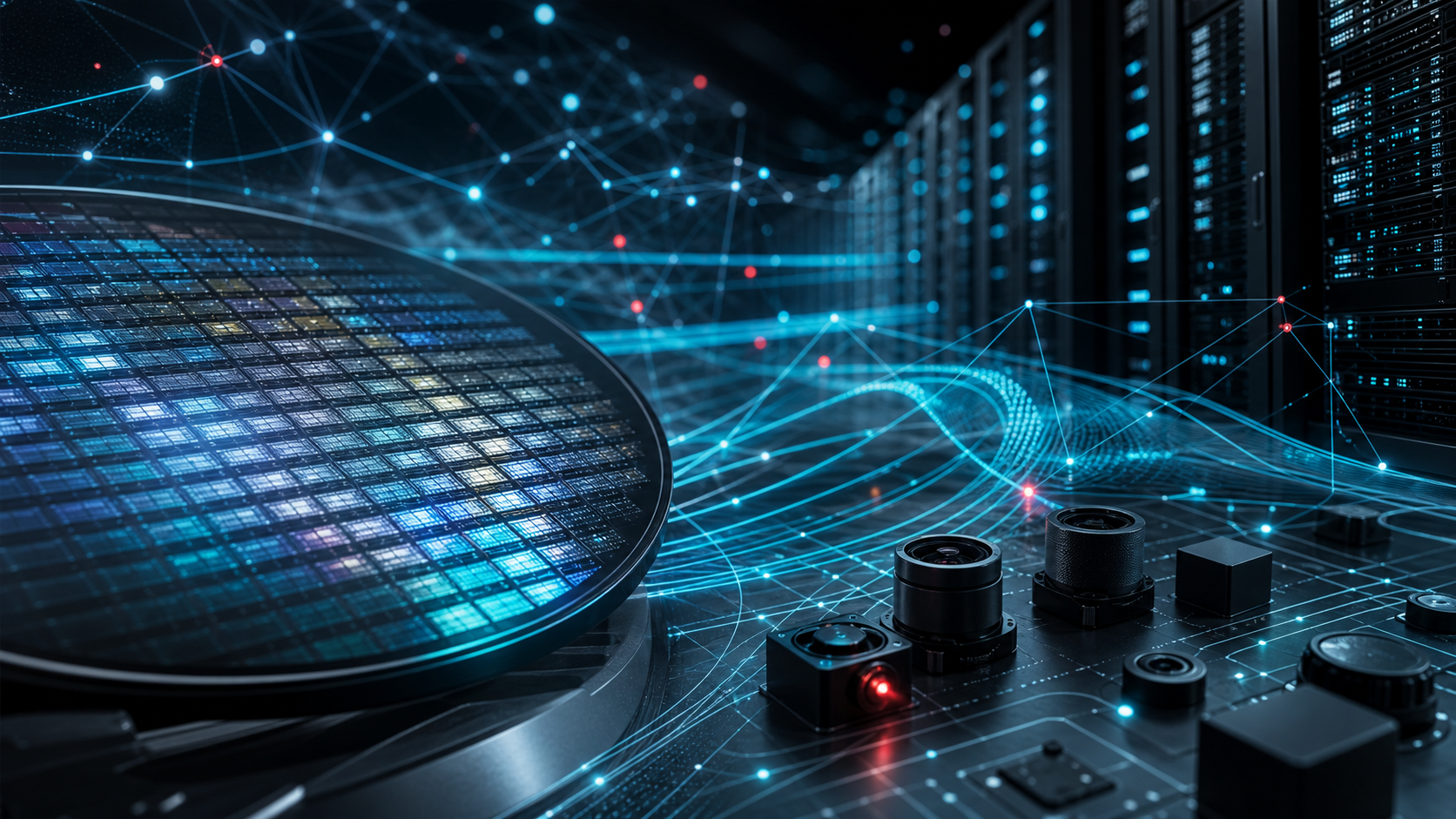
    Frontier technology is often described through individual breakthroughs: an AI model, a robot, a satellite, a battery, a gene-editing tool, or a quantum chip. In practice, breakthrough products depend on a stack of supporting technologies.

    Understanding the stack helps readers see why some technologies scale quickly while others stay stuck in demonstrations.

    Compute and Chips

    AI, simulation, robotics, biotech analysis, and consumer devices all depend on specialized chips. Performance, power consumption, memory, packaging, and supply chains influence what products can exist at a practical price.

    Sensors and Data

    Robots need cameras, lidar, radar, force sensors, and microphones. Health devices need biological and motion signals. Satellites need imaging systems. Transportation networks need location, traffic, and energy data. Good data is the raw material of modern technology.

    Data Centers and Energy

    Large-scale AI and cloud services require data centers, networking, cooling, power contracts, and reliability engineering. Energy availability is becoming a central technology constraint.

    Software and Trust

    Software connects hardware to users. Security, privacy, reliability, user experience, regulation, and transparent communication determine whether people will adopt new tools.

    A Useful Question

    When you read about any frontier technology, ask: what has to be true for this to scale? The answer usually includes more than the invention itself. It includes manufacturing, cost, regulation, infrastructure, distribution, and trust.

    The future is built by systems, not isolated miracles.

  • Future Transportation: Electric, Autonomous, and Connected Systems

    Future Transportation: Electric, Autonomous, and Connected Systems

    Transportation technology is changing across several layers at once: electric drivetrains, batteries, charging networks, autonomous systems, software-defined vehicles, logistics platforms, aviation experiments, and connected infrastructure.

    The future is not a single vehicle. It is a system of vehicles, energy, data, roads, rules, and user behavior.

    Electrification Is the Foundation

    Electric vehicles reduce mechanical complexity and create new possibilities for software control, maintenance, performance, and energy integration. Battery cost, charging speed, range, grid capacity, and raw materials remain important constraints.

    Autonomy Is a Harder Problem

    Autonomous driving requires perception, prediction, planning, mapping, safety validation, and regulatory approval. Some controlled environments are easier than open city streets. This is why autonomy may spread first in warehouses, mines, ports, highways, delivery routes, shuttles, and specific robotaxi zones.

    Connected Mobility

    Vehicles are becoming connected computing platforms. Software updates, fleet analytics, driver assistance, infotainment, charging optimization, and insurance models all depend on data. That creates value but also raises cybersecurity and privacy questions.

    What to Watch

    • Charging infrastructure and grid readiness.
    • Battery chemistry and recycling.
    • Autonomy in constrained commercial environments.
    • Electric aviation and advanced air mobility pilots.
    • Cybersecurity for connected vehicles.

    Future transportation will be judged by reliability, cost, safety, convenience, and infrastructure. Technology must fit the physical world, not just impress in a prototype.

  • Consumer Electronics After the Smartphone: Spatial, Wearable, and Ambient

    Consumer Electronics After the Smartphone: Spatial, Wearable, and Ambient

    The smartphone remains the center of consumer technology, but the next interface cycle is forming around wearables, spatial computing, ambient AI, health sensors, smart displays, and connected home devices.

    The common theme is context. Devices are becoming more aware of location, motion, voice, health signals, and user intent. The best products will make technology feel less like a screen and more like a useful layer around daily life.

    Wearables Are Becoming Health Platforms

    Smartwatches, rings, earbuds, and other wearables can measure activity, heart rate, sleep, temperature trends, and environmental signals. They are not replacements for doctors, but they can help users notice patterns and build healthier habits.

    Spatial Computing Changes the Display

    Spatial computing places digital objects into a three-dimensional interface. The idea is not only entertainment. It can support design, training, collaboration, remote assistance, education, and productivity. The challenge is comfort, price, battery life, content, and social acceptance.

    Ambient AI and Smart Homes

    Smart home devices become more useful when they understand routines and reduce friction. Ambient AI could help coordinate lighting, security, energy use, reminders, and media. However, privacy, reliability, and interoperability remain major concerns.

    What to Watch

    • Battery improvements for small devices.
    • On-device AI for privacy and speed.
    • Health sensor accuracy and regulation.
    • Open smart home standards.
    • New displays and input methods.

    The post-smartphone era will not arrive all at once. More likely, the phone will remain important while new devices take over specific moments: exercise, navigation, work, entertainment, home control, and health awareness.

  • Cybersecurity in the Age of AI Phishing and Passkeys

    Cybersecurity in the Age of AI Phishing and Passkeys

    Cybersecurity is entering a new phase. Attackers can use AI tools to write convincing messages, translate scams, imitate support conversations, and generate content at scale. At the same time, defenders are moving toward stronger identity systems such as passkeys.

    The result is a shift from simple password advice to a broader focus on trust: who is asking, what action is requested, which device is involved, and whether the request matches normal behavior.

    Why AI Phishing Is Different

    Traditional phishing messages often contained obvious grammar mistakes or suspicious formatting. AI-generated messages can be cleaner, more personalized, and easier to produce in many languages. That lowers the cost of deception.

    Businesses and consumers need to be careful with urgent requests, payment changes, login links, file downloads, and messages that ask for sensitive information. Verification through a separate trusted channel is still one of the strongest defenses.

    Passkeys and the Password Problem

    Passkeys are designed to reduce reliance on passwords by using cryptographic authentication tied to a device or account. They can be easier for users and harder for attackers to steal through fake login pages. Adoption is still ongoing, but the direction is promising.

    Practical Security Habits

    • Use a password manager for accounts that still require passwords.
    • Turn on multi-factor authentication where passkeys are not available.
    • Keep devices and browsers updated.
    • Verify sensitive requests through a second channel.
    • Limit what personal information is shared publicly.

    Cybersecurity is no longer only an IT department problem. It is part of everyday digital life, and AI makes clear habits more important than ever.

  • Clean Energy’s Next Bottleneck Is Storage, Grids, and Materials

    Clean Energy’s Next Bottleneck Is Storage, Grids, and Materials

    Clean energy discussions often focus on solar panels, wind turbines, and electric vehicles. Those technologies are important, but the next stage of the energy transition depends heavily on storage, grid capacity, materials, software, and permitting.

    Generating clean electricity is only part of the challenge. The power must be delivered where it is needed, when it is needed, at a price consumers and businesses can accept.

    Why Storage Matters

    Solar and wind output changes with weather and time of day. Batteries and other storage technologies help balance supply and demand. Short-duration batteries can smooth daily peaks. Long-duration storage may help with seasonal or multi-day gaps, though economics and deployment are still developing.

    The Grid Is the Hidden Platform

    The electrical grid was not originally built for millions of distributed energy sources, electric vehicles, smart devices, and two-way power flows. Modernization requires transmission lines, transformers, sensors, software, cybersecurity, demand response, and better interconnection processes.

    Materials and Manufacturing

    Batteries, motors, solar panels, and grid hardware depend on supply chains for lithium, nickel, copper, rare earth elements, silicon, steel, and advanced chemicals. Recycling, alternative chemistries, and domestic manufacturing will shape cost and resilience.

    What to Watch

    • Battery chemistry improvements and recycling systems.
    • Grid-scale storage projects.
    • Virtual power plants and demand response.
    • Advanced nuclear and geothermal development.
    • Permitting reform and transmission expansion.

    Clean energy is not one invention. It is a system upgrade. The winners will be technologies that integrate well with the grid, supply chains, regulation, and real customer demand.

  • Biotechnology and AI Are Changing How Discovery Starts

    Biotechnology and AI Are Changing How Discovery Starts

    Biotechnology is becoming more computational. Researchers can now generate, read, model, and analyze biological data at a scale that was difficult to imagine a generation ago. Artificial intelligence adds another layer by helping scientists search large biological possibility spaces.

    This does not mean AI replaces laboratories. Biology is physical, messy, and context-dependent. The promise is that AI can help researchers decide what to test, prioritize candidates, find patterns, and reduce wasted cycles.

    Where AI Helps Biotech

    AI can assist with protein structure prediction, molecule generation, imaging analysis, genomic interpretation, clinical trial matching, diagnostic support, and manufacturing optimization. In drug discovery, computational tools may help identify targets or propose molecules, but those ideas still require validation.

    Biotech progress depends on the loop between prediction and experiment. Better models can suggest better experiments. Better experiments produce better data. Better data improves the next model.

    Beyond Medicine

    Biotechnology is not only healthcare. Synthetic biology can support materials, agriculture, food production, environmental monitoring, and industrial manufacturing. Cells can be treated as programmable systems, though the programming is far more complex than software.

    Challenges to Watch

    • Data quality and reproducibility.
    • Regulation and clinical safety.
    • Manufacturing scale-up.
    • Ethics, privacy, and genetic data protection.
    • The gap between promising models and proven therapies.

    The future of biotech will likely be shaped by hybrid teams: biologists, chemists, engineers, data scientists, clinicians, and regulatory specialists working together. Discovery is becoming faster, but trust still requires evidence.

  • Quantum Computing: Why Error Correction Matters More Than Hype

    Quantum Computing: Why Error Correction Matters More Than Hype

    Quantum computing is often described in dramatic language, but the practical story is more disciplined. Quantum computers use quantum bits, or qubits, to represent and process information in ways that may be useful for certain classes of problems. The challenge is that qubits are fragile.

    Small disturbances from heat, vibration, electromagnetic noise, or imperfect operations can introduce errors. That is why error correction is central to the field. Without it, quantum computers remain interesting experimental machines. With it, they may eventually solve problems that are difficult for classical computers.

    What Quantum Computers Might Be Good At

    Potential applications include materials science, chemistry simulation, optimization, cryptography research, and specialized modeling. Quantum computers are not expected to replace ordinary computers for everyday tasks like email, browsing, or spreadsheets. They are more likely to become specialized accelerators for problems where quantum behavior matters.

    The Error Correction Problem

    A useful quantum computation may require many physical qubits to create one reliable logical qubit. This overhead is why headlines about qubit counts should be read carefully. Quantity matters, but quality, connectivity, gate fidelity, control systems, and error correction matter too.

    Progress in quantum computing is therefore a system-level challenge. Hardware, cooling, control electronics, compilers, algorithms, and cloud access all need to improve together.

    How to Read Quantum News

    • Ask whether the result improves logical qubits, not only physical qubits.
    • Look for error rates and benchmark details.
    • Separate research milestones from commercial readiness.
    • Watch quantum sensing and communications, not only computing.

    Quantum technology is real, but timelines are uncertain. The most useful approach is neither dismissal nor hype. It is patient attention to engineering progress.

  • The New Space Economy Is Built on Reuse, Data, and Infrastructure

    The New Space Economy Is Built on Reuse, Data, and Infrastructure

    Space technology is no longer only about national prestige or one-off exploration missions. A growing space economy is forming around reusable launch, satellite networks, Earth observation, communications, navigation, manufacturing, and data services.

    The most important change is cost. When launch becomes more frequent and reusable, more organizations can place hardware in orbit. That makes space less like a special event and more like an infrastructure layer.

    Satellites as a Data Platform

    Modern satellites can observe crops, cities, oceans, forests, weather patterns, shipping routes, and infrastructure. This data can support agriculture, disaster response, insurance, logistics, climate monitoring, and defense. The value is often not the satellite itself but the insight created from the data stream.

    Communications satellites are also changing connectivity. Low Earth orbit networks can reduce latency and expand coverage in remote areas, though they also raise questions about spectrum, orbital debris, astronomy, and regulation.

    Reusable Launch Changes the Model

    Reusable rockets make it possible to think in terms of cadence, maintenance, and logistics rather than single-use missions. That does not make space easy, but it changes the economics. More launch capacity supports more experiments, more satellites, and more commercial services.

    What to Watch

    • Debris management and responsible orbital behavior.
    • Satellite-to-phone and direct connectivity services.
    • In-space manufacturing and servicing.
    • Space-based Earth observation for climate and supply chains.
    • Lunar infrastructure and commercial exploration partnerships.

    The next phase of space technology will be defined less by single milestones and more by systems that operate continuously. Space is becoming a platform, and platforms create ecosystems.

  • Robotics Is Moving From Lab Demos to Real Workflows

    Robotics Is Moving From Lab Demos to Real Workflows

    Robotics has always been easy to imagine and hard to deploy. A short demo can look impressive, but a robot that works all day around people, dust, uneven lighting, changing objects, and unexpected problems is much harder to build.

    The field is now entering a more practical phase. Instead of asking whether a robot can perform a single trick, companies are asking whether it can complete useful work repeatedly, safely, and at a cost that makes sense.

    Where Robots Are Already Useful

    Warehouses, factories, hospitals, agriculture, logistics, and inspection are some of the strongest early markets. These environments often contain repetitive tasks, measurable outcomes, and labor shortages. A robot does not need to do everything a human can do. It only needs to handle a defined workflow well enough to create value.

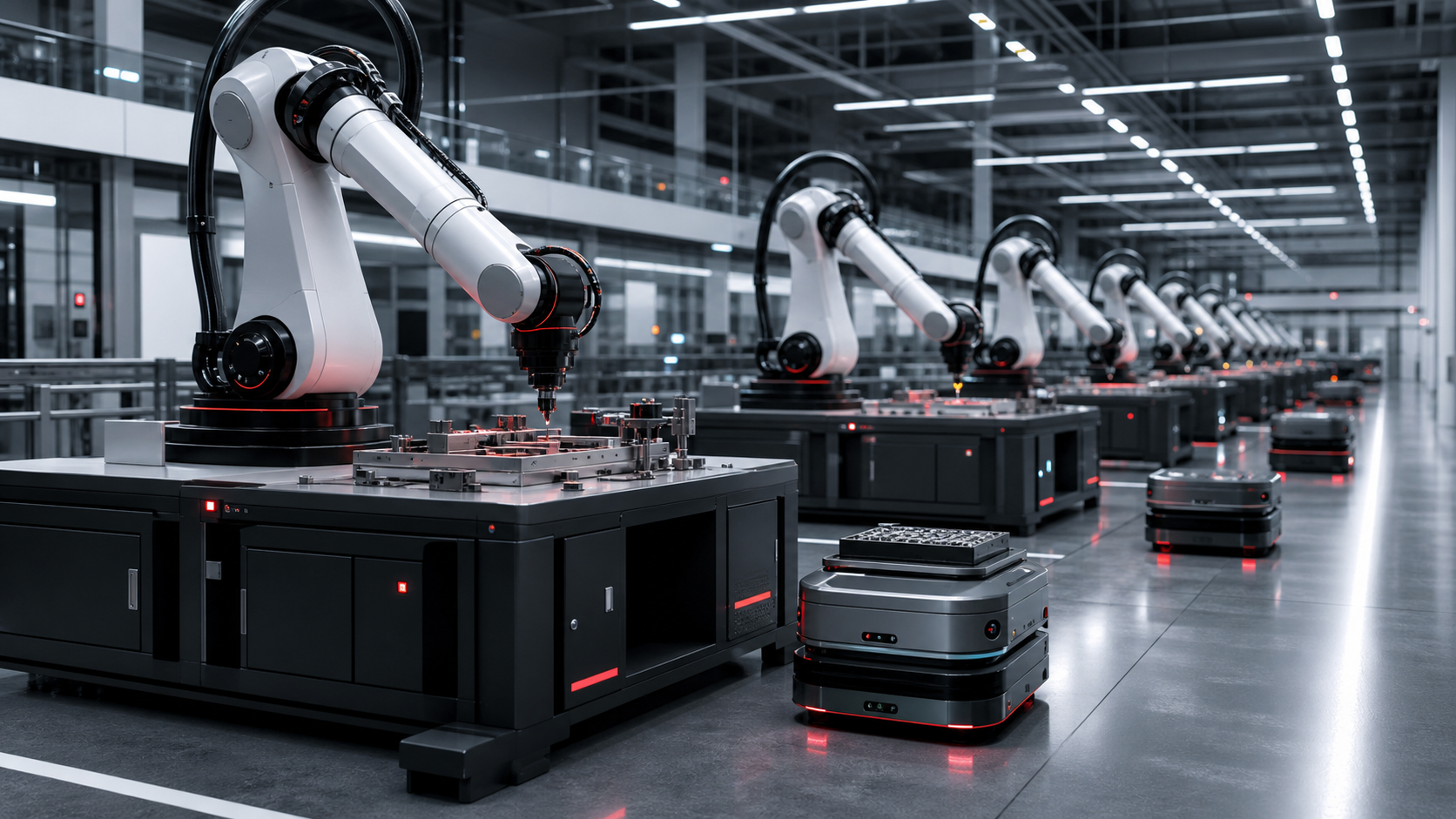
    Mobile robots can move goods through warehouses. Robotic arms can sort, pick, weld, inspect, and package. Drones can scan infrastructure. Surgical and medical robots can assist trained professionals. Agricultural robots can monitor fields and support harvesting tasks.

    Why AI Helps

    Modern AI gives robots better perception, language understanding, and planning. Cameras, depth sensors, tactile sensors, and machine learning models help robots understand objects and environments. Language models can make robot instructions more flexible, although safety-critical control still requires careful engineering.

    The long-term dream is a general-purpose robot. The near-term business is more focused: reliable robots for specific jobs.

    What Still Limits Adoption

    • Hardware cost and maintenance.
    • Battery life and physical durability.
    • Safety certification and insurance.
    • Integration with existing operations.
    • Human trust and training.

    Robotics progress is best judged by boring reliability. When robots quietly complete ordinary work every day, the technology has moved beyond spectacle and into infrastructure.

  • AI Agents Are Becoming the New Interface for Software

    AI Agents Are Becoming the New Interface for Software

    For years, most software has asked users to learn menus, dashboards, search boxes, and settings. Artificial intelligence is beginning to change that relationship. Instead of clicking through every step, a user can describe a goal and ask an AI system to help plan, draft, summarize, compare, or automate parts of the workflow.

    This is why AI agents matter. An agent is not just a chatbot that answers a question. It is software designed to reason through a task, use tools, remember context, and take multiple steps toward an outcome. A useful agent might search documents, draft an email, create a spreadsheet, compare options, and ask for approval before a final action.

    Why Agents Are Different

    The biggest shift is that the interface becomes more goal-oriented. In traditional software, the user has to know the correct sequence of buttons. In agentic software, the user describes the result. The system still needs guardrails, confirmations, permissions, and human review, but the burden of navigation starts to move from the person to the machine.

    Agents are especially useful where work is repetitive but not fully predictable. Customer support, research, sales operations, software development, data analysis, content planning, and personal productivity all contain tasks that follow patterns but still require judgment.

    The Infrastructure Behind the Trend

    AI agents depend on several layers: large language models, retrieval systems, tool connectors, authentication, workflow engines, memory, evaluation, and security controls. The model is only one piece. The surrounding system determines whether an agent is reliable enough for real work.

    For readers watching this space, the important question is not whether every app will add an AI assistant. Many will. The better question is which assistants can safely complete useful tasks without creating more work for the user.

    What to Watch

    • How agents handle permissions and approvals.
    • Whether they can explain their reasoning and sources.
    • How companies measure accuracy and failure rates.
    • Whether agents save time in real workflows, not just demos.

    The next generation of software may feel less like a collection of screens and more like a set of capable collaborators. That future will arrive gradually, but the direction is already visible.