
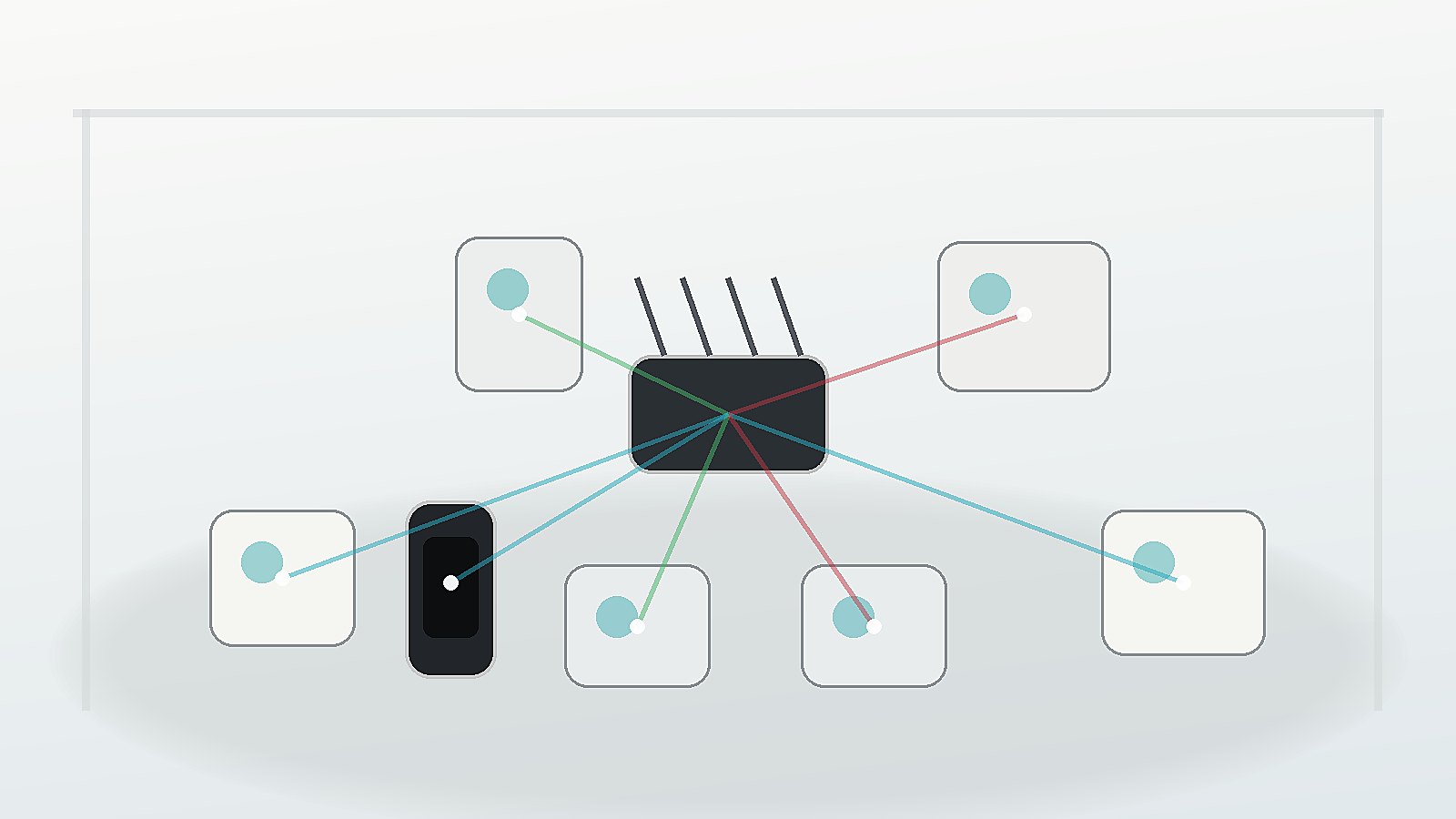
The smart home has never lacked gadgets. It has lacked confidence. Buyers want lights, locks, sensors, speakers, thermostats, appliances, and hubs to work together without studying a compatibility chart every time they add a device. Matter was created to make that easier, and Matter 1.6 continues the slow but important work of making setup and control feel less fragmented.
For consumers, the headline is not one dramatic new device category. It is a set of practical improvements: clearer setup, better multi-ecosystem behavior, more context-aware control, and continued expansion of a shared language for smart devices.
Matter Is a Common Application Layer
Matter is a connectivity standard from the Connectivity Standards Alliance. It defines how supported smart-home devices describe themselves, join a home, expose features, and communicate with controllers from different ecosystems. It can run over local network technologies such as Wi-Fi, Ethernet, and Thread, with Bluetooth Low Energy commonly used during setup.
The alliance’s Matter overview frames the standard around interoperability, simplicity, reliability, and security. Those goals matter because ordinary buyers do not want every switch, bulb, and sensor to be a separate island.
Matter does not make all smart-home products identical. A device can support Matter while still offering extra features in its manufacturer’s own app. Nor does Matter force every platform to expose every possible capability in the same way. It gives the industry a shared foundation, not a guarantee of perfect feature parity.
Version 1.6 Focuses on Setup and Multi-Ecosystem Use
The Connectivity Standards Alliance describes Matter 1.6 as an update aimed at more intuitive setup, better multi-ecosystem experiences, and context-driven control. That direction is important because many smart-home frustrations happen before a device does anything useful.
Setup is where buyers discover whether they need a hub, whether the phone can find the device, whether a code scans correctly, whether the right network is available, and whether a second household member can control the same product. Small improvements here can matter more than a new automation feature.
Multi-ecosystem support is also central. A household might use one voice assistant, another phone platform, a dedicated home hub, and a manufacturer’s own app. A practical smart home should not punish that mix. The point is not to erase ecosystems, but to make the device less trapped inside one of them.
Context-Driven Control Needs Careful Boundaries
Context-driven control means devices and systems can act with a better understanding of state: occupancy, mode, device capabilities, scenes, environmental readings, or user preferences. A home can become more useful when a sensor, light, thermostat, and controller share enough meaning to coordinate.
The risk is that automatic behavior becomes confusing. A light that changes because a sensor triggered, a schedule ran, and a platform inferred a routine can feel broken if the user cannot see why it happened. Smart homes need explanations, override controls, and predictable defaults.
That is why consumer trust depends on more than connectivity. It also depends on privacy, security, and clear controls, themes we covered in our smart-home security checklist.
Thread and Wi-Fi Still Play Different Roles
Matter can use several network transports. Wi-Fi makes sense for higher-bandwidth devices and products that already have mains power. Thread is a low-power mesh networking technology often used for sensors, switches, and small devices. A Thread border router connects the Thread mesh to the rest of the home network.
Buyers should understand that a Matter label does not automatically mean a device will connect directly to any router in the house. Some products need a compatible Thread border router or controller. Others use Wi-Fi. A smoother Matter experience still depends on the right home infrastructure.
This is similar to wireless charging certification: the standard helps, but the exact product, accessory, and environment decide the experience.
Certification Helps, but Ecosystem Updates Matter
Matter certification gives buyers a more reliable signal than vague compatibility claims. The alliance maintains a certified products search, which can help identify whether a specific product has passed certification and under which program.
However, a certified device is only part of the chain. Phones, hubs, speakers, routers, apps, and cloud services also need updates. A feature added in a new Matter version may take time to appear across controllers. Early adopters should expect uneven support while ecosystems roll out software changes.
This does not mean the standard has failed. It means interoperability is a process. The more devices and controllers support the same features over time, the less buyers need to memorize brand-specific rules.
Privacy and Local Control Remain Buying Criteria
Smart-home devices sit in intimate spaces. They can reveal when people are home, which rooms are occupied, what routines are common, and which appliances are used. Matter includes security architecture, but buyers should still examine privacy policies, account requirements, update history, and local-control behavior.
A device that works locally for basic commands can be more resilient when a cloud service has an outage. A device with a clear update policy is less likely to become a forgotten security liability. A device that shares less data by default is easier to trust.
Audio devices, lighting, locks, and sensors also interact with accessibility and public-space use cases, much like Auracast broadcast audio. The best consumer electronics standards make technology less fussy without hiding important choices from the user.
A Practical Buying Checklist
- Check that the exact model is Matter certified, not merely described as compatible.
- Confirm whether it uses Wi-Fi, Ethernet, or Thread, and whether you need a border router.
- Look for support in the ecosystem you actually use, including the controller version.
- Review privacy settings, account requirements, local-control behavior, and update history.
- Assume advanced features may vary across apps even when basic control works through Matter.
For most households, Matter 1.6 is not a reason to replace working devices immediately. It is a reason to expect the next wave of smart-home products to be easier to set up, easier to share across platforms, and less dependent on a single brand’s island.
Leave a Reply